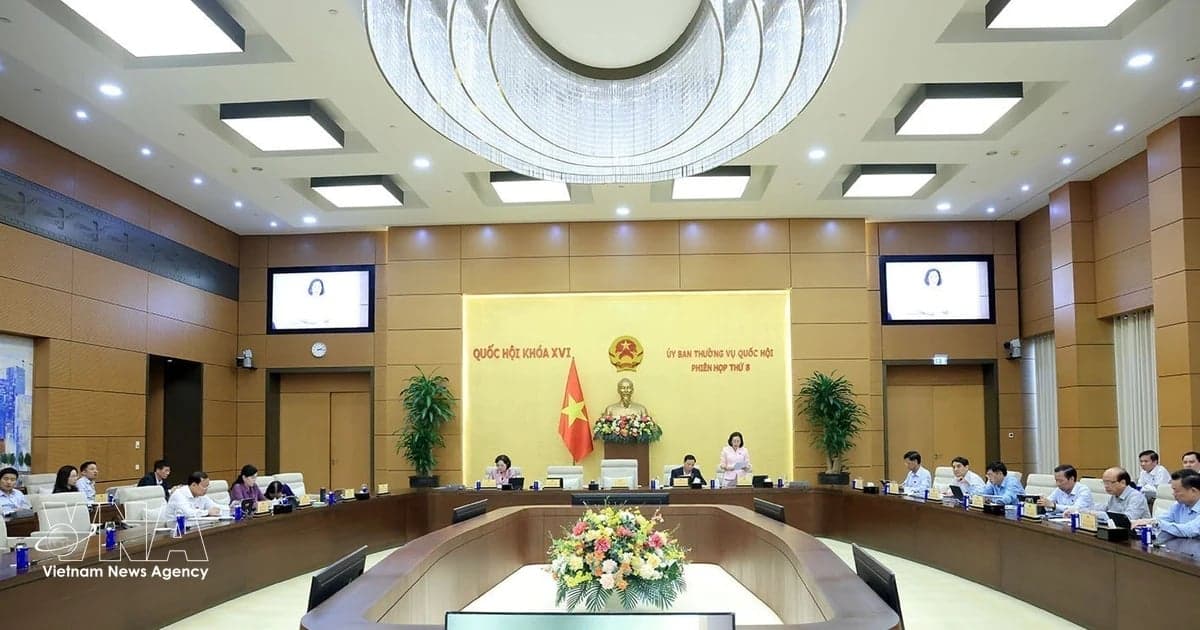
Members of Vietnam's National Assembly Standing Committee discussed draft amendments on new tobacco products, tissue and organ donation, and transplantation on November 18 during its eighth sitting.
They considered revisions to laws on donation and transplantation, children, persons with disabilities, medical care, pharmacy, older people, health insurance and tobacco control.
Reducing demand for tobacco use
Health Minister Dao Hong Lan said the Government had clarified definitions of e-cigarettes, heated tobacco products and other new tobacco products, including products without nicotine-containing materials.
The draft specifies prohibited acts involving e-cigarettes, heated tobacco products, nicotine pouches, shisha and other tobacco products, including manufacturing, trading, storing, transporting, exporting, importing and transiting.
The Government aims to reduce demand and gradually curb supply in line with the National Strategy on Tobacco Harm Prevention and Control to 2030 and Vietnam's commitments under the World Health Organisation Framework Convention on Tobacco Control.
Health warnings on tobacco packaging will be expanded from the current 50% to a higher proportion. Specific provisions will be set out in the implementing decree.
Existing business conditions and licences for tobacco trading will be retained. The draft will also require the Minister of Industry and Trade to announce permitted production volumes under the roadmap for reducing tobacco consumption.
Tightening conditions for tissue and organ donation and transplantation
Lan said the draft law on tissue and organ donation and transplantation had been revised to strengthen voluntariness and transparency and prevent exploitation.
Only people aged 18 or above may register to donate tissues, organs or their bodies after death. Living organ donation by people under 18 will be prohibited.
The minimum age for living donors will rise from 18 to 25. People aged 18 to under 25 may donate only to family members, while those aged 25 or above may donate to other recipients under stricter conditions.
The draft adds independent counselling, age-appropriate psychological assessments and written consent from legal representatives and biological parents in relevant cases.
After brain death or death from circulatory failure, the draft narrows the scope of eligible representatives. If a registered donor's family objects, tissues and organs will not be removed.
The number of groups of prohibited acts will rise from 10 to 28 to prevent donation and transplantation from being used for trading or profit. New provisions address misuse of adoption, alternative care and social protection arrangements to obtain and transplant human tissues and organs.
Nguyen Dac Vinh, chairman of the National Assembly Committee for Culture and Social Affairs, asked the Government to continue reviewing the draft and ensure consistency with its accompanying documents.
He said the legislation should address shortcomings, balance public health with humanitarian, charitable and traditional cultural values, and leave no loopholes for violations.
The committee also discussed rules for death-determination councils, transplants involving foreign parties, removal of tissues and organs when no donation has been registered, and coordination of donation and transplantation activities.
It stressed that such donations must be based entirely on the voluntary consent of biological parents or legal representatives and serve exclusively humanitarian purposes. Tissues or organs must not be removed when the cause of death is unclear or there are suspected legal violations or other irregularities.
Sources: VietnamPlus / Vietnam News Agency