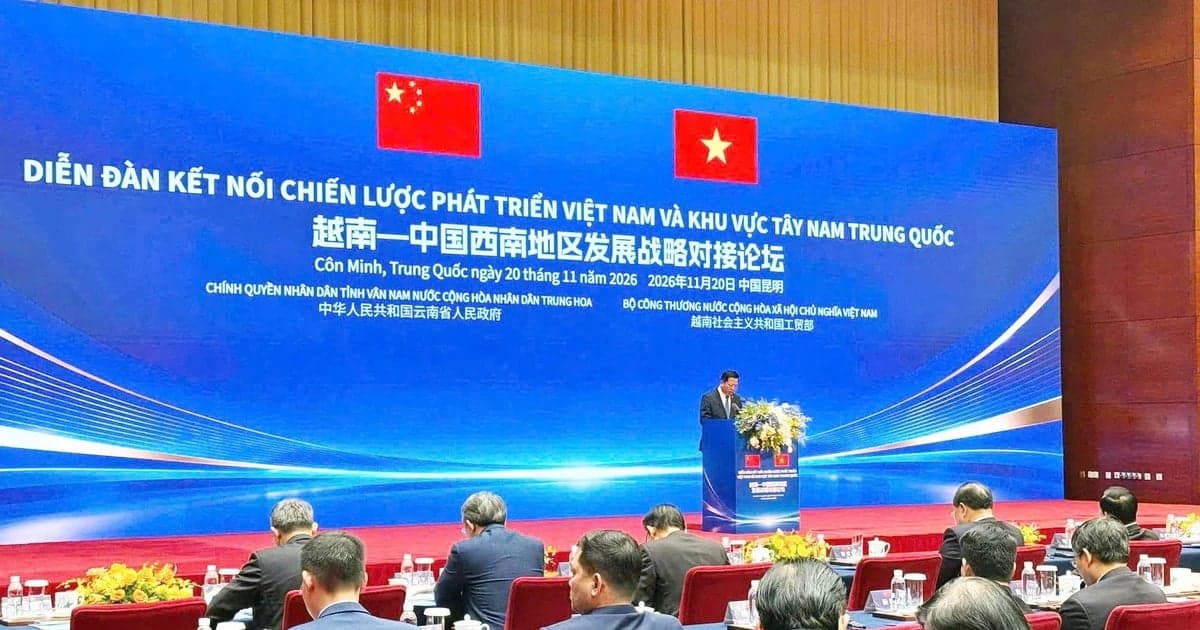
Vietnam and China should make railway cooperation a strategic direction in their bilateral relations, Minister of Construction Tran Hong Minh said at a forum in Kunming, Yunnan province, on November 20.
He said standard-gauge railway links would shorten logistics times, connect industrial centres with seaports and expand trade opportunities. As economic and trade ties grow, cross-border transport infrastructure, particularly railways, helps expand economic space, increase transport capacity and improve national competitiveness.
Priority railway projects
Vietnam is entering a new phase of accelerated transport and urban infrastructure development to build a modern, integrated transport network. Developing standard-gauge railway connections with China has been identified as a major strategic priority.
Under a joint statement issued during To Lam's April 14–17 state visit to China, the two sides agreed to promote railway connectivity, increase freight transport and accelerate infrastructure links. They also set a goal of making railway cooperation a new highlight in bilateral strategic cooperation.
Minh expressed high expectations for the Lao Cai–Hanoi–Hai Phong standard-gauge railway, which will connect with Yunnan. Together with the Dong Dang–Hanoi and Mong Cai–Ha Long–Hai Phong lines linking Vietnam with Guangxi, the projects are expected to form important cross-border transport corridors.
The network will connect China's industrial centres and raw-material production areas with Vietnam's international seaports, helping reduce logistics costs, improve freight transport efficiency and expand export opportunities for both countries.
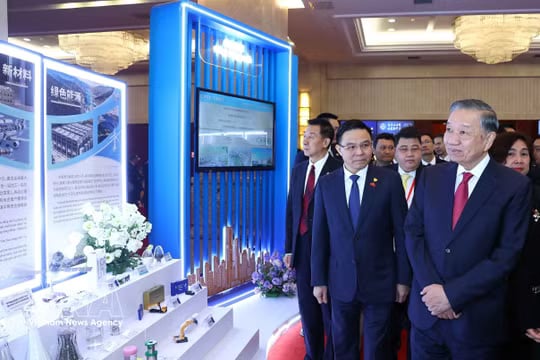
The minister said effective connectivity requires railway construction as well as coordinated logistics systems and supporting infrastructure. He called on businesses from both countries to invest in transit stations, logistics centres and technical facilities in border areas, and stressed the importance of links with Kunming, Yunnan's provincial capital.
He proposed three priorities: accelerating strategic connectivity projects, developing integrated logistics infrastructure, and strengthening cooperation in railway management, operations and workforce training.
The Ministry of Construction urged Chinese contractors to collaborate with Vietnamese companies, implement modern railway engineering solutions, and ensure that cross-border lines operate safely and to high quality standards.
The two sides should share experience in construction investment management, railway operation, maintenance and repair, and expand practical training programmes to develop skilled railway personnel, he said.
Minh added that infrastructure construction, technical development and smart urban development offer broad cooperation opportunities for businesses from both countries.
Vietnam's Ministry of Construction will continue improving institutions, standards and technical regulations in line with international practices, while creating a transparent and fair investment environment for foreign contractors and investors, including Chinese firms.
He said the ministry would work closely with businesses to address difficulties and support effective project implementation, making infrastructure connectivity a driver of Vietnam–China economic relations.
Sources: VietnamPlus / Vietnam News Agency