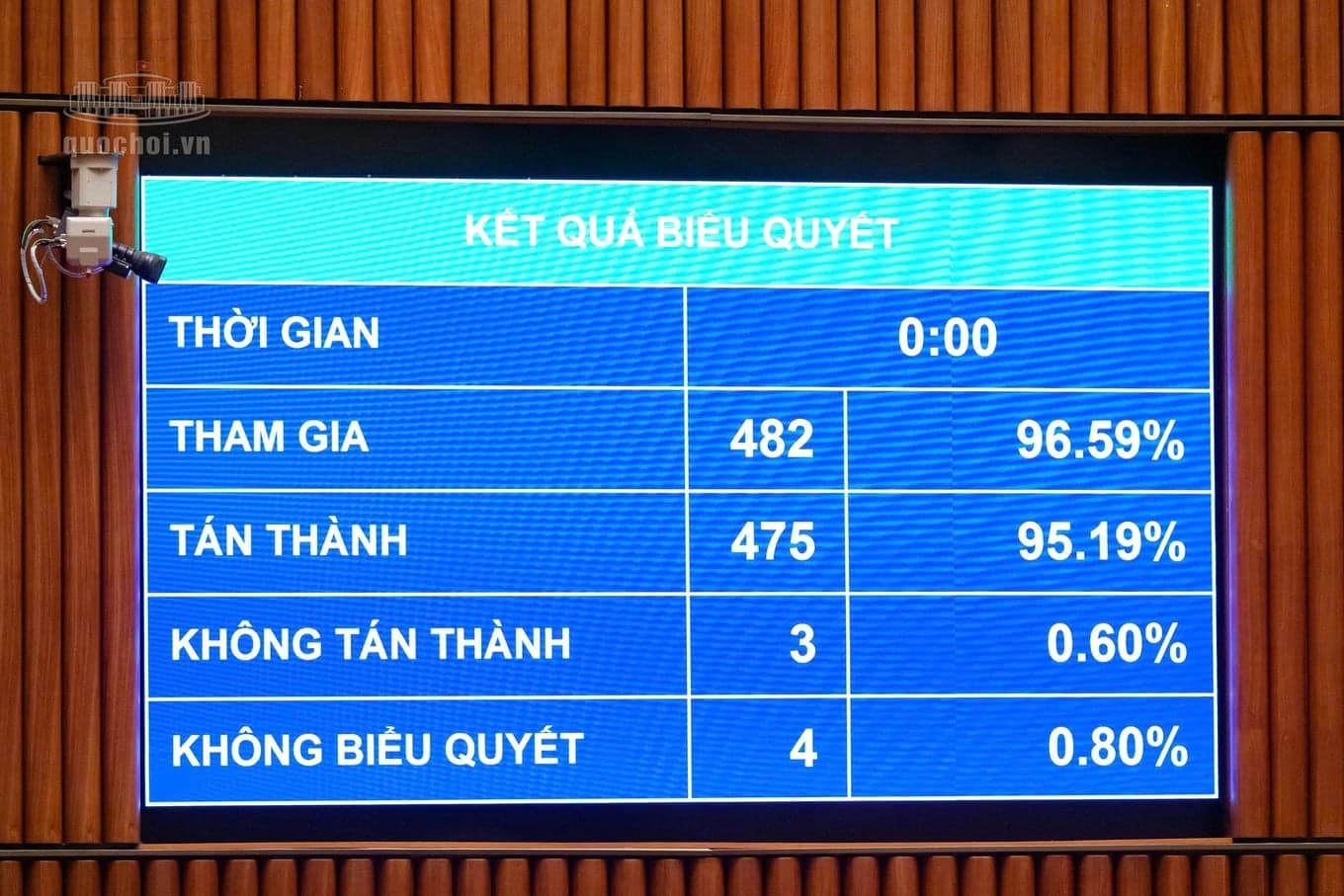
On November 20, Vietnam's National Assembly passed amendments to the Law on Property Auctions. A total of 475 of the 482 participating deputies voted in favor, or 95.19% of all deputies. Three voted against and four did not vote.
The law sets auction procedures, rules for auctioneers and auction-service organizations, penalties for violations, cancellation of auction results and compensation for damages.
One notable change concerns deposits required for auctions, especially auctions of land-use rights.
Residential land auctions require at least a 20% deposit
Under Article 35, an auction participant must pay an initial deposit. It is normally agreed by the auction-service organization and the property owner and generally ranges from 5% to 20% of the starting price, except in separately regulated cases.
For auctions of land-use rights that the state grants to individuals for residential use, the deposit will be 20% to 50% of the starting price.
If a plot has a starting price of VND 2 billion, the deposit will range from VND 400 million to VND 1 billion, depending on the amount set for the auction.
For auctions of land-use rights that the state grants or leases for an investment project, the deposit will be 10% to 20% of the starting price.
Before the vote, the government said some deputies had requested data on forfeited deposits and an assessment of the 20–50% range. They were concerned that a high deposit could restrict participation by people with a genuine need for housing.
The government added a rule requiring it to set principles and criteria for choosing the deposit within the statutory range. The amount must reflect the type of property and local conditions and must not create unreasonable barriers.
A rapid review in 16 provinces and cities showed that the new deposit rules and measures for violations were beginning to work, according to the report.
In Thanh Hoa, after a deposit equal to 50% of the starting price was applied, the number of plots whose auction results were cancelled because the money was not paid fell from 377 cases in 2025 to 82 cases in the first nine months of 2026. The number of plots offered at auction rose from 1,129 to nearly 3,900.

In Quang Tri, cancelled auction results fell from 35 to 11.
The government proposed retaining the range to address cases in which bidders offer unusually high prices and then walk away, negatively affecting the property market.
Auction bans of up to five years for refusing a winning bid
The law adds measures targeting auction winners who breach payment obligations or refuse the auction result.
Under Article 58, a person who refuses an auction result or refuses to sign the auction record may be barred from auctions for six months to five years, depending on the violation.
The measure also applies to winners of auctions for land-use rights or mineral extraction rights when a payment breach leads to cancellation of the decision approving the result.
A barred person may not participate in auctions for that type of property nationwide during the ban. The decision must be sent to the Ministry of Justice and posted on the National Property Auction Portal.
If a winner's violation leads to cancellation of the auction result, the initial deposit will not be returned.
The government said the added grounds for auction bans are intended to prevent unusually high bids followed by refusal of the result or failure to pay.
Protecting auction participants' rights
The auction-service organization must keep the deposit in a separate payment account at a commercial bank or foreign bank branch in Vietnam.
Within three working days after the auction ends, or another agreed period, it must return the deposit and any interest to unsuccessful participants, except where the law does not allow a refund.
A participant who submitted valid documents and paid the deposit but no longer wishes to take part may withdraw in writing before the auction opens. The deposit will be returned, but the document fee will not.
A participant who did not attend without force majeure, was barred for a violation or refused the auction result will not receive the deposit back.
For the winner, the deposit and any interest become security for performance of the contract or the obligation to purchase the property.
The amendments will take effect on July 1, 2027.
Sources: Dân Trí