In 2026, the Mekong River Commission began implementing its 2026-2030 Strategic Plan. It covers stronger institutions and governance, better data, monitoring and forecasting, coordination in basin management, transboundary projects, partnerships and knowledge sharing.
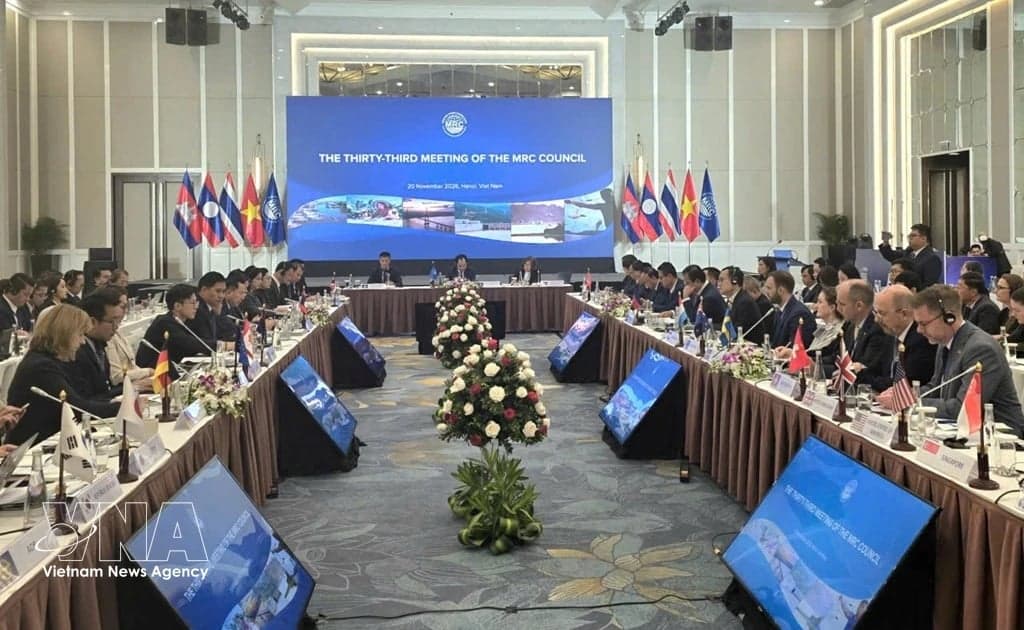
The 33rd session of the Mekong River Commission Council and its 31st Joint Session with Development Partners took place in Hanoi on November 20. The meeting was chaired by Vietnam's Minister of Agriculture and Environment Trinh Viet Hung, Chairman of the Vietnam National Mekong Committee and Chair of the MRC Council for 2026.
Representatives of Cambodia, Laos, Thailand and Vietnam, the four member countries, took part along with the MRC Secretariat and its partners.
The meeting was held as the Mekong basin faces growing problems affecting water resources and the environment. Unusual weather, floods, droughts, water pollution, declining sediment flows and deteriorating ecosystems are directly affecting people's lives and livelihoods. Several international studies have warned that a strong or very strong El Nino could emerge towards the end of 2026, raising the risk of drought, lower river flows and saltwater intrusion in the Mekong Delta during the 2026-2027 dry season. In his opening remarks, Hung said these problems cross national borders and require closer coordination to address transboundary risks.
The commission also began implementing its 2026-2030 Strategic Plan in 2026. The plan covers institutions and governance, data, monitoring and forecasting, basin management, transboundary projects, partnerships and knowledge sharing. During this period, the commission is gradually pursuing a roadmap towards financial autonomy for its core functions by 2030.
After the first year of implementing the Strategic Plan, MRC cooperation made progress. The Mekong monitoring network continued to be upgraded and operated, flood and drought forecasting improved, and data sharing on hydropower operations continued. The MRC's Procedures for Water Use Monitoring also remained in operation. Projects supporting riverside communities helped strengthen climate resilience and improve local livelihoods.
However, given the growing challenges across the basin, these achievements are only an initial step. The MRC needs to strengthen its coordinating role and promote cooperation among member countries.
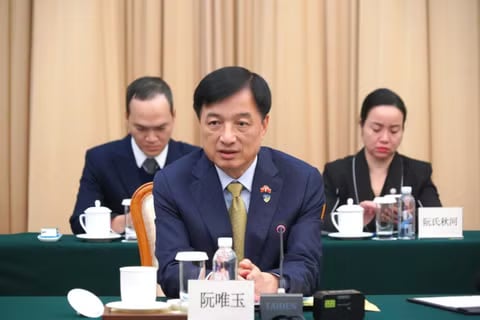
At the joint meeting with development partners, Deputy Minister of Agriculture and Environment Nguyen Hoang Hiep, who leads the Vietnamese delegation, stressed the importance of implementing the 1995 Mekong Agreement and its Procedures for Water Use Monitoring. He called for better monitoring, forecasting and early-warning systems, active prevention of transboundary water pollution, and cooperative projects that bring tangible benefits to riverside communities.
He also stressed the importance of sharing information on reservoir operations, improving emergency notification mechanisms and coordinating responses to floods, droughts and environmental incidents across the basin. Vietnam is ready to work with other countries during consultations on relevant hydropower projects and called for stronger transboundary initiatives to address shared challenges in the basin.
Swiss Ambassador to Vietnam Thomas Gass, speaking on behalf of development partners, confirmed their commitment to continue working with the MRC and its member countries in the coming years to implement strategic tasks, improve operational effectiveness and gradually strengthen the commission's autonomy. He said joint efforts should be intensified to protect the environment, local communities and economic activities that depend on the Mekong. Development partners called for stronger regional cooperation in monitoring, information sharing and risk forecasting so that countries can respond in a coordinated way to pressures on the river under the 1995 Mekong Agreement and relevant MRC procedures.
In his closing remarks, Hung said the council approved the terms of reference for the MRC Secretariat Chief Executive Officer for the 2028-2030 term and the 2027-2028 Work Plan. The documents provide a basis for carrying out the commission's priority tasks in the coming period.
Reports and discussions at the meeting showed progress during the first year of the 2026-2030 Strategic Plan, particularly in monitoring, forecasting, information sharing and coordination in basin water-resource management. Hung said the results confirmed member countries' commitment to stronger cooperation and agreement on improving the commission's operational effectiveness.
At the end of the meeting, Hung, Chair of the MRC Council for 2026, handed over the chairmanship for 2027 to Thor Chetha, Cambodia's Minister of Water Resources and Meteorology and Chairman of the Cambodia National Mekong Committee.
Sources: VietnamPlus / Vietnam News Agency