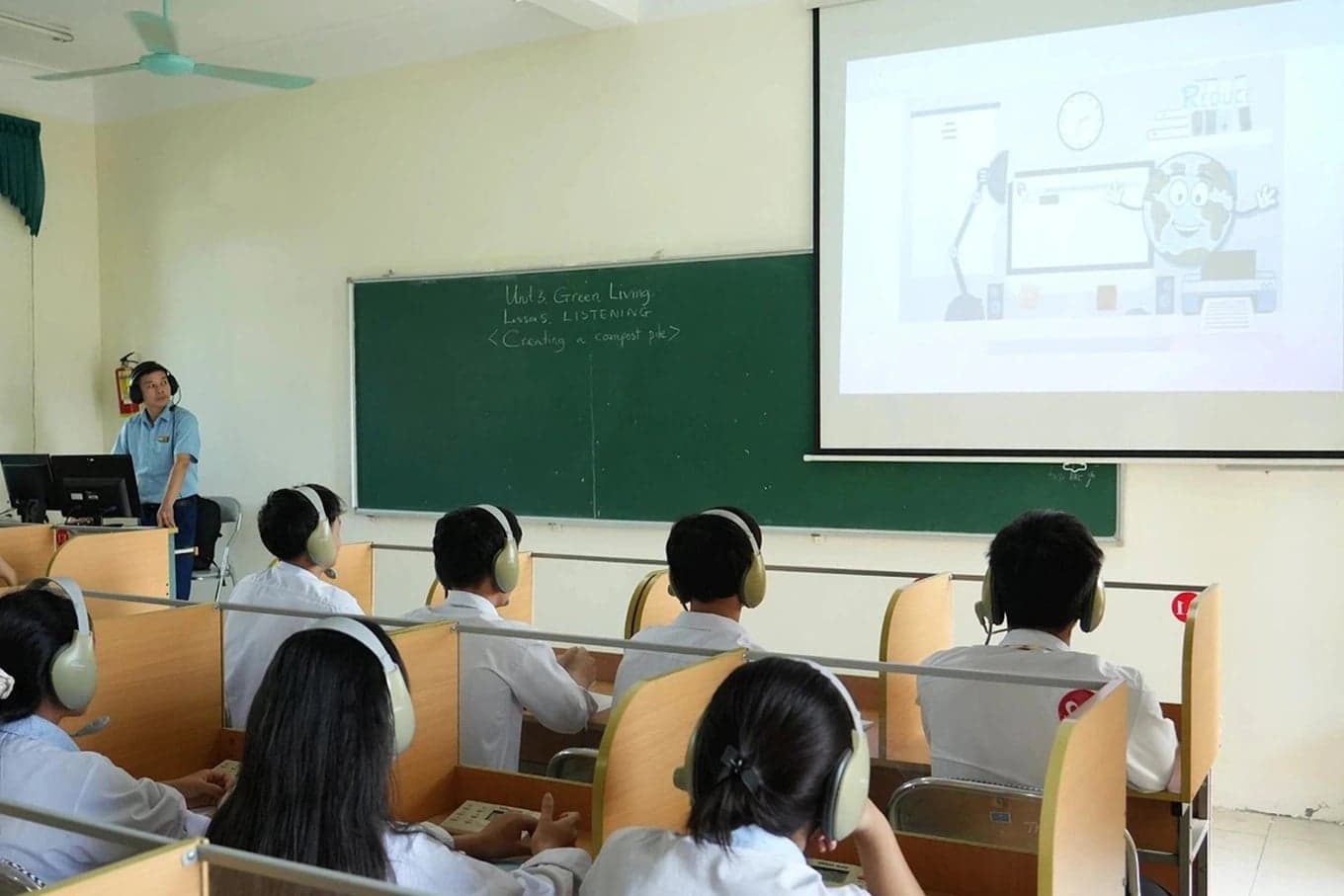
Vietnam's Circular 94/2026/TT-BGDĐT takes effect on December 19. It sets standards, criteria and assessment procedures for a project to make English a second language in schools.
For a public school to reach the project's first level, at least one school leader must be able to use English to work directly with foreigners. The third level requires at least two leaders to meet that standard.
The requirement has prompted questions from school leaders in Nghe An province, especially because some areas offer few opportunities for direct contact with foreigners.
A leader of a combined primary and lower-secondary boarding school in a border commune of Nghe An said the English requirement would not be difficult to meet. In his view, if English becomes a second language, principals and vice principals should also be able to communicate in it.
He is confident that six months of study would be enough for him to reach the level needed to communicate with foreigners. At his workplace, however, learning is rarely followed by practice.
During his years as a school administrator, he has had almost no opportunity to practise English or communicate with foreigners.
"The rule is suitable for specialist schools in major cities, but not across the country, especially in mountainous areas where many ethnic minority communities live," he said.
Ho Tuan Anh, vice principal of Quynh Mai 2 Lower Secondary School in Nghe An, shares this view. He said contact with foreigners at his school is rare, if it happens at all.
When such situations do occur, current English teachers, supported by technology, would provide more accurate interpretation for meetings between school leaders and visitors.
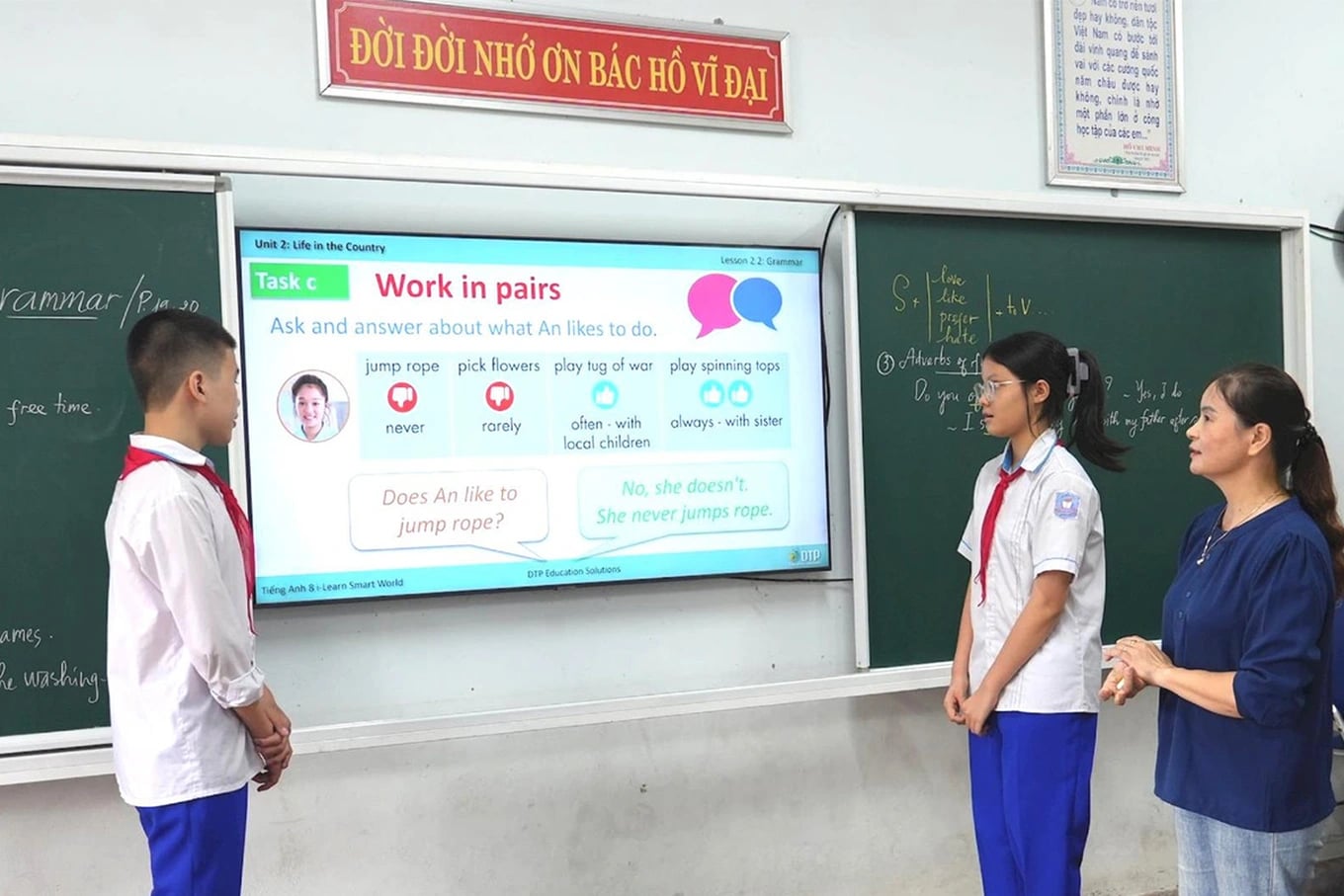
He said school leaders need a long-term plan to improve their English. If they are to be trained, what would that plan look like? Or would authorities have to look for people who already meet the standard when appointing school leaders?
The issue is not limited to border and coastal areas. Even in cities, school leaders do not often have the opportunity to communicate directly with foreign partners.
A principal at a high school in the former city of Vinh said there is still a wide gap between "communicating in English" and negotiating with foreign partners in the language.
"A school leader's management ability does not depend on English. I believe English proficiency should be encouraged rather than made a rigid condition or mandatory standard. That would place additional pressure on school leaders," the principal said.
In his view, the English requirement is better suited to bilingual and specialised schools than to every public school.
Sources: Dân Trí