
After receiving complaints, Can Tho authorities asked city agencies to review their own work and their cooperation with businesses to support the city's development.
Why do small businesses not want to grow?
On November 12, the Can Tho People's Committee held the 2026 annual economic forum. Its theme was “Developing the private economy as a lever for Can Tho's fast and sustainable growth in a new era.”
Vuong Thanh Nam, deputy director of the Can Tho Department of Finance, said that 2,979 new businesses were registered in the city during the first eight months of 2026, up 3.08% from the same period in 2025. At the same time, 1,374 businesses registered a temporary suspension, up 7% year on year. The city now has more than 25,000 businesses, and small and micro businesses account for 98% of them.
Associate Professor Phan Anh Tu, deputy rector of the School of Economics at Can Tho University, said some small businesses were reluctant to expand. They were used to traditional ways of doing business, lacked management skills and had weak links with larger companies. The shift from presumptive tax to tax declarations had made them even less interested, he said.
Dang Thi Thu Hoai, head of the Department of Sectoral and Local Economy at the Institute for Policy and Strategy Research, said Can Tho has an integrated economic space combining urban, industrial, agricultural and marine areas. However, these advantages have not yet created sufficiently competitive conditions to attract large investors. The city still faces gaps in market connections and logistics, has not fully used the value of its raw-material regions, and businesses have difficulty accessing resources and carrying out projects.
Agencies must review their own work
Speaking about regulatory problems, Pham Thai Binh, chairman of the board of Trung An High-Tech Agriculture, said he was concerned about the way officials support businesses.
Binh has worked in the rice industry for more than 30 years and strongly supports a project to develop 1 million hectares of high-quality, low-emission rice in the Mekong Delta. He said the project had run into a situation where the “road” was open but local authorities moved slowly and in circles, leaving the business “vehicle” stuck.
Binh said he submitted two projects under the 1-million-hectare scheme to Can Tho and An Giang at the same time in August 2025. The Can Tho company is a parent company with 30 years of experience, while the An Giang company was established about 10 years ago. By September 2026, An Giang had approved a 20,000-hectare project, while in Can Tho, Binh said, the decision still seemed far away because support to remove obstacles had been slow.
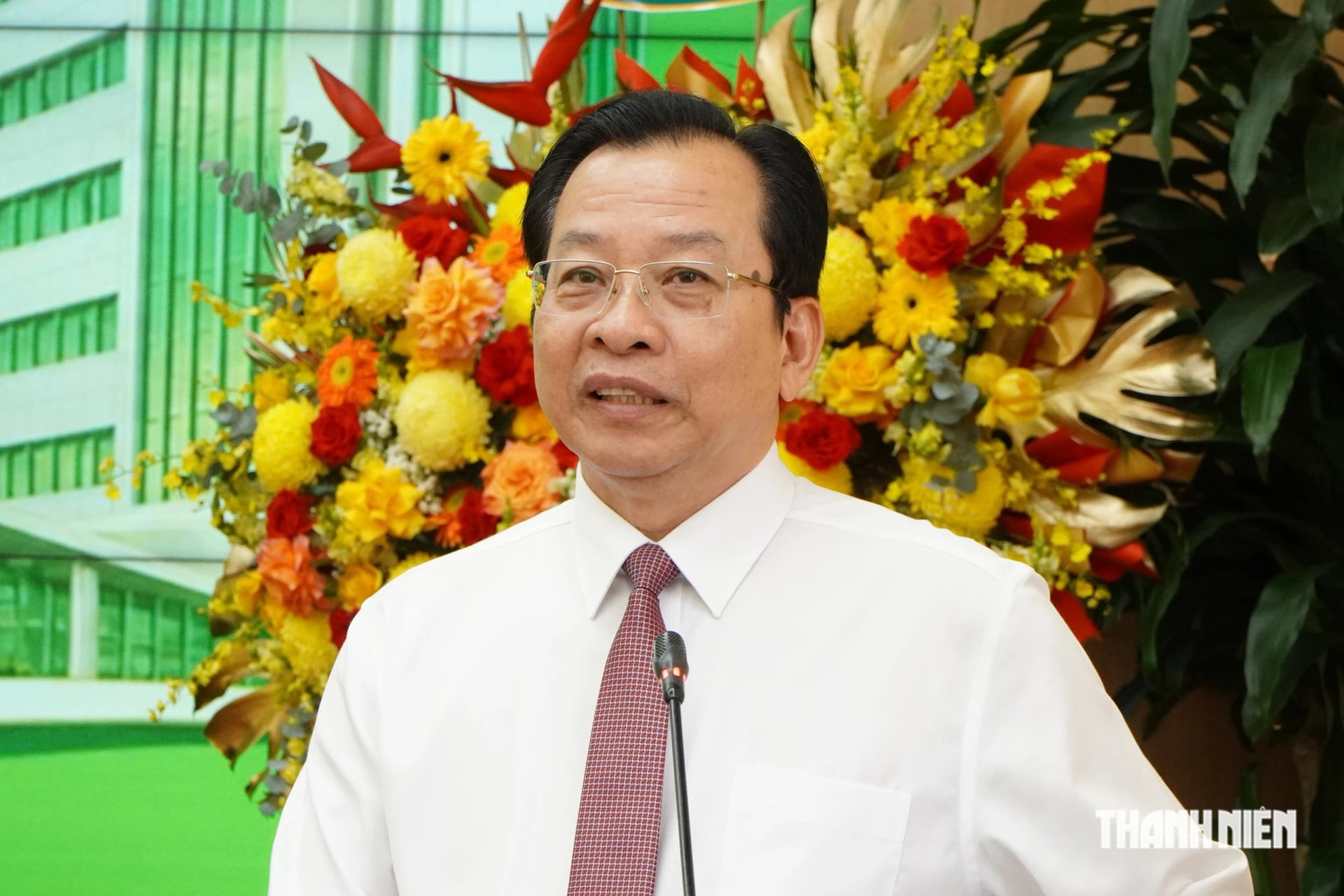
Binh called on officials in departments, wards and communes to change their approach, moving from management to supporting development and treating businesses' work as a shared responsibility. “What I expect from Can Tho authorities is not more resolutions, slogans or seminars, but practical support,” he said.
Vuong Quoc Nam, vice chairman of the Can Tho People's Committee, said the city aims to have about 45,000 businesses by 2030. To reach that goal, the city needs to improve its policies and mechanisms and the way officials carry out their duties. This includes helping businesses with land, premises, capital, workers, science and technology, and product markets.
Regarding Trung An's project, Vuong Quoc Nam said it was receiving close attention but still faced problems with a straw-processing plant. Departments are continuing to assess and handle the project. He also reminded them to review their own work: when difficulties arise, they should give businesses clear guidance and answers. He said this would help entrepreneurs maintain their interest in their work.
Sources: Thanh Niên