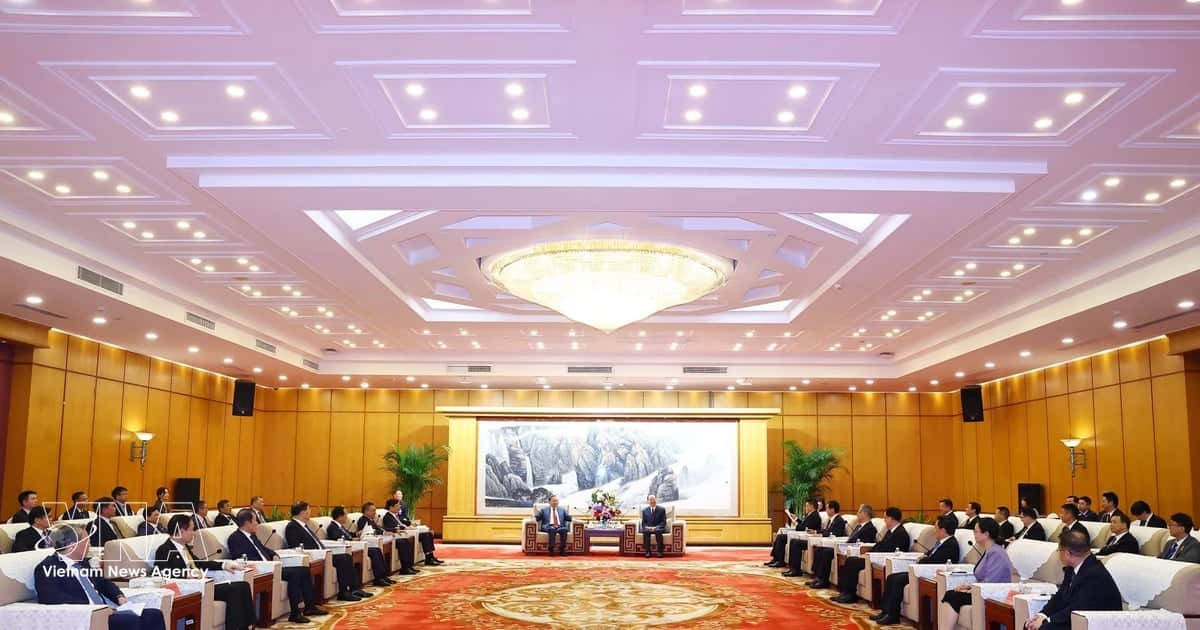
Vietnam and Japan are expanding semiconductor cooperation through joint research, workforce training and the commercialisation of chips designed by Vietnamese companies. These efforts are creating opportunities to attract high-tech investment, promote innovation and deepen Vietnam’s participation in global supply chains in line with Resolution No. 57-NQ/TW.
From laboratories to the market
The two countries are implementing five semiconductor research projects involving leading universities, with funding agreements signed in July. The projects cover three-dimensional integrated circuits, advanced semiconductor materials, secure artificial intelligence chips and power electronic components.
According to Assoc. Prof. Dr. Le Duc Anh of the University of Tokyo, over approximately 42 months participants will gain experience in experimental design, prototype fabrication, measurement and reliability assessment while developing intellectual property. The projects also offer joint doctoral supervision, shared facilities and long-term research teams.
Prof. Pham Nam Hai of the Tokyo University of Science is working with Vietnamese universities on semiconductor research for edge AI, which processes data directly on devices. The cooperation covers materials, memory, chip design and software. He is also involved in a Japanese Government-funded programme to train 250 Vietnamese doctoral students, with more than 10 Japanese professors.
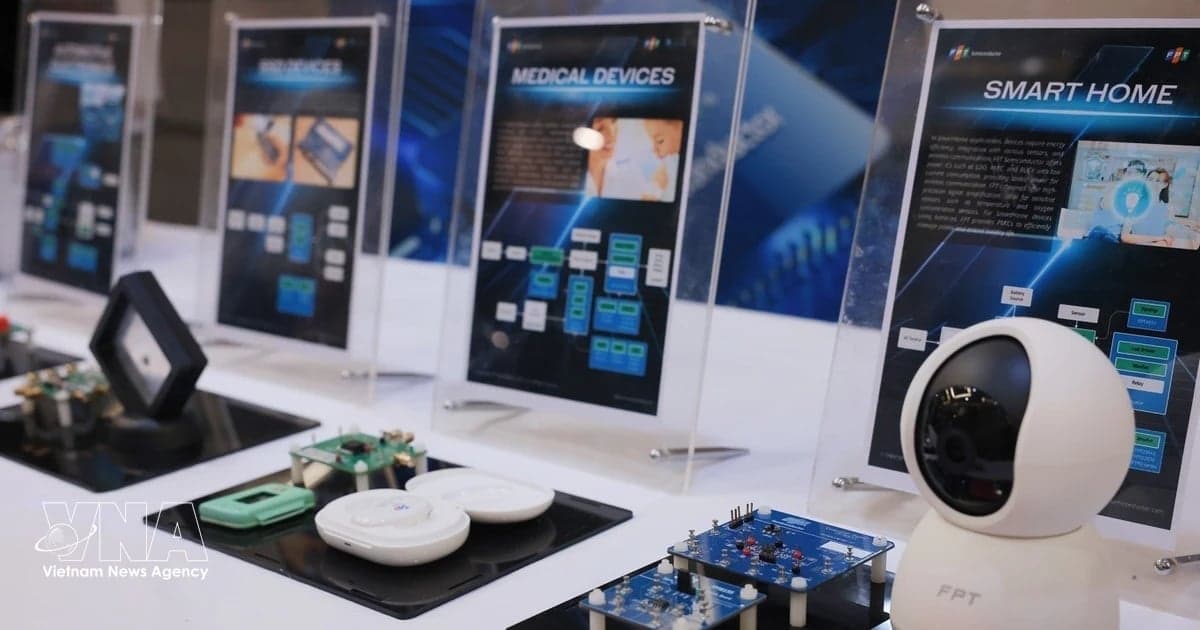
In late 2025, FPT delivered its first commercial shipment of Vietnamese-designed chips to a Japanese customer through Restar. The power management chips for multifunction printers underwent electrical performance, stability and reliability assessments and real-world device testing. The FPT-Restar agreement targets distribution of 10 million chips across the Asia-Pacific region over three years. This is a market development target, not an order specifically for Japan.
Segments that can attract investment
Japan is prioritising economic security and supply chain resilience while using its strengths in materials, manufacturing equipment, measurement and inspection. Power management chips, microcontrollers, sensors and industrial chips offer more accessible markets for Vietnamese businesses. Advanced packaging, testing and reliability assessment are also promising areas.
Viettel’s meetings with Nikon and Tokyo Electron reflect efforts to find partners for domestic manufacturing capabilities. Semiconductor manufacturing requires coordinated control of hundreds of processes, equipment maintenance, higher production yields, stable electricity, ultra-pure water, specialised materials and skilled engineers. Vietnam should gradually master equipment operation, calibration, maintenance and production-line integration before developing components, control software and supporting systems.
Turning Resolution No. 57-NQ/TW into practical cooperation
The Politburo’s Resolution No. 57-NQ/TW dated December 22, 2024 identifies businesses as the main driving force, scientists as the key factor and the State as the guiding force in science and technology development, innovation and national digital transformation. Hai proposed a three-tier model in which universities handle education and fundamental research, leading institutes develop core technologies and businesses commercialise research results.
Sustainable cooperation with Japan requires focused investment in key laboratories, suitable financial mechanisms and stable research funding. Vietnamese experts in Japan can help with technology selection, training and partner connections, provided they have suitable research conditions, remuneration, autonomy and projects that support long-term participation.
The prospects for bilateral cooperation lie in a continuous cycle from research and training to production and commercialisation. Strong research teams, products with established customers and businesses able to ensure supply would give Vietnam a stronger basis for attracting high-tech investment and strengthening its position in global semiconductor supply chains.
Sources: VietnamPlus / Vietnam News Agency