On Saturday, the government sought National Assembly approval for three expressway projects in the northern mountainous region and Central Highlands. Their preliminary combined investment is estimated at roughly VND162 trillion (US$6.3 billion).
The National Assembly's Economic and Financial Committee endorsed the need for the projects. However, the legislative body urged restraint in applying the special provisions proposed by the government, particularly the direct appointment of contractors without competitive bidding.
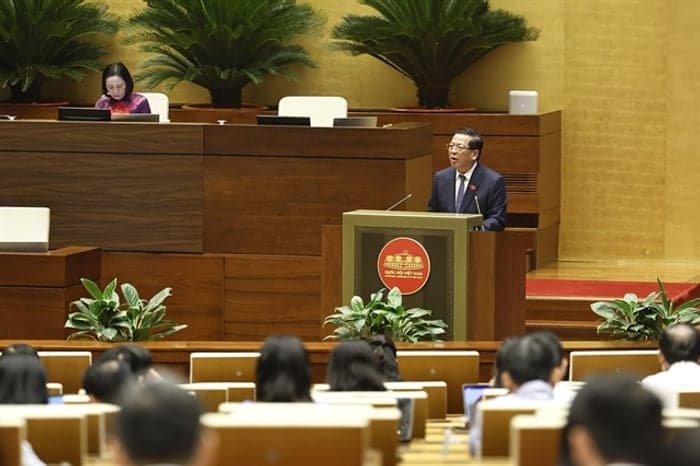
Presenting the proposal, Minister of Construction Tran Hong Minh said the projects were needed to meet growing transport demand and progressively complete the national expressway network set out in the master plan.
The routes would also help narrow regional development disparities and reduce poverty among ethnic minority communities, he said.
The Moc Chau-Son La-Dien Bien and Bao Ha-Lai Chau expressways would serve the northwest, while the Quang Ngai-Kon Tum expressway would connect the central coast with the Central Highlands.
The three routes would have a combined length of about 430.5 km, with four lanes and design speeds of between 80 and 100 km per hour.
Preparatory work would take place in 2026-2027. Compensation, resettlement and construction would begin in 2027. The expressways are expected to be largely completed in 2030 and opened to traffic in 2031. The work would be divided into 14 component projects.
The government has proposed financing the projects through public investment. The central budget would provide about VND158 trillion ($6.2 billion).
The remaining VND4 trillion ($158 million) would come from the budgets of Lai Chau and Quang Ngai, the two provinces designated to manage sections of the construction. The money would cover roughly half of the compensation and resettlement costs in their localities.
Minh said the government planned to allocate more than VND119 trillion ($4.7 billion) from the central budget to the projects over 2026-2030. He said that would be sufficient to substantially complete them within that timeframe.
The government also asked the National Assembly to authorise special provisions for the projects, similar to those approved for other nationally important projects. These would allow greater flexibility in investment policy and planning adjustments, compensation and resettlement, and the selection of contractors.
Phan Van Mai, chairman of the National Assembly's Economic and Financial Committee, said the committee agreed with the government's assessment that the projects were necessary.
However, the committee chairman recommended that the government apply the special provisions cautiously, set clear limits on their scope and duration, and establish clear lines of accountability.
The provisions should be applied transparently, he said, without creating legal loopholes, causing losses and waste, or infringing on citizens' legitimate rights and interests.
The legislator also called for a careful review of the proposal to appoint contractors directly. Contract packages open to competition should be awarded through competitive bidding as required by law, to ensure fair competition and efficient use of state funds.
Direct appointment should be confined to exceptional cases in which it is genuinely necessary and fully compliant with the law, he said.
Sources: Viet Nam News