Fuel and electricity prices fell in the final months of the year, but airfares for Vietnam's Dinh Mui 2027 Tet holiday have not cooled. On some routes from Ho Chi Minh City to central and northern provinces, tickets have risen compared with late October.
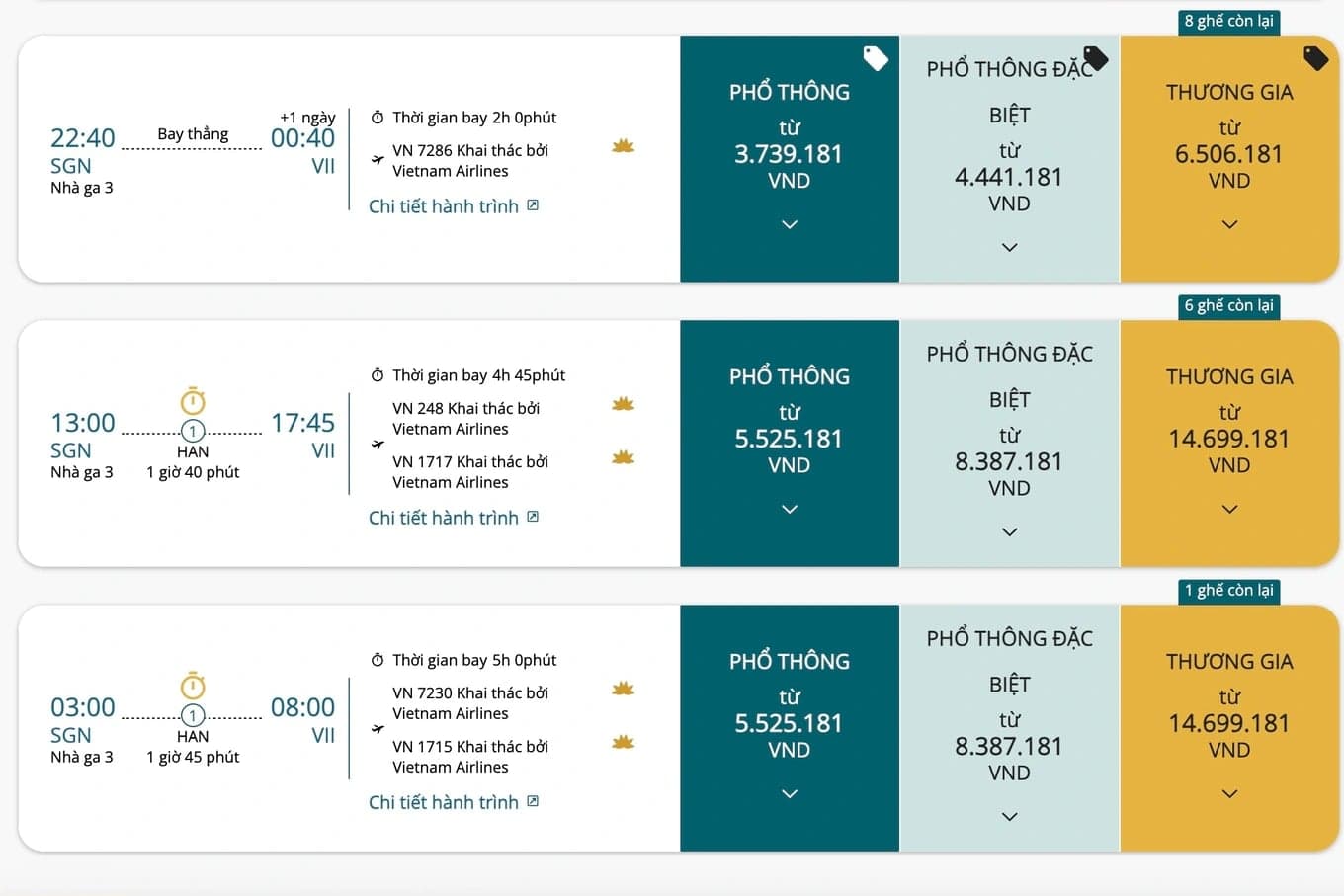
Diem, an office worker in Xuan Hoa Ward in Ho Chi Minh City, is looking for tickets for her family of four to travel to their relatives in Nghe An for Tet. She said that when she contacted an agent, many Vietnam Airlines morning flights on February 4, 2027, the 28th day of the last lunar month, were already sold out. A 1 p.m. flight was available at nearly VND5 million per ticket, while a night flight cost about VND3.7 million. Taxes and fees were included.
The family would have to spend about VND40 million on round-trip tickets. Diem said the price quoted by the agent on November 9 was higher than in late October, when the most expensive Vietnam Airlines economy ticket was VND4 million.
Fares on many Tet routes rise from late October
A survey by Dân trí reporters on ticket-booking apps on the afternoon of November 9 found that fares on many flights from Ho Chi Minh City to destinations across Vietnam remained high during the Tet peak period.
On the Ho Chi Minh City - Vinh route for the 28th day of Tet, the cheapest one-way Vietjet ticket was about VND3.5 million. Vietnam Airlines tickets ranged from VND3.6 million to VND4.9 million depending on the departure time.
In the October 27 survey, the lowest Vietjet fare on the Ho Chi Minh City - Vinh and Ho Chi Minh City - Thanh Hoa routes was about VND3.3 million one way. Vietnam Airlines tickets then ranged from VND3.7 million to VND4 million.
The Ho Chi Minh City - Hanoi route has kept the higher fare level recorded since late October. Vietjet and Sun PhuQuoc Airways tickets start at about VND3.1 million, while Vietnam Airlines tickets start at VND3.5 million one way.
Fares on the Ho Chi Minh City - Hue route vary sharply by departure time. Vietnam Airlines still had some late flights priced at about VND2.4 million to VND3.5 million. Morning and afternoon flights, however, cost up to VND4.6 million on Vietjet and VND5.2 million on Vietnam Airlines. Vietnam Airlines fares on the route were about VND3.6 million to VND3.7 million in the October 27 survey.
Tickets on the Ho Chi Minh City - Da Nang and Ho Chi Minh City - Nha Trang routes generally cost about VND1.8 million to VND2 million one way.
For Tet, Vietnam Airlines Group, which includes Vietnam Airlines, Pacific Airlines and Vasco, plans to offer nearly 3.7 million seats across its domestic and international network. That is an 11% increase from last year's Tet peak.
The first sales period covers the peak travel season from January 22 to February 20, 2027, corresponding to the 15th day of the last lunar month through the 15th day of the first lunar month.
On domestic routes, planned capacity for Hanoi - Ho Chi Minh City flights will rise 15.4%, while Ho Chi Minh City - Da Nang capacity will increase 7%. Capacity from Ho Chi Minh City to Hai Phong, Thanh Hoa, Vinh and Hue will rise 6-13% compared with Tet 2026.
Vietjet has meanwhile put 3.1 million tickets on sale early across its domestic and international network for the Tet peak period, 6% more than a year earlier. The airline said it would continue adjusting and adding flights according to actual demand.

Ministry of Construction orders checks of transport fares
On November 6, the Ministry of Construction sent a document to the road, maritime, inland-waterway and aviation authorities, the Vietnam Railways Authority and local Departments of Construction, calling for tighter management of transport fares.
The ministry said domestic fuel prices had generally fallen in recent pricing cycles. This provides a basis for controlling inflation, supporting production and business, and stabilizing people's lives.
The ministry ordered the agencies to implement Prime Minister's Official Telegram No. 70/CĐ-TTg dated October 15 and the conclusions in Government Office Notice No. 528/TB-VPCP issued the same day on price management during the final three months of the year.
The ministry specifically called for stronger checks on fare declarations, displayed prices and sales at the displayed prices. The focus is on transport businesses that raised fares but did not lower them after fuel input costs fell. Violations must be dealt with strictly.
“Transport fares must not rise when fuel prices rise and then remain unchanged when fuel prices fall,” the Ministry of Construction said.
Sources: Dân Trí