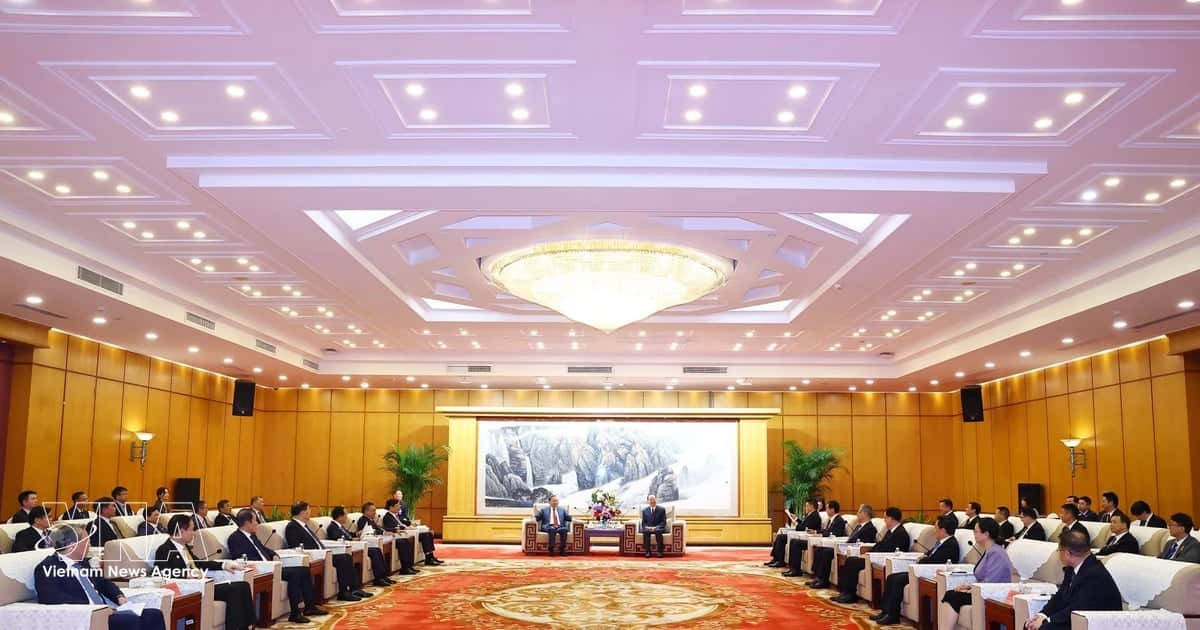
At a session of the second sitting of Vietnam's 16th National Assembly on November 12, deputy Le Cong Dinh from Tay Ninh Province raised the issue of commercializing scientific and technological research results.
The deputy said the prime minister had assigned 20 major tasks to 10 ministries and agencies and approved a list of 30 strategic technology products. Commercialization results, however, remain limited: the high-tech program has produced 47 products, while only 20 results from independent research tasks have been commercialized and applied in practice.
He asked Minister of Science and Technology Vu Hai Quan to explain the reasons and responsibility for the failure of many research results to become products and goods for the market.
Research does not always meet practical needs
The minister identified five main reasons why research commercialization in Vietnam remains limited.
The first is that many research results are not yet ready for production. In the past, most research tasks came from proposals by scientists. That approach supported creativity and discovery but did not always reflect practical needs.
Alongside researchers' initiatives, enterprises and the market therefore need to define specific problems and commission scientists to solve them.
As an example, the minister cited a trip to Vinh Long Province, where a local business asked for help handling the large amount of durian peel left after harvesting.
Each tonne of harvested durian leaves about 700 kilograms of peel. The business must pay additional costs to process this by-product and hopes science and technology can help.
The minister said durian peel could be studied as a raw material for organic fertilizer or for extracting valuable substances.
The example shows that research driven by a specific business need is more likely to find practical use.
The second reason is the difficulty of valuing research results. The economic value of a technology does not necessarily match the cost of developing it.
Some research is produced with limited funding but may generate substantial economic value. This makes it difficult to determine the value of intellectual property for transfer and commercialization.
The third reason is a lack of investment capital. Moving from research to commercialization requires substantial resources, while domestic venture funds and international financing in Vietnam remain limited.
Fourth, support policies have not been implemented in a coordinated way. This is especially true of research infrastructure, laboratories and facilities for technology testing.
When scientists have an idea, they need suitable laboratories and infrastructure to develop and test a product. Current support does not always meet that need.
The final reason cited by the minister is limited organizational capacity for commercialization. Cooperation among the state, universities and businesses has not yet produced the expected results.
Three groups of solutions
To address these obstacles, the Ministry of Science and Technology will focus on three groups of solutions to accelerate the commercialization of research results.
The first group is intended to improve the quality of the technology supply by creating more research tasks based on practical needs.
Research should rely not only on scientists' proposals but also on specific problems in production and business.
The second group addresses difficulties in valuing research results and intellectual property, which remain barriers to technology transfer.
The minister said he had instructed leaders of several departments and agencies to work directly with research institutes and universities that hold intellectual property and to test valuation methods for individual products.
Based on practical cases, the ministry will develop guidance to gradually ease the valuation and transfer of research results.
The third group is intended to strengthen organizations' ability to implement research results, creating conditions for their application and commercialization.
The minister said the ministry is gradually implementing all three groups of solutions to accelerate the commercialization of research products and direct science and technology toward economic development, production and business needs.
Sources: Dân Trí