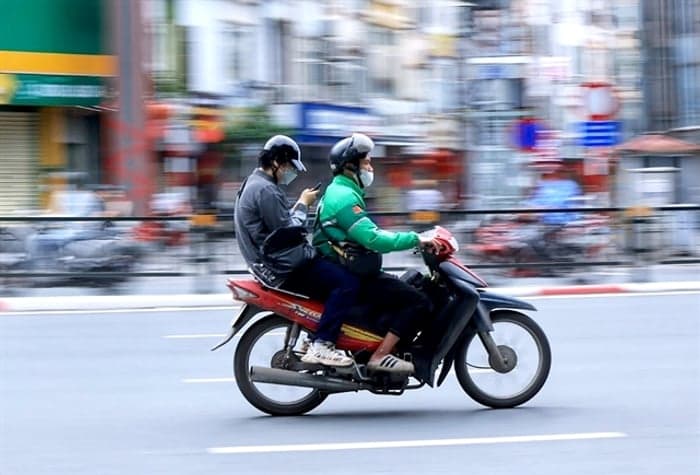
At 6am, after spending the whole night on the road, Hiếu returned to his rented apartment in Thanh Xuân Ward, Hà Nội. His shift began at 8pm the previous evening, timed to take advantage of Grab incentives that give drivers an extra VNĐ10,000 per night-time trip.
Driving offers more flexibility, but does not necessarily give drivers more control over their time. A September survey of 141 drivers by the HCM City Trade Union's Workers' Counselling and Support Centre found that 93.6 per cent relied on ride-hailing as their main income. A SocialLife Research Institute survey found that 64.3 per cent of 400 drivers chose ride-hailing for flexible hours, while only 15.5 per cent cited high earnings.
With a standard eight-hour day, monthly income would fall below the average living wage in major cities, VNĐ6.21 million compared with VNĐ7.5 million. To earn VNĐ9.3 million after expenses, drivers must work more than 11 hours a day and over 28 days a month. That is more than 103 hours of overtime a month, over 2.6 times the Labour Code limit.
Platforms assess acceptance rates, time online and customer ratings. Drivers can choose when to start, but cannot fully control how many hours they need to reach their desired income. Too many rejected rides can mean fewer orders or account suspension.
A 2025 University of Queensland study described how GrabBike drivers in Hà Nội adapt to the platform algorithm through a strategy called 'rèn áp'. The tactics require long hours and push drivers towards exhaustion without changing the balance of power.
Independent partners
In September, some Grab drivers called for a collective app shutdown over deductions and the company's flexible app-fee system. Grab later announced a VNĐ2.95 trillion package covering fee reductions, driver refunds, incentives and passenger promotions. From November 10, Grab will cap combined platform and app-use fees at 32 per cent of the passenger's total payment, excluding taxes and third-party charges, and plans to refund VNĐ3.9 billion for erroneous deductions.
Drivers remain sceptical. They have repeatedly opposed fees between 2017 and 2024, but changes have provided only short-term relief. They have few formal channels to negotiate collectively with platforms.
Employment status and insurance
Grab and other platforms classify drivers as independent partners rather than formal employees. Drivers therefore lack some benefits and protections while bearing the risks of their work. Article 13 of Viet Nam's 2019 Labour Code lists work performance, remuneration, management and supervision as indicators of an employment relationship.
A SocialLife Research Institute survey found that 82.4 per cent of drivers did not participate in social insurance, 87.3 per cent lacked unemployment insurance, more than half had no accident insurance, and 33.1 per cent had no health insurance. Viet Nam has not yet established specific guidance for determining the employment status of platform workers. In October, the Government proposed extending mandatory social insurance to platform workers, including ride-hailing drivers.
Sources: Viet Nam News