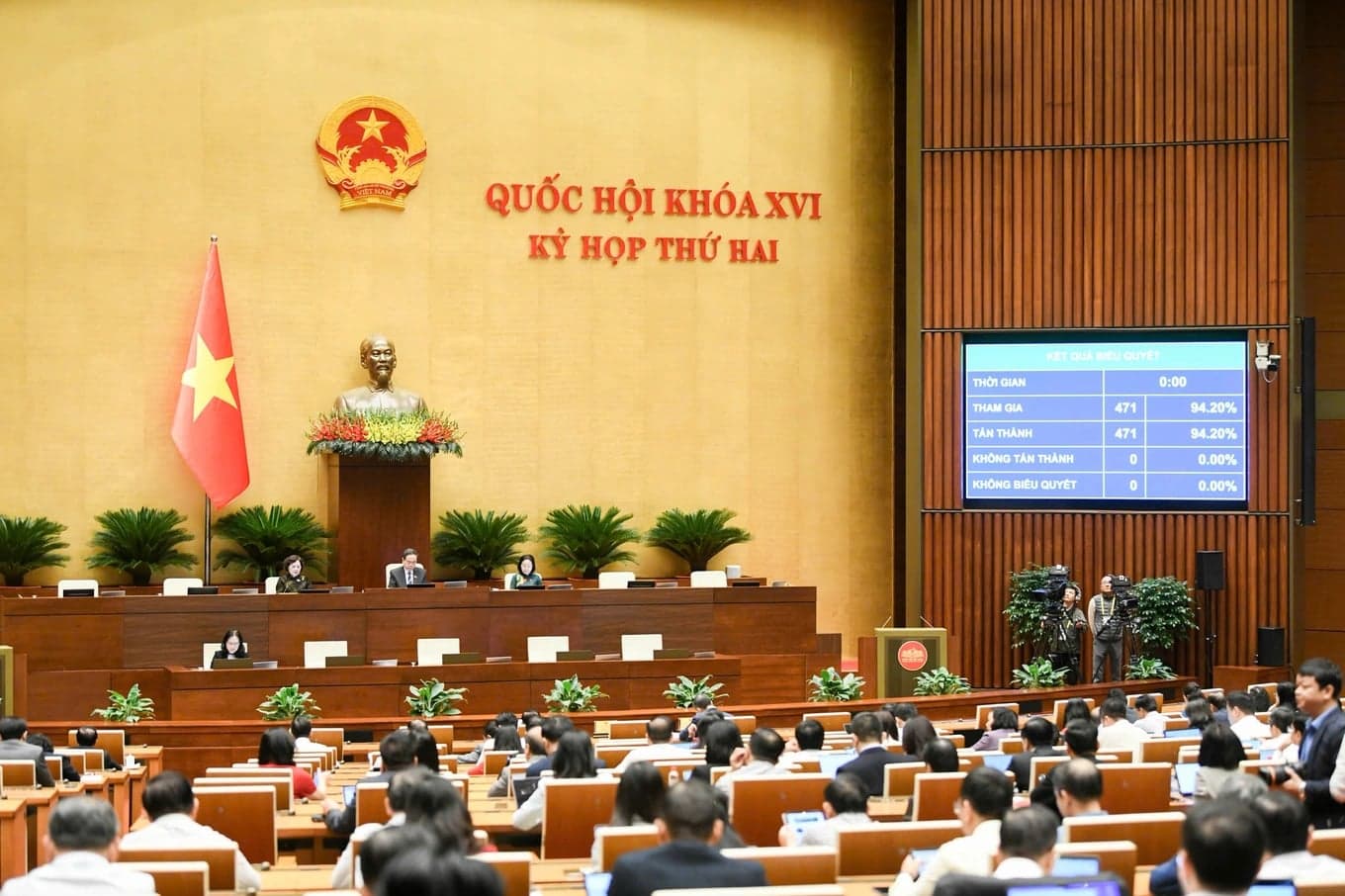
Vietnam's National Assembly approved the government's 2027 budget proposal. Accumulated wage-reform funds may be used for salaries, allowances and income, and to adjust pensions, social insurance payments, monthly benefits and preferential allowances for people who have rendered services to the country.
The provisions are included in the resolution on the 2027 state budget. All National Assembly deputies present voted for it.
Local budget surpluses to fund development
2027 state budget revenue will exceed 3.3 quadrillion dong, including more than 1.77 quadrillion dong for the central budget and over 1.5 quadrillion dong for local budgets. Total spending will exceed 4 quadrillion dong: central spending will top 2.3 quadrillion dong, including 408.747 trillion dong for balancing local budgets and 311.363 trillion dong in targeted transfers, while local spending will exceed 1.7 quadrillion dong.
The deficit will be 739.597 trillion dong, or 4.5% of GDP. Total state budget borrowing will exceed 1.27 quadrillion dong.
Hanoi and Ho Chi Minh City will receive 25% of corporate and personal income tax, while 75% will go to the central budget. Quang Ninh and Dong Nai will receive 65%, Hai Phong and Da Nang 75%, and other provinces and cities will retain 80% and transfer 20% to the central budget.
When local revenue exceeds spending, the difference will fund local development investment, especially major projects. The National Assembly asked authorities to manage the 2026 budget strictly and flexibly, maximize revenue and control spending. The government will add to the central wage-reform fund using savings from the 2026 regular spending of central agencies.
Wider use of accumulated wage-reform funds
Local savings from regular spending may fund central social policies issued in 2026 where local budgets are responsible for the costs. The remainder will fund major infrastructure projects, and unused money may be carried over to 2027.
Wage-reform savings will fund salaries, allowances and income, pension adjustments, social insurance payments, monthly benefits, preferential allowances and staff reductions. Central and local authorities must create funding sources for the reform, while certain revenues remain excluded from calculations of local revenue growth earmarked for wage reform.
Unused central and local wage-reform funds may be used more broadly for pensions, social payments, benefits and staff reductions. Funds allocated to agencies, organizations or local budgets and unused by year-end, including 2026 funds, must be returned to the central accumulated fund and cannot be used for other purposes.
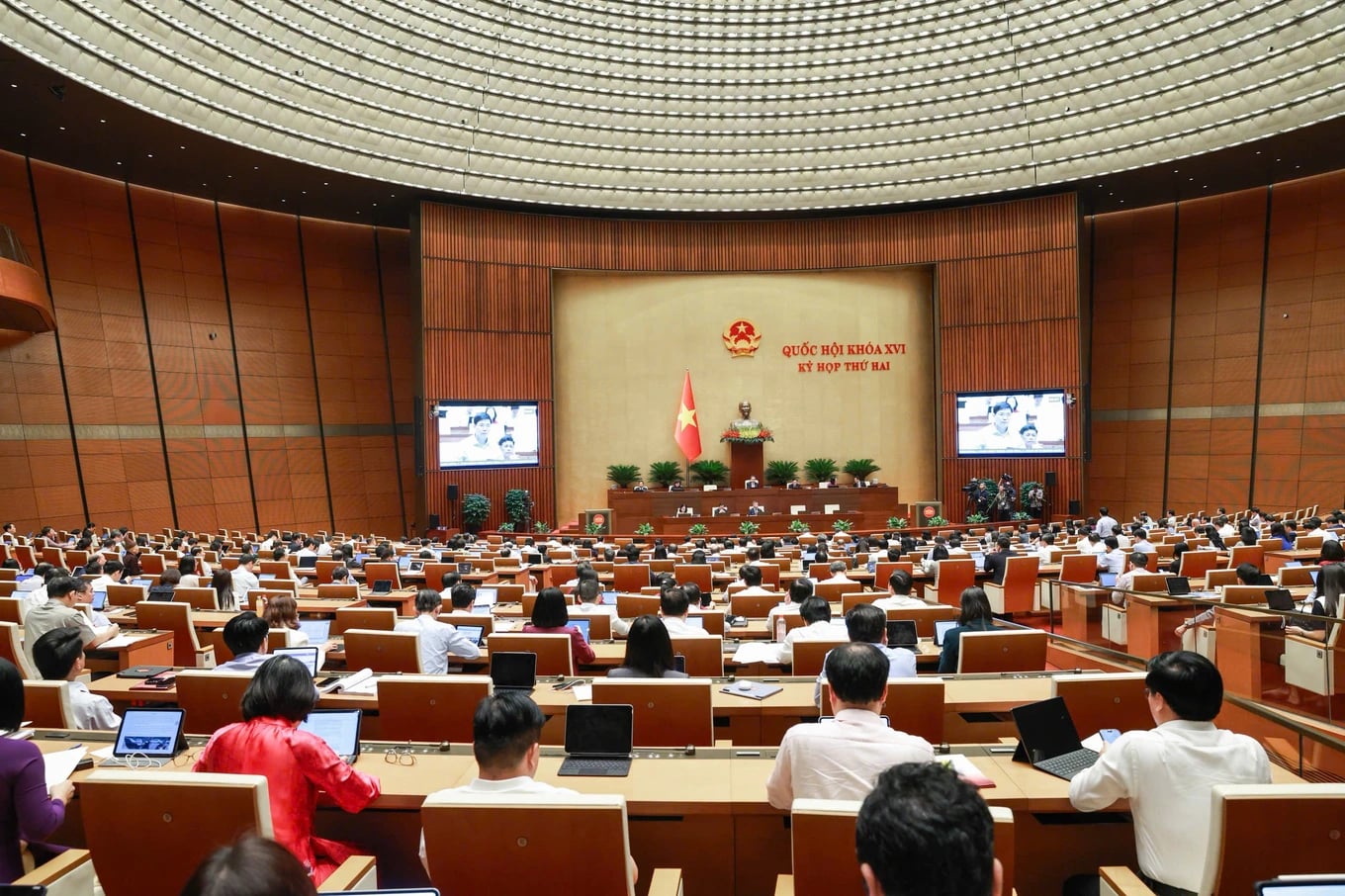
The National Assembly asked the government to complete tax and revenue legislation, make it transparent and effective, support fair competition and promote socio-economic growth. 2027 state revenue is targeted to rise about 9.1% from the 2026 outturn.
The resolution calls for action against hidden revenue, transfer pricing, tax evasion and tax arrears, and a broader tax base covering e-commerce, digital-platform businesses and mineral extraction. Tax incentives may not exceed legal limits, and revenue assignments may not differ from the law except where approved by competent authorities.
Sources: Dân Trí