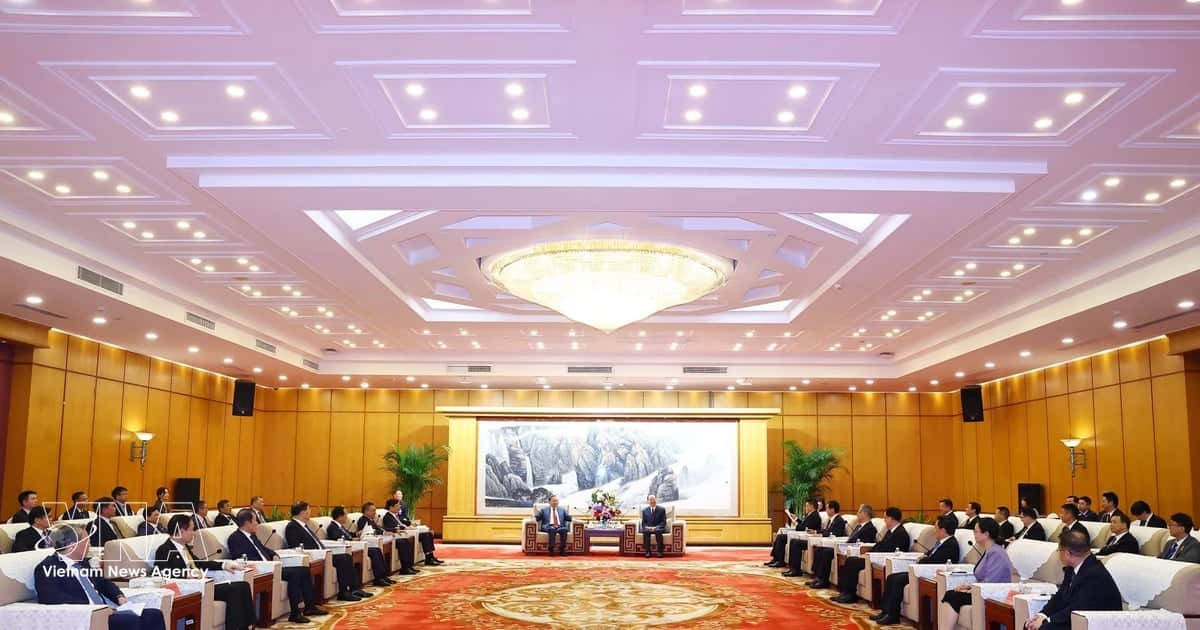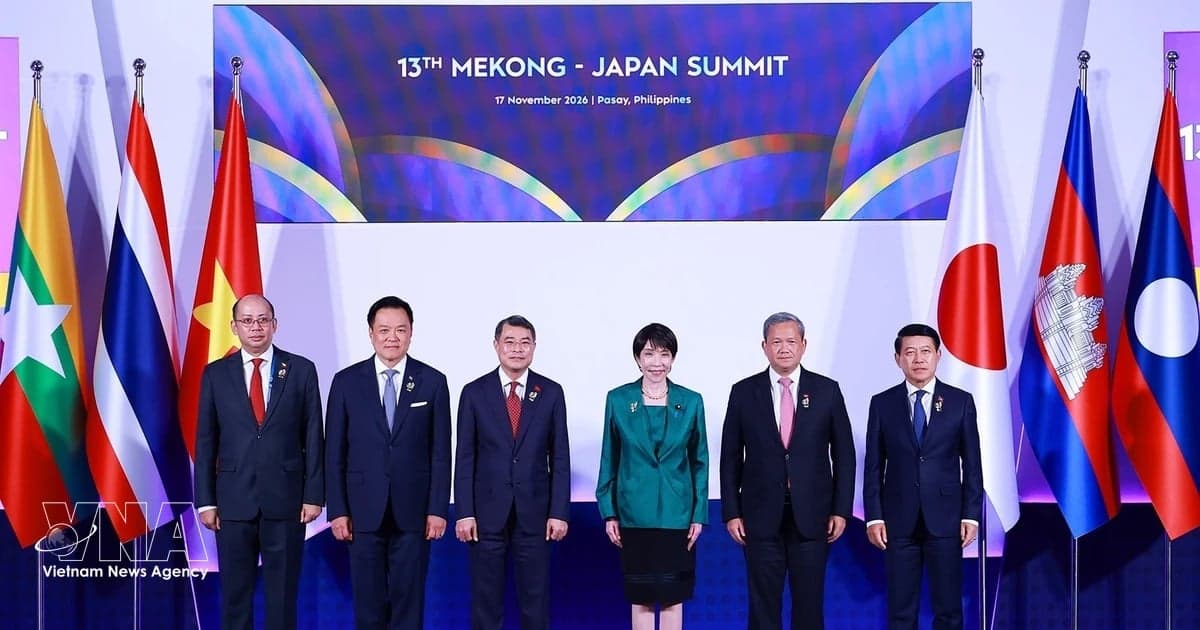
Vietnam will continue working with member countries to build a trusted, resilient and innovative Mekong-Japan partnership, Prime Minister Le Minh Hung said at the 13th Mekong-Japan Summit in Manila, the Philippines. He said the partnership would also contribute to deeper ASEAN-Japan Comprehensive Strategic Partnership.
The summit was held within the framework of the 49th ASEAN Summit and related meetings. It was co-chaired by Hung and Japanese Prime Minister Sanae Takaichi, with the participation of the Prime Ministers of Cambodia, Laos and Thailand and a representative of Myanmar.
Hung said the resumption of the summit after a six-year hiatus showed the sides' determination to elevate their partnership and help build a strong and resilient ASEAN Community.
Against a backdrop of unpredictable changes, Hung proposed three directions for future cooperation.
First, he called for Mekong-Japan cooperation to take a leading role in shaping an East Asian Economic Corridor. This requires stronger connectivity in infrastructure, logistics, production networks and supply chains, as well as greater production capacity and innovation.
Hung proposed launching a Mekong-Japan Smart Supply Chain Initiative to strengthen regional supply chains through digital connectivity and the use of artificial intelligence.
Second, he called for expanded cooperation in addressing non-traditional security challenges. He listed sustainable water resource management, disaster risk reduction, the energy transition and cybercrime prevention as priorities.
He urged Japan to expand cooperation with the Mekong River Commission and support the use of artificial intelligence and advanced technologies in disaster forecasting and response. Hung also voiced support for Japan's initiative to establish a dialogue channel on combating transnational crime.
Third, he proposed renewing coordination mechanisms and involving different stakeholders. Mekong countries and Japan should jointly identify long-term priorities, including through a new Mekong-Japan Economic Cooperation Strategy, while expanding cooperation in research, new technologies, digital transformation and innovation and strengthening links between businesses and localities.
Participants welcomed the Vietnamese Prime Minister's proposals. They adopted the Statement of the Co-Chairs of the 13th Mekong-Japan Summit, reaffirming their intention to deepen the partnership through co-creation, stronger connectivity and innovation and greater resilience, with a view to sustainable and inclusive development and shared prosperity across the subregion.
The summit identified priorities including economic connectivity, greater production capacity, supply chain resilience, digital transformation, the clean energy transition, sustainable water resource management, human resources development and the fight against transnational crime. The leaders also called for greater business engagement and stronger links between Mekong-Japan and ASEAN-Japan cooperation.
At the end of the meeting, Hung thanked Japan and the Mekong countries for close coordination that enabled Vietnam to serve as co-chair of Mekong-Japan cooperation in 2025 and 2026.
He formally handed over the co-chairmanship for 2027 to Cambodia and expressed confidence that the country would successfully take on the role and promote practical and effective cooperation.
Established in 2008, Mekong-Japan cooperation brings together the five Mekong countries and Japan.
Sources: VietnamPlus / Vietnam News Agency