Lawmakers called for targeted investment in cultural industries and sweeping administrative reforms in culture, sports and tourism as the National Assembly debated a new cultural industries law and amendments to seven existing laws.
The second session of the 16th National Assembly focused on priority sectors, private investment, intellectual property protection and removing regulatory obstacles to business and cultural development.
Deputies supported a legal framework for the Party's cultural development policies and urged the Government to make new regulations practical, consistent and free of unnecessary administrative burdens.
Deputy Vuong Quoc Thang of Da Nang City said the draft law marked a shift from preserving cultural heritage to turning cultural values into economic resources through creativity, innovation and commercialisation.
He called for stronger mechanisms to help creators and businesses commercialise products, particularly in the digital environment.
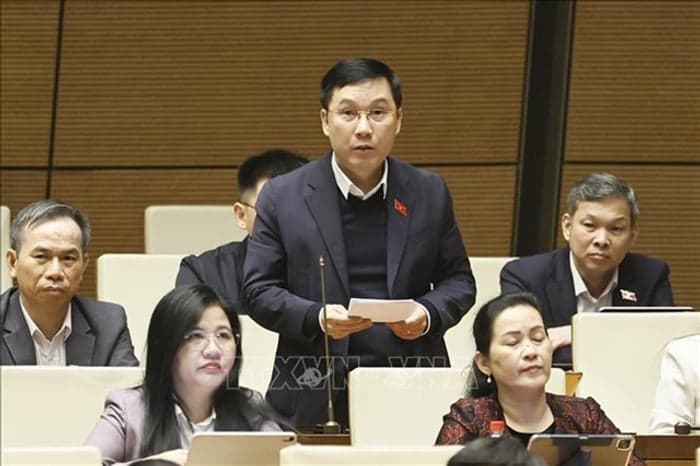
Deputy Le Hoang Anh of Gia Lai Province said the draft covered 10 sectors without identifying priorities. He said prioritising every sector meant prioritising none, since none of its 37 articles named key industries.
He proposed choosing no more than three or four priority sectors every five years and reviewing the list regularly. Initial priorities, he said, should include video games and digital content, cinema and television, music, performing arts and events.
Anh questioned the investment plan, saying more than VND9 trillion would be spent on infrastructure for cultural industry clusters and zones while relatively little private investment was expected.
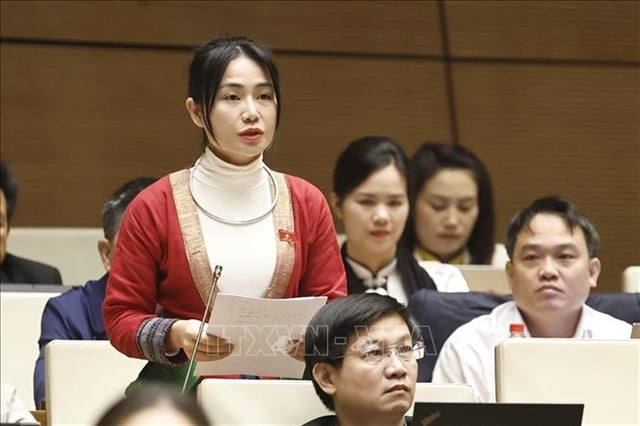
He warned that overlapping tax and investment incentives without safeguards could allow property developers to disguise real estate projects as cultural developments. He called for stricter eligibility criteria and centralised assessment of tax incentives.
Deputy Trinh Xuan An of Dong Nai City said the goal of cultural industries contributing 7 per cent of GDP by 2030 required clearer definitions and focused policies. Traditional handicrafts, he said, could create economic value through craftsmanship, design and cultural identity without modern technology or formal intellectual property registration.
He urged the drafting agency to clarify the relationship between the proposed law and existing sector-specific legislation.
Lawmakers called for clearer responsibilities and simpler procedures in amendments to seven laws covering culture, sports, tourism, libraries, cinema, advertising and the press.
Deputy Nguyen Dang An of Lang Son Province said tourist area assessments should be based on scale and complexity rather than the number of communes. He also called for a clearer separation of heritage assessments and construction procedures.
Ho Chi Minh City deputy Vo Ngoc Thanh Truc urged stronger legal protection and social insurance coverage for more than 49,000 tour guides, saying better working conditions would improve tourism quality.
Deputy Ly Thi Lan of Tuyen Quang Province proposed guaranteed State funding for films serving political tasks and allowing tour guides to renew licences after meeting professional requirements without a mandatory 12-month wait.
Deputy Nguyen Thi Kim Thoa of Vinh Long Province called for more films promoting Vietnamese culture, family values and children, along with stricter age controls on content recommended by digital platforms.
Deputy Nguyen Thi Yen Nhi, also from Vinh Long Province, urged stronger school physical education and investment in sports facilities to address declining physical activity and rising obesity among students.
Deputy Nguyen Vu Trung of Ho Chi Minh City proposed fully digitising advertising procedures and tightening safety rules for outdoor advertising structures and electronic screens.
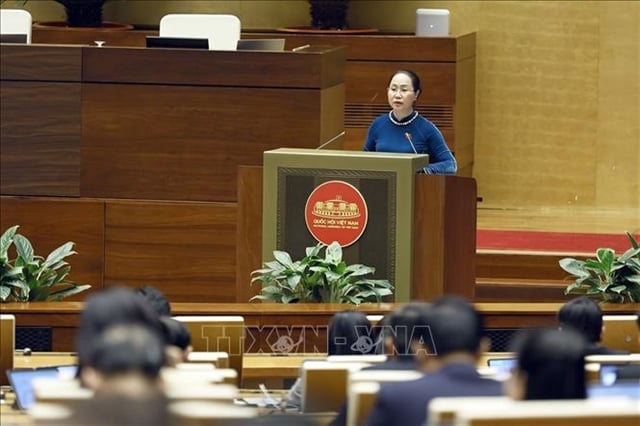
Minister of Culture, Sports and Tourism Lam Thi Phuong Thanh said the bill would establish a framework covering 10 sectors, with the Government selecting priorities for each period.
Investment incentives would focus on competitive products with distinctive Vietnamese cultural identity, while free creative software and digital platforms would expand access to creative tools and protect intellectual property, she said.
The amendments to seven laws aim to accelerate decentralisation, clarify central and local responsibilities, simplify administrative procedures and remove unnecessary business conditions.
The Government would avoid additional red tape, the minister said. Broader reforms would be considered in future revisions of sector-specific laws, and a comprehensive revision of the Law on Tourism is scheduled for 2027.
National Assembly Vice President Nguyen Thi Thanh called for clearer provisions on decentralisation, digital transformation and administrative reform and urged lawmakers to avoid overlapping regulations in cinema, advertising and the press.
She said urgent changes should be included in the current amendments, while broader reforms should be prepared for future legislative programmes, including in 2027.
Sources: Viet Nam News