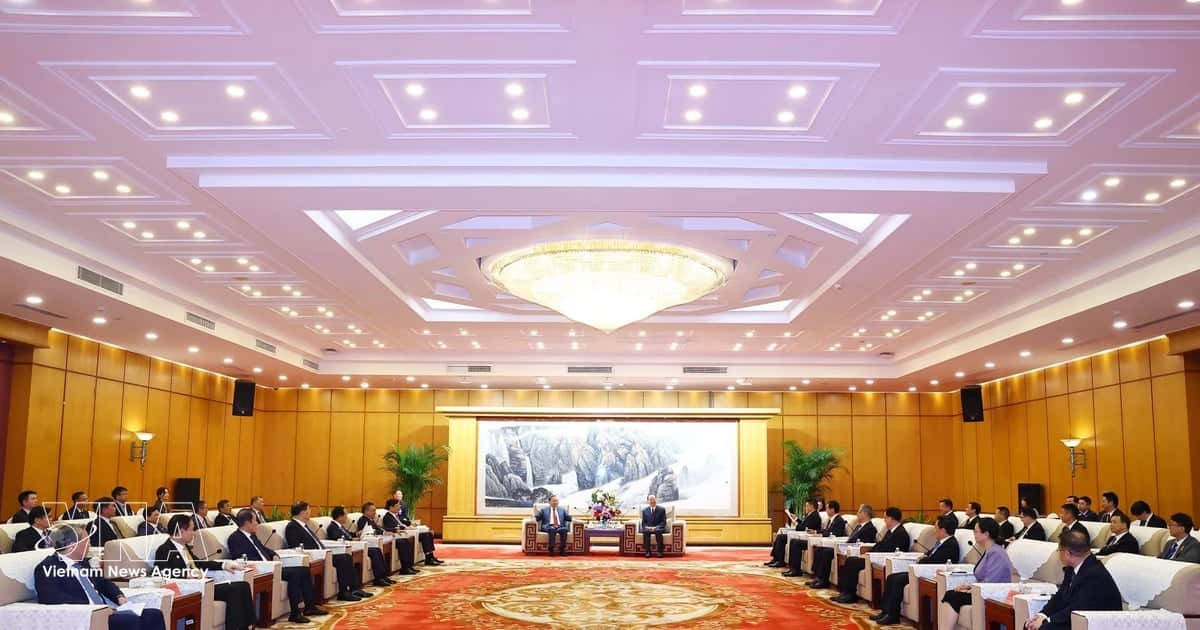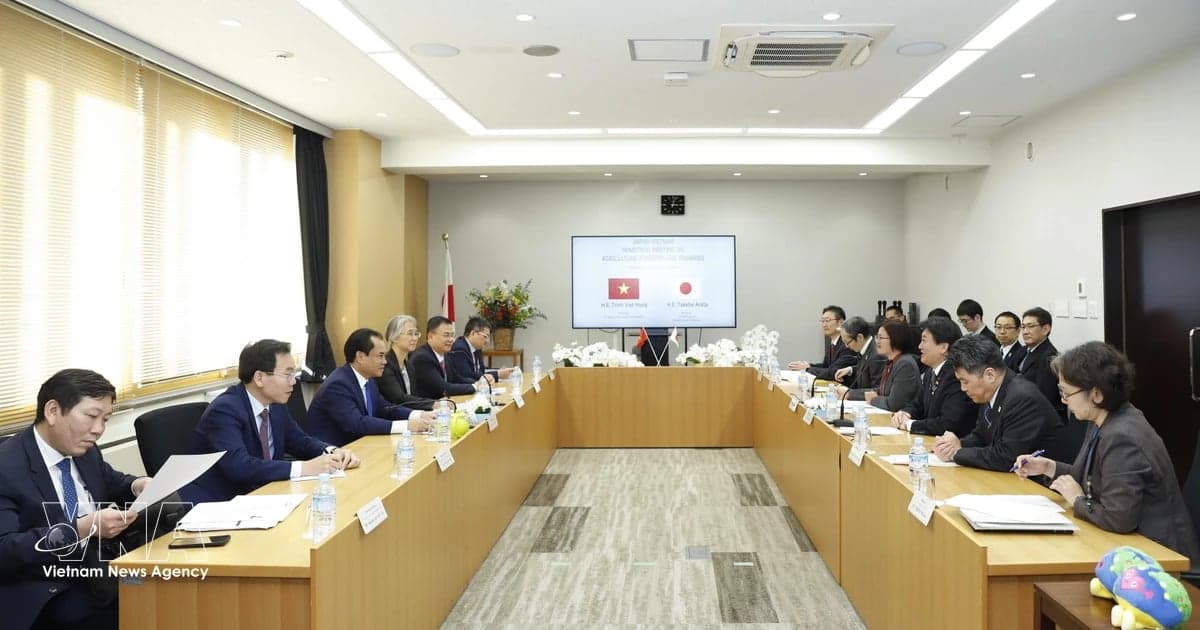
Vietnamese Minister of Agriculture and Environment Trinh Viet Hung and Japanese Minister of the Environment Sasagawa Hiroyoshi witnessed the exchange of a memorandum on cooperation between the two ministries in Tokyo on November 9.
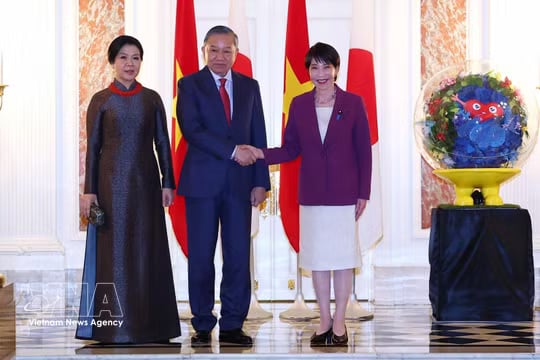
The exchange took place during General Secretary of the Communist Party of Vietnam Central Committee and President To Lam’s official visit to Japan from November 8 to 11.
The memorandum is expected to expand cooperation in environmental technology, carbon markets and the circular economy, while supporting Vietnam’s green transition.
It sets eight priority areas: emissions reduction and climate-change adaptation; low-carbon technology, carbon markets and the Joint Crediting Mechanism under Article 6 of the Paris Agreement; waste management, recycling and circular-economy development; and control of water, air and plastic pollution. The cooperation also covers monitoring and early warning, environmental planning, sustainable urban development, biodiversity conservation and natural-resource management.
To implement these priorities, the two ministries will hold policy dialogues, exchange experts, train human resources, conduct feasibility studies and transfer technology. The aim is to involve companies and research institutes from both countries in environmental projects, especially where Vietnam needs capital and technology.
In Tokyo, Hung held talks with Sasagawa and co-chaired the Vietnam-Japan Environmental Policy Dialogue with Japanese State Minister of the Environment Azemoto Shogo. Both sides noted progress in the Joint Crediting Mechanism, greenhouse-gas inventories, waste treatment, waste-to-energy and e-waste management. They agreed to promote carbon markets, the circular economy and pollution control.
Carbon-credit projects in renewable energy, waste treatment and low-emission agriculture were identified as a priority. The sides also discussed wider use of artificial intelligence and remote sensing for environmental monitoring, management and sustainable production.
Hung asked Japan to transfer technology for treating rice straw after harvest. Vietnam generates about 61 million tonnes of rice straw a year, with nearly half coming from the Mekong Delta. Technology to recover energy and manage ash and slag from combustion could turn the waste stream into a resource, reduce pollution and increase the economic value of farming.
The cooperation also extends to the marine economy. At the Vietnam-Japan Marine Policy Dialogue in Tokyo, Hung and Japanese State Minister for Ocean Policy Furukawa Toshiharu discussed managing and using marine resources and developing the ocean economy sustainably.
The two sides signed a memorandum on marine and ocean policy covering marine spatial planning and governance, scientific research, ecosystem conservation, environmental protection and sustainable resource use. For 2026–2030, Vietnam proposed joint work on ocean databases and digital maps, artificial intelligence for marine management, deep-sea surveys, marine-resource and blue-carbon research, ocean-waste control and oil-spill response.
Offshore renewable-energy surveys and business links in offshore wind were another focus. Japan brings technology and management experience, while Vietnam needs new power sources to support growth and its energy transition.
On agriculture, the Vietnamese ministry’s delegation met authorities and companies in Yamanashi Prefecture to promote high-tech farming and expand agricultural trade. In talks with Governor Nagasaki Kotaro, they agreed to boost trade, plant-variety research, technology transfer and training.
A key result was an agreement to prioritise completing market-access procedures for Vietnamese pomelos and Japanese grapes, targeting mutual access for the 2027 crop. Vietnamese passion fruit and Japanese peaches are next in line, which could diversify supply and widen market access for agribusinesses.
Vietnam also suggested that Yamanashi share know-how in high-tech greenhouses, farming on sloping and acid-sulfate soils, processing and preservation, watershed-forest management and disaster prevention. The cooperation is expected to raise yields and quality and increase the added value of Vietnamese agricultural products.
About 60 officials and company representatives attended the Vietnam-Yamanashi agro-forestry-fishery trade conference in Yamanashi. Participants studied import rules, shared market information and met potential partners. Beyond grapes, peaches, green-skinned pomelo and passion fruit, companies showed interest in coffee, rice, matcha and higher-value farm products.
Sources: VietnamPlus / Vietnam News Agency