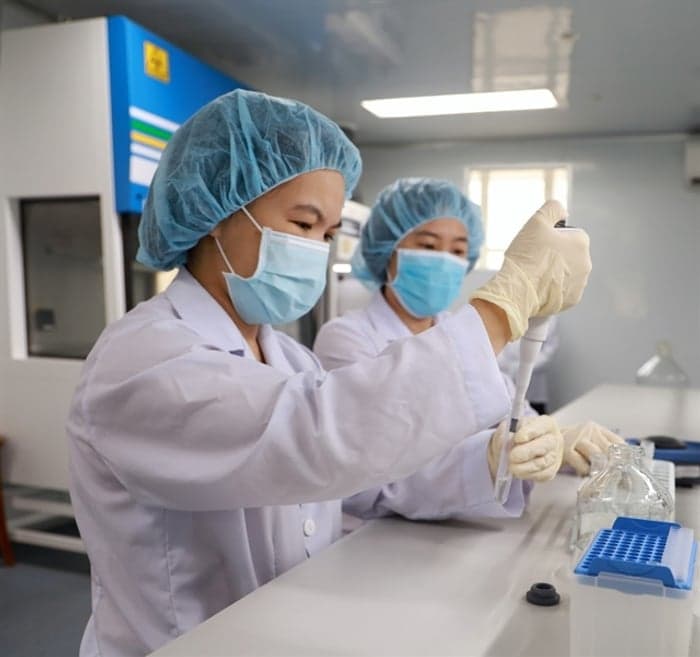
The newly signed free trade agreement between Vietnam and the European Free Trade Association, comprising Switzerland, Norway, Iceland and Liechtenstein, is expected to create opportunities for trade, investment and closer healthcare cooperation.
The areas include pharmaceuticals, medical technology, biomedical research, healthcare services and workforce training. Switzerland has strengths in pharmaceuticals, biotechnology, medical devices, research and healthcare systems, while Vietnam needs healthcare modernisation, stronger domestic production and wider access to advanced treatment.
Cooperation could improve access to innovative medicines and technologies and help Vietnam become a regional healthcare and life-sciences centre. It will require regulation that supports innovation and protects patients.
Roche Pharma general manager Burak Pekmezci said non-communicable diseases account for about 80 per cent of deaths in Vietnam and breast cancer is often diagnosed at an advanced stage. A WifOR Institute study estimated productivity losses from HER2-positive breast cancer in Vietnam at US$3.71 billion over 2017–27.
Pekmezci identified faster registration, appropriate treatment after early diagnosis and sustainable funding as priorities. Novartis Vietnam president Jondy Syjuco said predictable rules were needed for long-term investment. DKSH Vietnam vice-president Charaf Kadri said access depended on regulatory preparation, compliance and supply-chain coordination. DKSH signed a memorandum with a local producers' association to support capacity and regional exports.
Digital healthcare
Roche Diagnostics Vietnam general manager Ricky He said diagnostics influence about 60–70 per cent of clinical decisions. Digitalisation and AI could support earlier detection, more accurate decisions and more efficient use of resources. Digital pathology could combine imaging and genomic data, shorten diagnosis and reduce errors, while connected laboratory, medical-record and hospital systems could speed results.
Regional ambitions
Participants said Vietnam could become a Southeast Asian healthcare and innovation centre, but this would require institutional reform, stronger health capacity, international cooperation, research and domestic manufacturing. Priorities include predictable rules, efficient approvals, clear reimbursement timelines, public-private partnerships, clinical research, knowledge transfer, continuity of care and decentralised services.
Regulatory reforms
Le Viet Dung of Vietnam's Drug Administration said pharmaceutical regulation should ensure access to medicines that are safe, effective, high quality and reliably supplied. Priorities include completing the legal framework, faster access to innovative medicines, supply security, modern distribution, international cooperation and innovation.
Amendments to the Law on Pharmacy adopted in 2024 simplified procedures. Vietnam plans to remove unnecessary requirements and accelerate digital transformation without lowering safety, quality or efficacy standards. The administration received about 32,000 dossiers over the past three years, including 15,000 new registrations, 15,000 renewals and 2,000 supplementary applications. Standard processing takes up to 15 months and renewals up to six months.
Nguyen Minh Loi of the medical-device administration said about 90 per cent of devices on the Vietnamese market are imported. Online public services and reforms reduced administrative procedures from about 60 to 16. Applications meeting requirements can now be processed in about 23 days, compared with waits of up to five years in 2021.
Sources: Viet Nam News