Deputy Minister of Foreign Affairs Le Thi Thu Hang said Resolution No. 23-NQ/TW represents a shift from rallying and caring for overseas Vietnamese to partnering with them, building mechanisms and pooling their resources. Implementation depends on better policies, administrative reform, digitalisation and favourable conditions for long-term cooperation and investment.
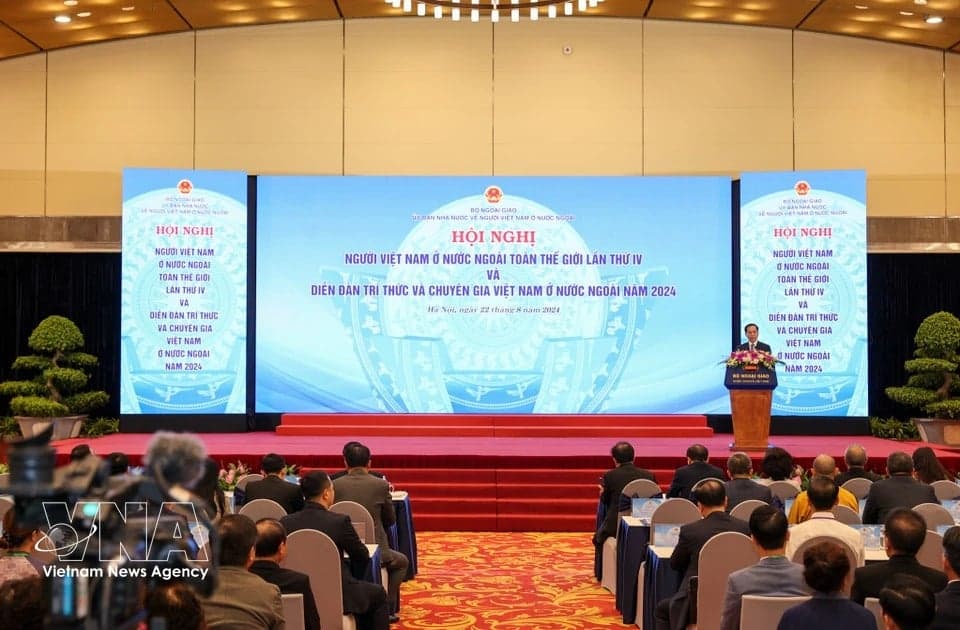
The fifth World Conference of Overseas Vietnamese is scheduled to take place in Hanoi in December. It is intended to turn the global Vietnamese network into a more connected and contribution-ready force for the country’s next development phase. Le Thi Thu Hang called for less emphasis on outreach and gathering and more on partnership and institution building, so overseas Vietnamese can become full participants in national construction and development.
A community of more than 6.5 million remains connected to home
Hang wrote that overseas Vietnamese are not scattered fragments. Wherever they live, they remain an inseparable part of the Vietnamese nation and one of its resources.
The community has grown in both size and quality. More intellectuals, experts, scientists, entrepreneurs and highly skilled workers are joining its ranks. Many hold strong professional positions in their host societies and participate in global science, technology and business networks. They send capital, knowledge and charitable support home, preserve cultural ties and act as bridges between Vietnam and the wider world.
Their circumstances differ, but the community shares patriotism, national pride and the ambition to see Vietnam become more prosperous and happy. The Party and State of Vietnam regard this potential as a valuable resource to be used more actively in the new development period.
Resolution No. 23-NQ/TW signals a new approach
The deputy minister said more than 6.5 million overseas Vietnamese represent knowledge, experience, economic capacity and international networks. The Politburo’s Resolution No. 23-NQ/TW, dated August 2, 2026, signals a shift to partnership with the diaspora, mechanism building and resource pooling. Overseas Vietnamese are to be participants, partners and a strategic national resource, rather than only policy beneficiaries.
Implementation requires better policies, administrative reform, digitalisation and favourable conditions for long-term cooperation and investment. The harder task is to create mechanisms that turn the diaspora’s potential into measurable results. Ministries, local authorities, research institutes and companies should define their needs and issue concrete cooperation briefs so suitable experts, resources and sectors can be matched.
A diaspora database and resource map are intended to speed up matching in science and technology, artificial intelligence, semiconductors, innovation, digital transformation, the green transition and skilled workforce development. Contributions may include policy consulting, research, teaching, technology transfer, workforce training and investment networking, including remotely.
The long-term goal is a system linking the overseas Vietnamese community with domestic agencies, local authorities, companies and research institutes. Resolution No. 23-NQ/TW should support practical networks, initiatives and projects that strengthen the country’s overall capacity.
The conference will provide a platform for implementation
The fifth conference is intended to put the resolution into practice, expand opportunities for diaspora participation and strengthen ties between Vietnamese at home and abroad. Building on four previous conferences, it will include discussions and direct matchmaking between overseas Vietnamese, ministries, local authorities, research institutes and businesses.
The forum will focus on diaspora participation in national goals, science and technology, innovation, digital transformation, the green transition, skilled workforce development, investment and international market expansion.
Organisers want contacts, ideas and cooperation proposals to continue after the event. Expected results include networks of diaspora experts, intellectuals and entrepreneurs, lists of initiatives and projects with domestic partners, policy recommendations and coordination points.
Success will be judged by a common action plan, policy recommendations, connection networks, a feasible project pipeline and a post-conference coordination and monitoring mechanism. The deputy minister said the political result should be greater trust and motivation, giving every overseas Vietnamese a clearer role, opportunity and path to contribute to the homeland.
Sources: VietnamPlus / Vietnam News Agency