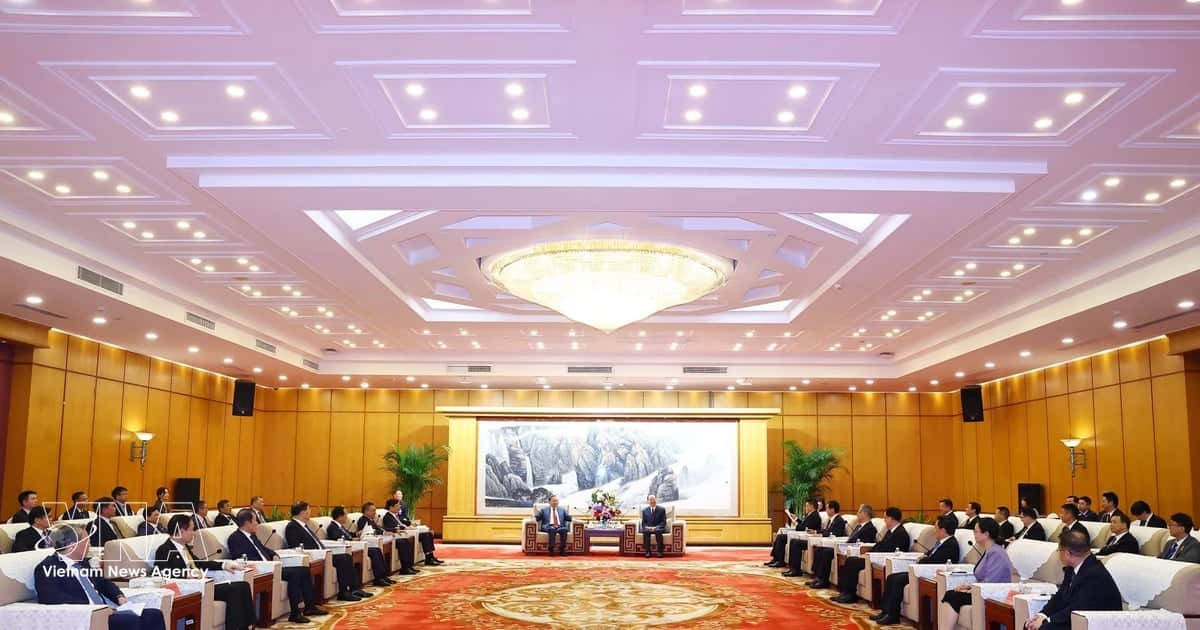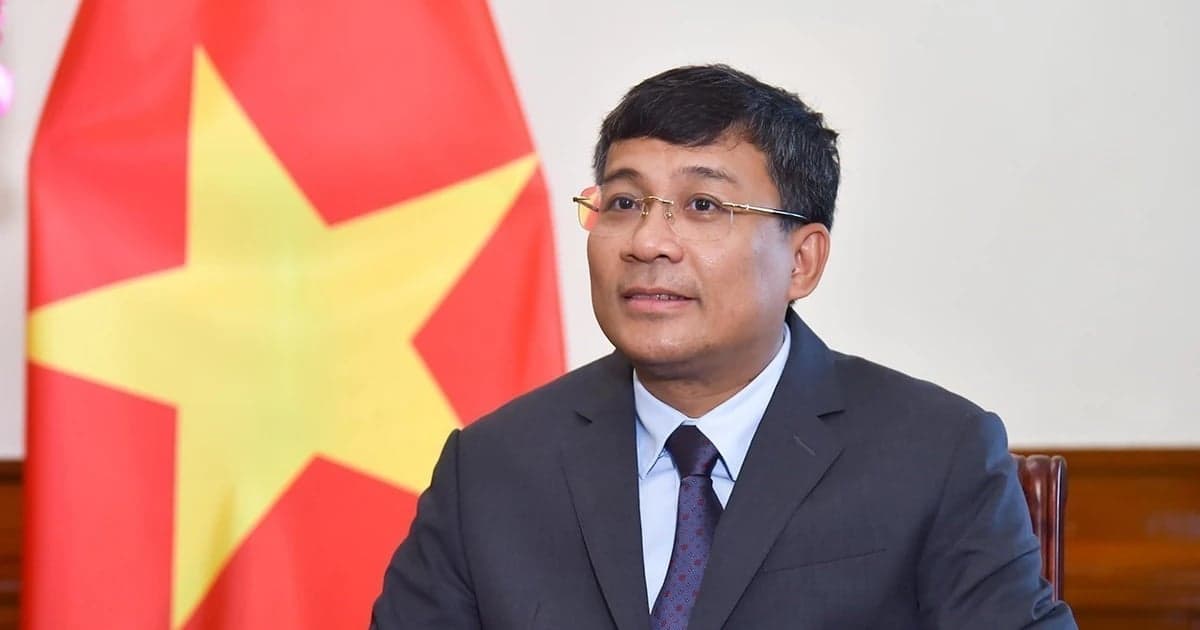
Permanent Deputy Minister of Foreign Affairs Nguyen Minh Vu said the November 17-20 trip by General Secretary of the Communist Party of Vietnam Central Committee and President To Lam and his spouse to China for the APEC Economic Leaders' Week and bilateral activities will be an important diplomatic and economic step.
Nguyen Minh Vu said the 33rd APEC Economic Leaders' Week in Shenzhen, China, will inject new momentum into trade, investment, connectivity and innovation, while giving Vietnam and other member economies a platform to prepare for a successful Vietnamese APEC chairmanship in 2027.
The 21 APEC economies account for more than 60% of global GDP and nearly 50% of global trade. They include many of Vietnam's most important economic partners. The deputy minister said the trip reaffirms APEC's core agenda, including open economies, trade and investment facilitation, and economic and technical cooperation.
Vietnam arrives in Shenzhen as the future APEC 2027 chair. During the meeting, its leader will formally take over the role. Vietnam plans to discuss an agenda with members that is practical for the region and has a long-term scope.
Nguyen Minh Vu said the trip also aims to develop bilateral ties, especially between Vietnam and China. Meetings with leaders of major economies are expected to address trade, investment, science, technology and innovation. With China, Vietnam wants to turn high-level understandings into concrete projects in infrastructure connectivity, logistics, high technology and business links.
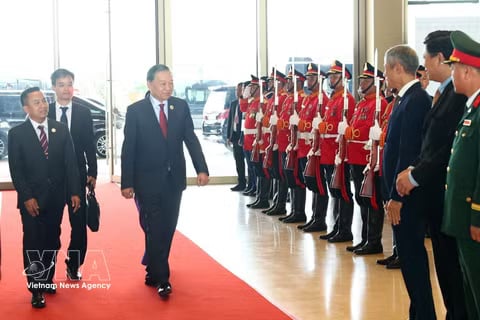
Activities in Shenzhen will create opportunities to strengthen links with the Guangdong-Hong Kong-Macao Greater Bay Area and expand cooperation by drawing on its strengths in technology, manufacturing, finance and services. In Yunnan, attention will focus on economic links between southwestern China and Vietnam, especially between border provinces.
After a year of APEC 2026 work, the leaders' meeting in Shenzhen will be its culmination and a new impetus for regional integration. Vietnam wants to strengthen confidence in open trade, investment and mutual gains. As trade barriers rise and supply chains are redrawn, APEC must advance trade facilitation, supply chain links, lower logistics costs and support for small and medium-sized enterprises, including the adoption of digital solutions and artificial intelligence.
Vietnam expects the Shenzhen meeting's results to prepare its APEC chairmanship year in 2027. This means continuing work launched in 2026, developing strategic cooperation in line with the region's new needs and achieving concrete, long-term results.
High-level talks and business meetings in Shenzhen are expected to turn commitments into projects in trade, investment, technology and innovation, while drawing Vietnamese companies more deeply into global and regional value chains.
In Shenzhen, Vietnam and China will link growth poles and use the Greater Bay Area's strengths, especially in high technology, advanced manufacturing and supporting industries, while combining quality investment with workforce training. In Yunnan, the sides intend to develop transport connectivity and modern logistics, create a smart border-gate model, expand border exchanges and improve border management.
Sources: VietnamPlus / Vietnam News Agency