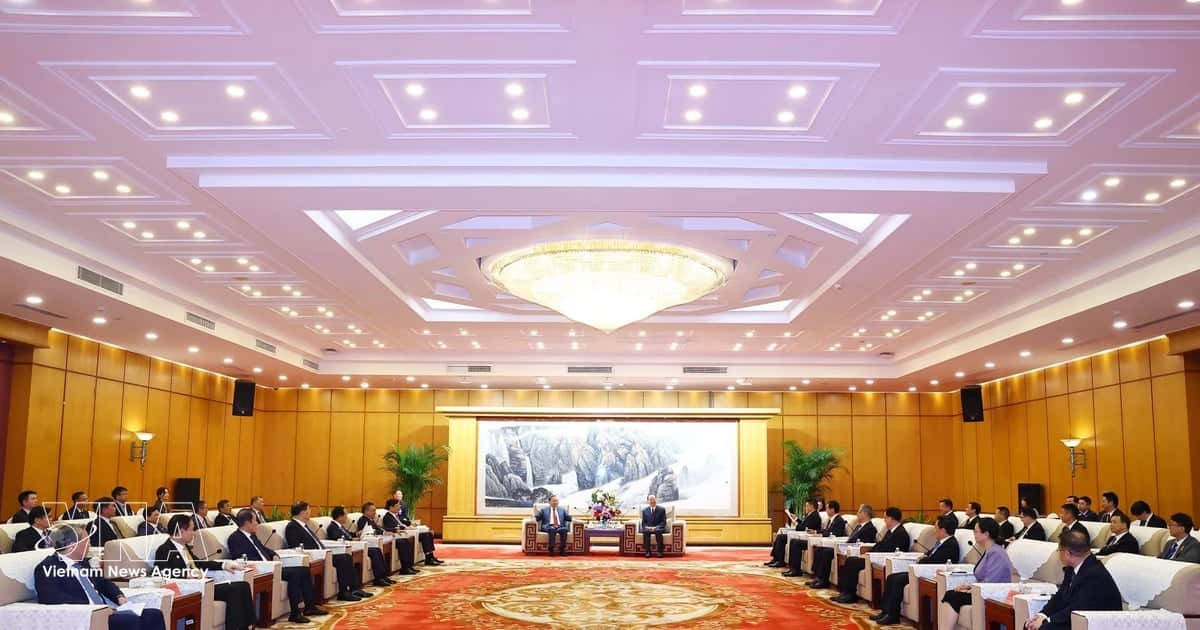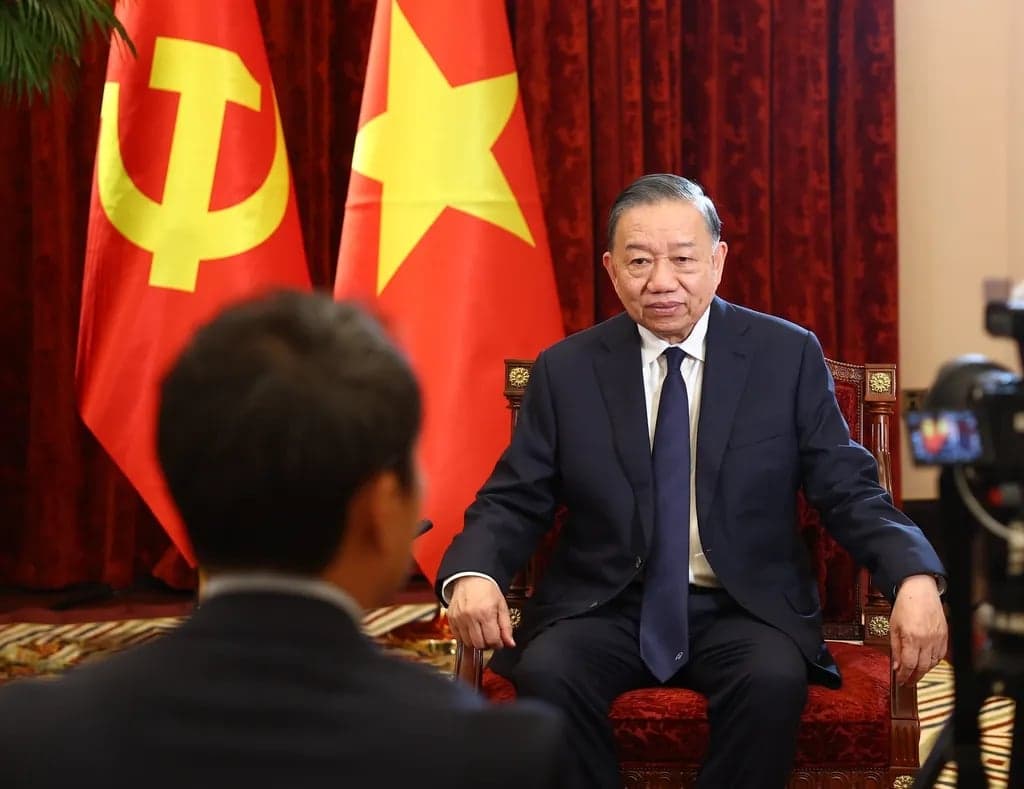
General Secretary of the Communist Party of Viet Nam Central Committee and State President To Lam gave an interview to Japan's public broadcaster NHK before his official visit to Japan.
He said the visit should strengthen the countries' longstanding ties and set long-term cooperation priorities. To Lam said people-to-people exchanges between Viet Nam and Japan date back more than 400 years.
Viet Nam regards Japan as one of its most important long-term comprehensive strategic partners. To Lam noted Japan's support for Viet Nam's two centenary strategic goals and said the two countries should build mutual trust and give fresh momentum to their Comprehensive Strategic Partnership for Peace and Prosperity in Asia and the world.
Bilateral trade reached nearly US$50 billion in the first 10 months of 2026, moving towards the US$80 billion target and the goal of reaching US$100 billion by 2030. Japan currently has around 5,800 investment projects in Viet Nam, with total active capital of US$80.4 billion.
To Lam called on Japanese companies to expand investment, research and product development in Viet Nam and work with Vietnamese enterprises in value chains. He named advanced industries, semiconductors, artificial intelligence and clean energy as cooperation areas, alongside workforce training and stronger technological and management capabilities.
Viet Nam plans to build a transparent, stable and predictable business environment and address legitimate business concerns. To Lam said Vietnamese people studying and working in Japan should be able to gain knowledge, improve professional skills, develop their careers and have their legitimate rights and interests protected. Viet Nam would also like more Japanese experts, scientists and young people to come for work, research and business.
Asked about diplomacy amid international uncertainty, To Lam said Viet Nam remains steadfast in principle, proactive in action and sincere in cooperation. The country cannot wait for global uncertainty to disappear and must create conditions to move forward amid difficulties and volatility.
Viet Nam remains committed to independence, self-reliance, resilience, peace, friendship, cooperation and development. It will diversify and multilateralise external relations while prioritising national interests on the basis of international law and the UN Charter. To Lam said strategic autonomy means being able to determine an independent development path and implement those decisions.
Viet Nam will deepen relations with partners, seek common interests and address differences through dialogue and peaceful means. Diplomacy should identify and prevent risks early, keep communication channels open and prepare response measures. Viet Nam values the United Nations and ASEAN's solidarity and centrality and is ready to contribute to common efforts.
To Lam said external relations should help the country, its people and businesses strengthen their capabilities. Cooperation in technology, human resources, green finance, energy and infrastructure should go together with reform and the ability to absorb and master knowledge and technology. Integration should produce higher productivity, stronger businesses and better jobs.
Speaking about Japan, To Lam said the partnership's foundation and high-level political trust would allow the two countries to work together, create opportunities and share responsibilities. Viet Nam's goal is to become a more autonomous and resilient country with trusted friends such as Japan and to make practical contributions to the international community.
Sources: Viet Nam News