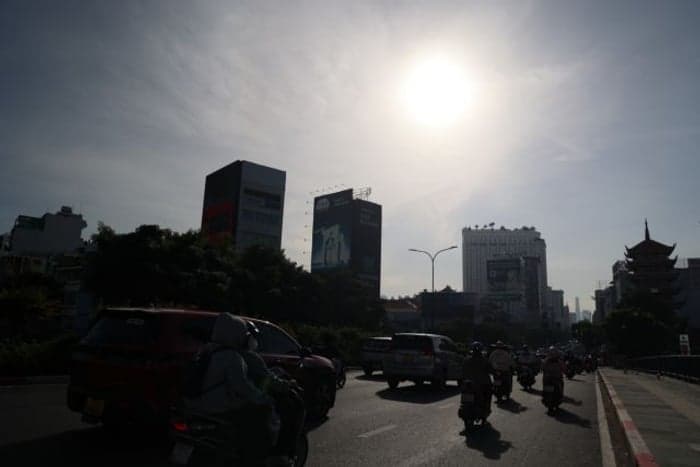
Vietnam’s national weather agency forecasts a warmer and drier winter and spring than usual as a very strong El Niño persists, with a heightened risk of drought in the south and Central Highlands.
The National Centre for Hydro-Meteorological Forecasting said there was a 79 per cent chance that El Niño would remain very strong through February.
The phenomenon is expected to weaken considerably from March to May. The chance of it persisting through that period is about 80 per cent, most likely at weak to moderate strength, while the chance of a return to neutral conditions is about 20 per cent.
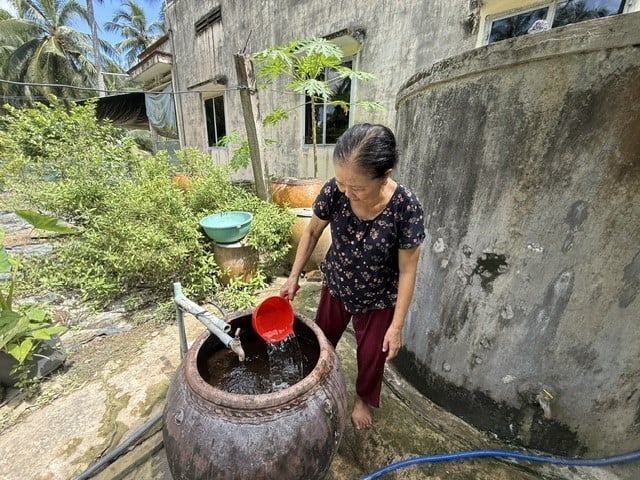
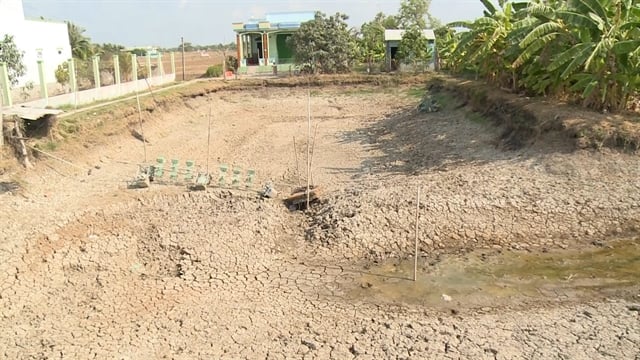
Between March and May, below-average rainfall, high temperatures and a delayed start to the rainy season could result in water shortages for households and agriculture in the Central Highlands and the south, the centre said.
Average temperatures nationwide are forecast to be 1 to 2 degrees Celsius above the long-term average from December through May and more than 2 degrees higher in some areas in spring.
Winter is likely to be milder than usual, with weaker cold air masses. Severe cold spells are forecast to arrive later and occur less frequently than normal in northern and north-central regions, although brief, sharp temperature drops remain possible.
The north is also expected to record fewer days of light rain and drizzle in late winter.
Heat waves may arrive in the southeastern region in February, earlier than usual. From March, heat is expected to intensify in the Central Highlands and the south, while localised hot spells may develop in the northwest and north-central regions.
In April and May, hot conditions are forecast to become more widespread across northern and central regions.
Central Vietnam may still experience periods of moderate to heavy rain in December, mainly between Hà Tĩnh and Huế and along the south-central coast, before the rain tapers off in January.
Many parts of the region are likely to record below-average rainfall even during the rainy season. The largest deficit is expected on the south-central coast, where December rainfall is forecast to be 50 to 150 millimetres below average.
The north is the only region expected to receive slightly above-average rainfall that month.
In January and February, rainfall is expected to be close to average in the north and below average in most other areas. From March to May, deficits are forecast across almost the entire country, with most areas receiving 10 per cent to 35 per cent less rain than average in May.
In the Mekong River basin, rainfall in the lower reaches is forecast to be 20 per cent to 40 per cent below average in December and 30 per cent to 60 per cent below average in January.
Deficits of 15 per cent to 50 per cent are expected across the entire basin from March to May.
Nguyễn Đức Hòa, deputy head of the centre’s climate forecasting division, said fewer storms and tropical depressions than the long-term average of 1.4 were expected in the East Sea, internationally known as the South China Sea, between December and February.
Few, if any, were likely to make landfall, he said, adding that storms were unlikely from March to May.
Hòa cautioned that thunderstorms accompanied by lightning, hail and strong gusts could still occur across the country. In spring, showers and thunderstorms, locally with moderate to heavy rain, are expected in the north and north-central regions, while thunderstorm activity is forecast to increase in the Central Highlands and the south from May.
The northeast monsoon could generate strong winds and high waves in the East Sea, affecting maritime transport and fishing. The southwest monsoon is expected to bring strong winds to southern waters from around May.
Heavy rain, thunderstorms, hail and severe cold could also adversely affect economic activity, public health, crops and livestock.
The centre noted that climate change was making weather patterns increasingly unpredictable and prone to extremes, including heat waves, intense short-duration rainfall, flash floods and landslides.
It recommended that authorities closely monitor forecasts and warnings and adjust their plans accordingly, particularly reservoir operations, to ensure the safety of dams and downstream communities.
Sources: Viet Nam News