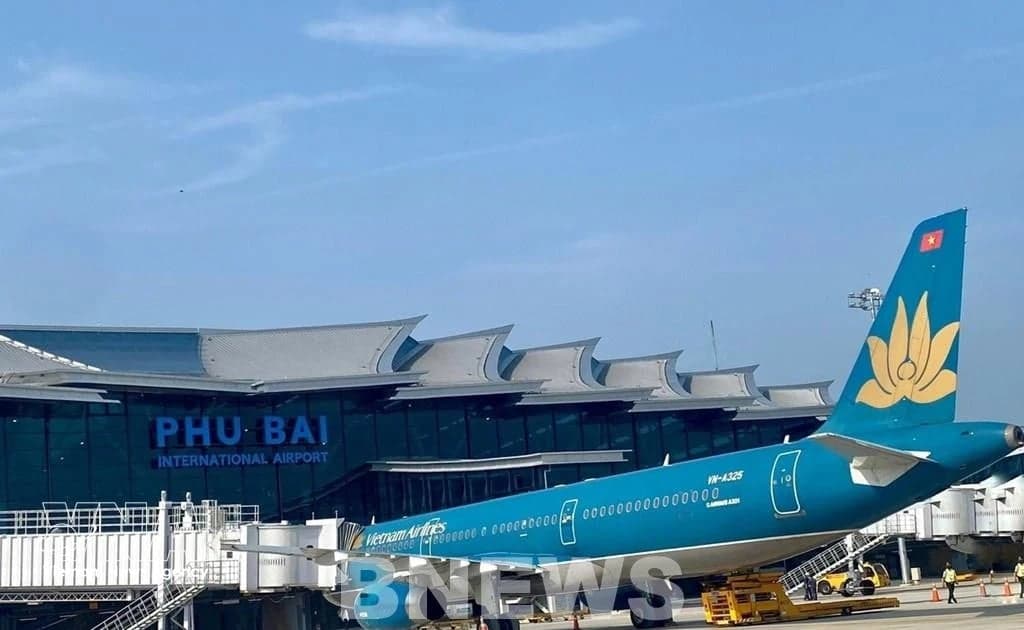
The Civil Aviation Authority of Vietnam has submitted a master plan for Phu Bai International Airport for 2021–2030, with a vision to 2050, to the Ministry of Construction for appraisal and approval. Located in Phu Bai and Huong Thuy wards of Hue city, the airport will remain an international facility in Vietnam's national civil airport network, with facilities shared for civil and military purposes.
For 2021–2030, the airport is planned to meet ICAO Code 4E standards, with annual capacity of 4 million passengers and 5,000 tonnes of cargo. It will have 11 aircraft parking stands and accommodate aircraft up to Code E, including the A350, B787, B777 and A320/A321, as well as equivalent models.
By 2050, Phu Bai is expected to retain its Code 4E classification, with capacity expanded to 12 million passengers and 24,000 tonnes of cargo annually and 27 parking stands. Planned land use is 514.28 hectares in both the 2021–2030 period and the vision to 2050.
The previous plan, approved by the Prime Minister in 2009, designated Phu Bai as a Code 4E international airport and Level-II military airfield, with capacity of 5 million passengers by 2020 and 9 million by 2030. The adjusted national airport system plan approved by the Ministry of Construction in 2026 sets capacity at 4 million passengers annually by 2030 and 12 million by 2050, while maintaining Code 4E.
The 2023 plans for what was then Thua Thien-Hue province and the north-central region outline development as a centre for culture, tourism, specialised healthcare, science and technology, education and training. They also target upgrades to Phu Bai, its cargo terminal and international flight network in connection with Chan May–Lang Co seaport. Hue's municipal plan includes a free trade zone linked to the port and airport, renovation and extension of the first runway, completion of the taxiway system and investment in a second runway before 2030.
The plan is intended to align the national airport system with regional and local strategies and provide a basis for infrastructure investment to meet passenger and cargo demand, support socio-economic development, and ensure national defence and security in central Vietnam. During preparation, the Civil Aviation Authority sought feedback from ministries, sectors, local authorities and relevant organisations, reviewed it and completed the dossier for appraisal and approval.
Sources: VietnamPlus / Vietnam News Agency