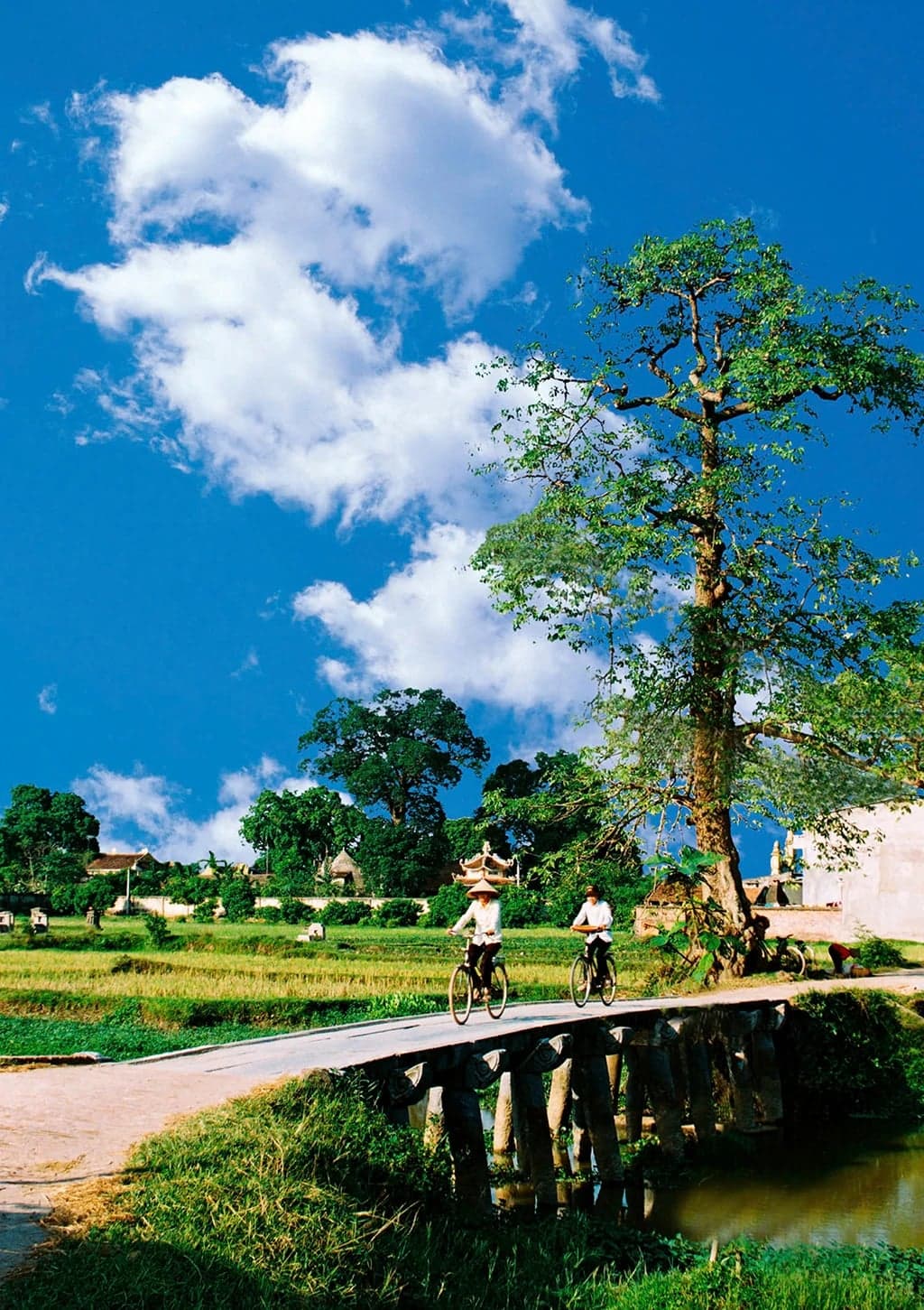
Experts say Nom Village in Hung Yen is suitable for a model eco-museum in Vietnam’s northern delta.
A living dictionary of rice-farming culture
The proposal was discussed at a November 11 seminar on solutions for building an eco-museum in Nom Village, Dai Dong Commune. Participants described the village’s varied cultural values.
Dang Van Bai, deputy chairman of Vietnam’s National Council for Cultural Heritage, called Nom one of the most distinctive old villages still largely intact in the Red River Delta. He said rapid urbanization and modernization in the 21st century had erased traditional cultural spaces in many villages, while Nom retained the architecture, landscape, way of life and spiritual practices of rice-farming communities.
Nguyen Thi Thu Trang of Ho Chi Minh City University of Culture and Nguyen Thi Thu Huong, director of the Hung Yen Monuments Management Board, identified four layers of heritage in Nom. Its natural heritage includes the Nguyet Duc River, ponds and lakes, and fields belonging to a riverside rice-farming village. The settlement’s structure includes the village gate, roads and lanes, wells, a landing and an ancient banyan tree.
Its tangible heritage includes a nine-span stone bridge, Nom Pagoda with 122 clay statues, the Nom communal house, old homes and family worship houses. Its living heritage includes the periodic Nom Market, which preserves traditional trading practices.
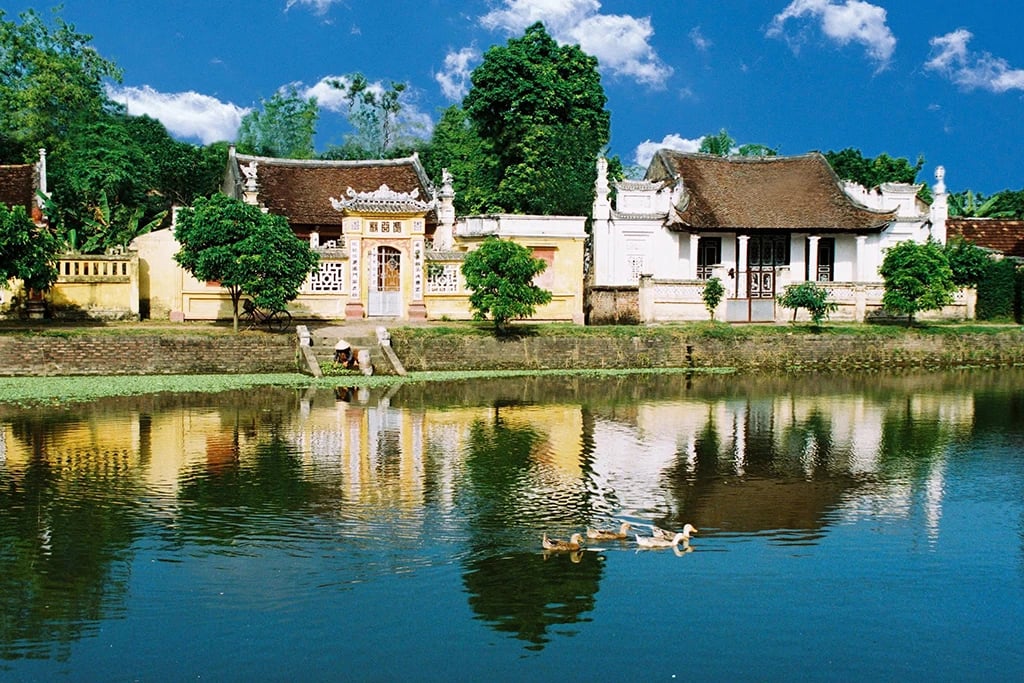
Thu Trang said Nom’s distinctive feature was not a single monument but the links between its heritage layers. The river created the landing, the landing supported the market, and trade helped the village build its communal house and pagoda, make statues and construct the bridge. The bridge then connected the two banks and the village’s daily life.
Nguyen Duy Thieu of the Institute for Vietnamese Cultural and Belief Studies recalled that Nom was known as a northern trading village rather than only an agricultural settlement. Residents did not cast bronze themselves. They bought and supplied raw materials and sold products for nearby casting villages. He said this trading network brought prosperity to the village, visible in its ironwood houses and imposing family worship houses. Nom Market, held on set days, was not only a place to exchange goods but also a living museum of rural trading culture in northern Vietnam.
An eco-museum run with the old village community
Architect Dinh Viet Phuong of 3D Art and Nguyen Anh Thu of Hanoi University of Culture proposed using technology to let visitors “see the past.” 3D mapping, lasers and visual LED screens could recreate an old Vietnamese village and combine it with a nighttime economy. Three-dimensional models and light projections could show scenes of life on the landing and the water at night and form part of live performances.
Nguyen Duy Thieu proposed turning all of Nom into an open museum space instead of building a separate museum to gather objects. Heritage sites could become interpretation stations: the village gate would welcome visitors, Nom Market would offer an experience of trade and food, the stone bridge and village ponds would present the aquatic ecosystem, and Nom Pagoda and the communal house would represent spiritual and traditional art heritage.
He also proposed that tours be led not by guides from travel companies but by older and middle-aged residents of the village. They could tell stories about their families, the history of the scrap-metal trade and the process of making clay statues in their own language and from their own memories.
Nguyen Duy Thieu proposed encouraging residents to make green souvenirs, including small ceramic items and handicrafts from recycled copper scrap, recalling the village’s history of scrap-metal trading. Part of the income from tickets and visitor experiences could be reinvested in a fund to preserve old houses and support rituals and village festivals.
Thu Trang said Nom met the main conditions for a model eco-museum in the northern delta. She urged Hung Yen Province to select the village as a pilot model.
She also proposed that the community create a representative organization and draw up eco-museum rules based on the village charter, so residents would be decision-makers from the start. A village can become a museum only when its residents want to tell their own story and are given the power to do so, she said.
Sources: Thanh Niên