The scheme to develop one million hectares of high-quality, low-emission rice in the Mekong Delta is entering a new phase. It is focusing on improving farming practices, standardising assessment methods and preparing an expansion roadmap for 2027–2030.
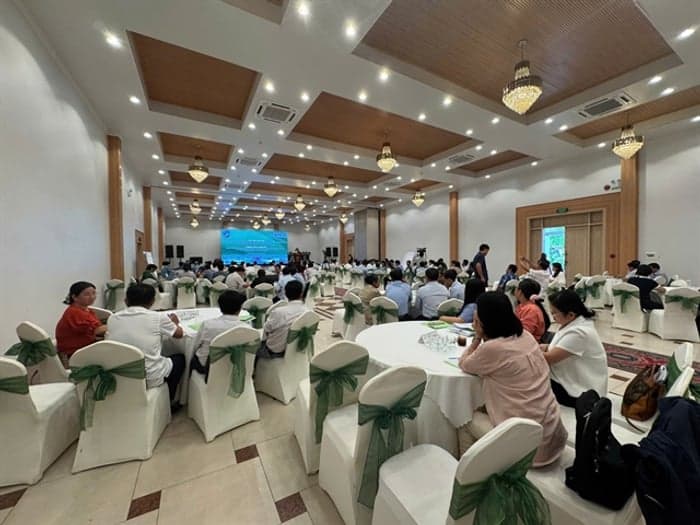
The Việt Nam Rice Industry Association (VIETRISA), in coordination with the International Rice Research Institute (IRRI), held a consultation workshop in Cần Thơ City on Wednesday. Participants discussed methods for developing high-quality, low-emission rice farming protocols tailored to different production sub-regions of the scheme.
The workshop also discussed a proposed expansion roadmap for the Mekong Delta during 2027–2030.
Participants aimed to agree on common principles, methods and templates to help localities develop technical protocols suited to their conditions. The consultation is intended to provide a basis for further planning, rather than determine specific area allocations or targets for individual localities.
According to IRRI, approximately 421,000ha had joined the scheme as of August 2026. However, only around 68,000ha, equivalent to 16 per cent, fully met its prescribed criteria.
Models implemented under the scheme have shown the potential to reduce seed use, save water, increase yields and profits, and lower greenhouse gas emissions. Results vary depending on location and cropping season.
The gap between participating areas and those fully meeting the criteria shows the need to improve implementation quality and ensure that results can be measured and verified.
Differences in soil conditions, water resources, cropping seasons and farming systems across freshwater alluvial areas, acid sulphate soils, flood-prone zones and coastal areas affected by saltwater intrusion mean that applying one technical package throughout the region would be unlikely to deliver optimal results.
The one-million-hectare platform is also envisaged as a digital information system connecting provincial and commune authorities with cooperatives. It will integrate data on land, water resources, cropping seasons, mechanisation, farming practices, emission reductions and value-chain links. This will help identify priority areas and monitor implementation progress.
Dr Nguyễn Văn Hùng, a senior expert at IRRI, said the key issue was not simply the area participating in the scheme, but the area actually meeting the high-quality and low-emission criteria.
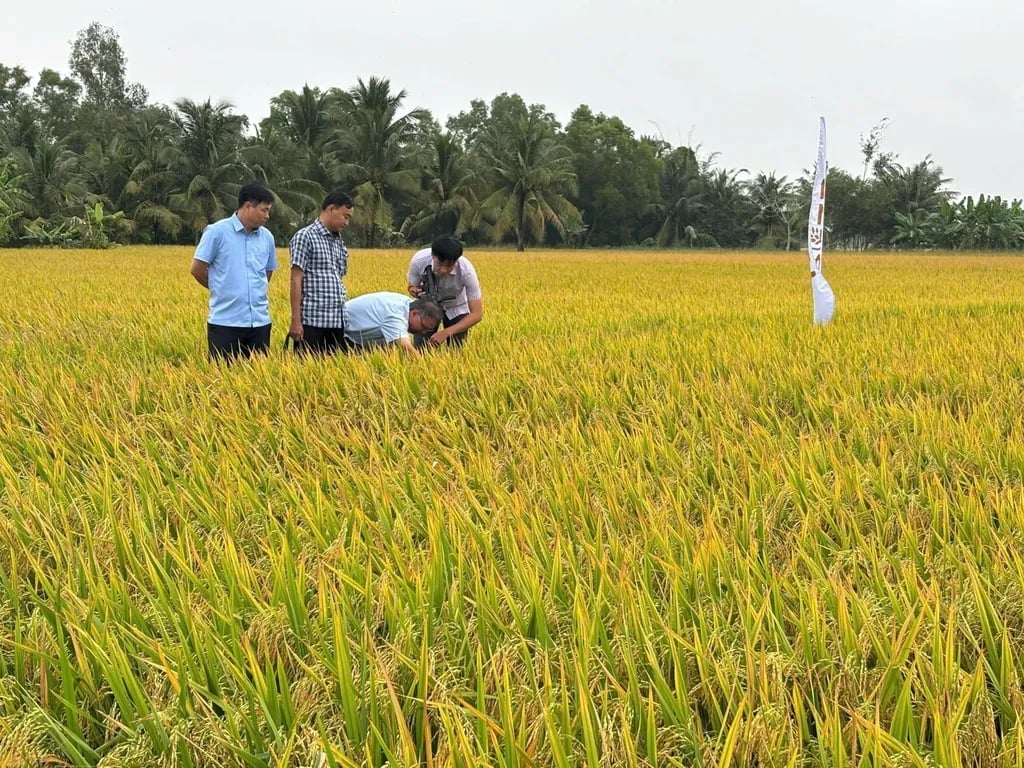
He said quality should take priority over expansion. Areas that were ready should proceed first, while those facing difficulties should receive targeted investment to address their specific problems.
Successful expansion depends on more than technical requirements. Production organisation, mechanisation services, agricultural extension systems, business participation and market access are also important. Standardised assessment methods across localities are needed so that results can be monitored and compared.
Lê Thanh Tùng, chairman of VIETRISA, said the scheme offered an opportunity to increase the value and strengthen the position of Vietnamese rice.
He said green production could develop sustainably only with value-chain links, consistent product quality, traceability and stable markets. Businesses and cooperatives have an important role in turning improved farming practices into greater economic value for rice growers.
Nguyễn Cao Khải, director of Tiến Thuận Cooperative, said farmers were primarily concerned about production costs, yields, income and market outlets. Cooperatives therefore need support with machinery, technical services and stable business partnerships to implement new farming practices effectively.
Following the workshop, VIETRISA, IRRI and their partners will continue refining the common principles, templates and assessment methods.
Localities will review available data, assess the readiness of individual production sub-regions, communes and cooperatives, and hold further consultations to propose suitable farming protocols and expansion plans.
Consultation results from six provinces and cities will contribute to a feasible expansion plan for 2027–2030. Investment will focus on priority areas, with implementation quality, economic efficiency and emission reductions serving as the main benchmarks.
Sources: Viet Nam News