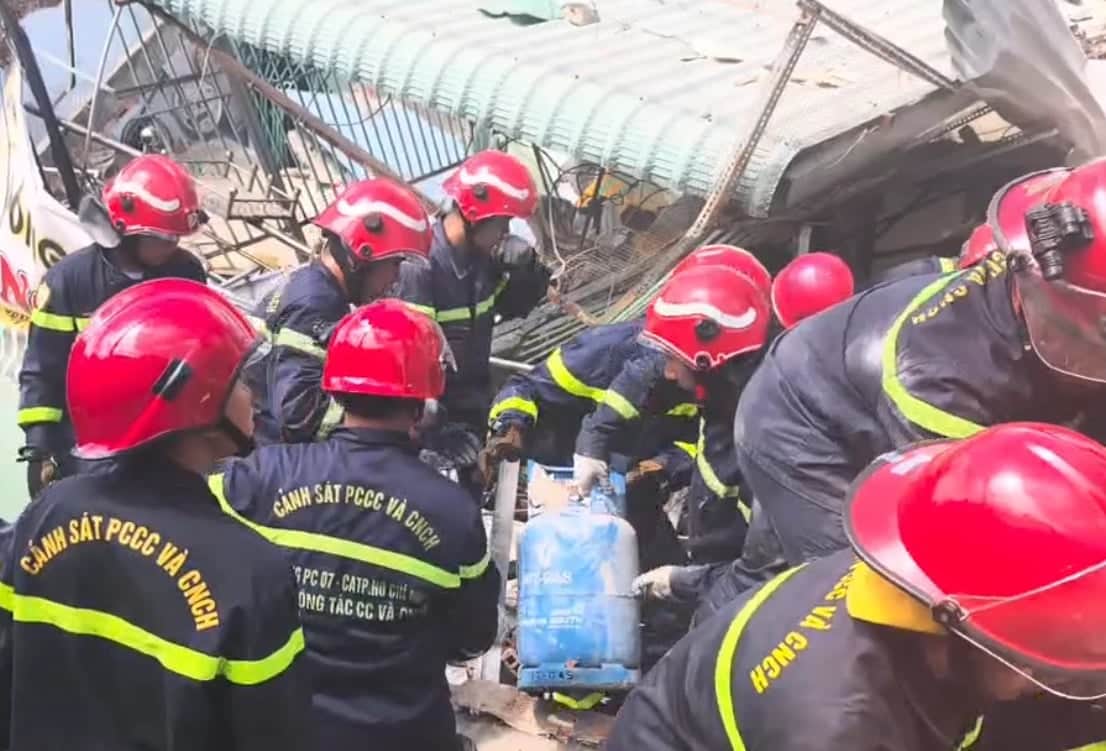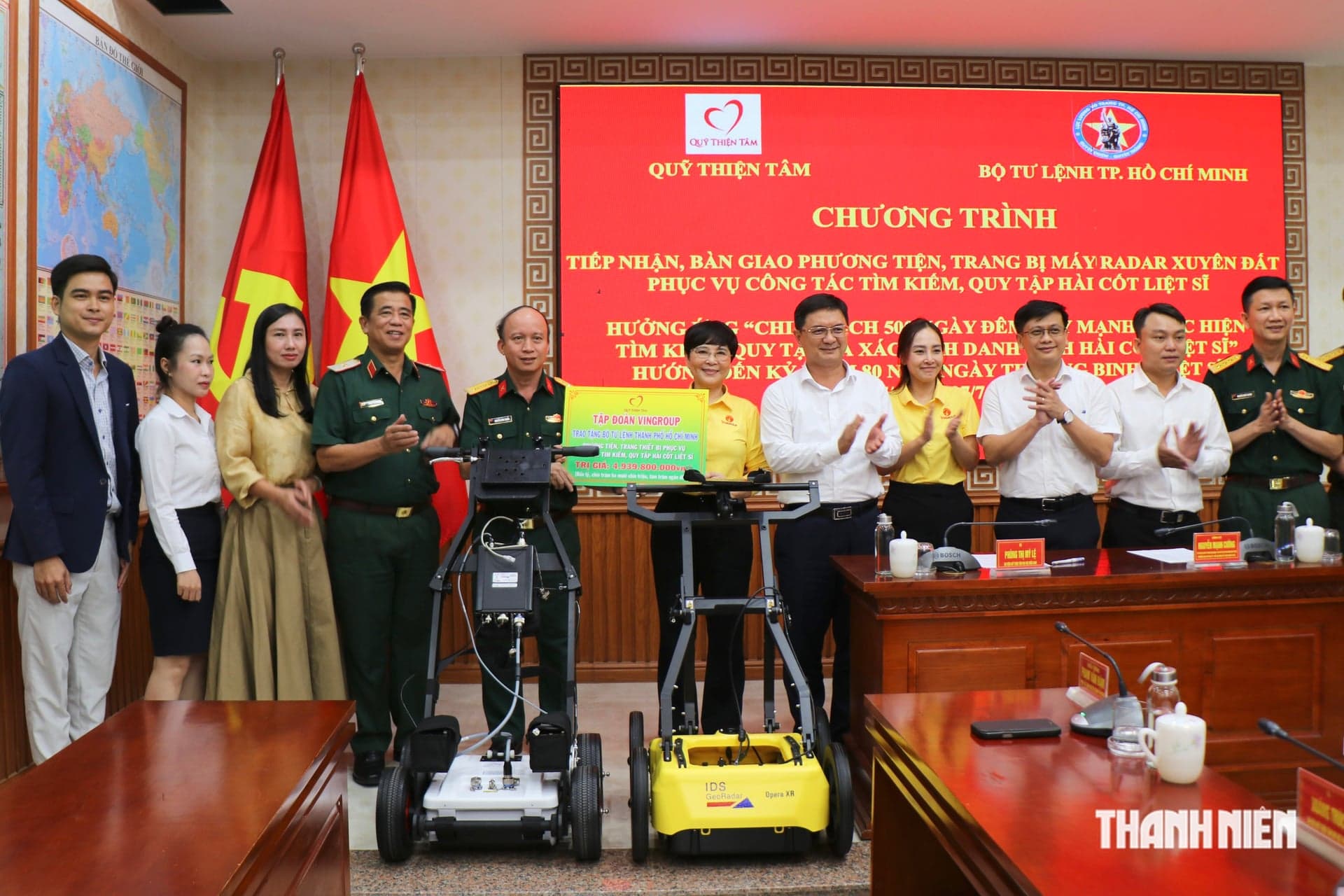
Ho Chi Minh City received two ground-penetrating radars to search for the remains of fallen soldiers. The equipment, worth more than 4.9 billion dong, was donated by Vingroup's Thien Tam Foundation.
On November 12, the Ho Chi Minh City Military Command received equipment for searching for and recovering the remains of fallen soldiers. The ceremony was attended by Nguyen Manh Cuong, deputy chairman of the city People's Committee, representatives of the command, universities and the Thien Tam Foundation.
More equipment for underground surveys
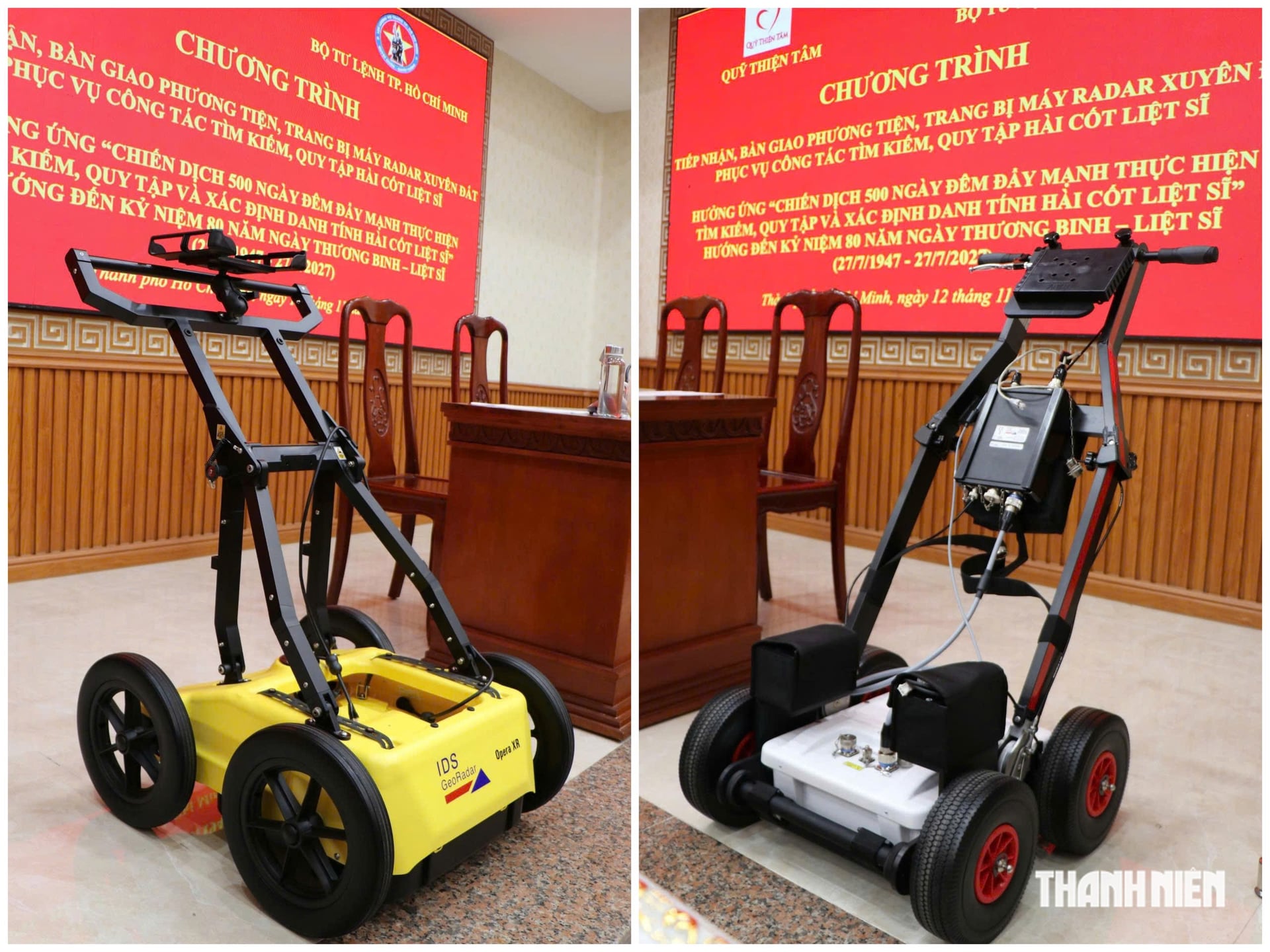
The devices use ground-penetrating radar technology. They send electromagnetic waves into the ground and receive reflected signals to examine underground structures and detect unusual features below the surface.
The Opera XR made by Italian company IDS GeoRadar operates at central frequencies of 200 and 900 MHz. According to the manufacturer, it weighs 20 kg, folds for transport and can be operated by one person. The device displays data in real time, marks survey locations and produces field reports.
Phung Thi My Le, a regional representative of the foundation, said Ho Chi Minh City still has many places that need to be surveyed and searched, including Le Thi Rieng Park, the Tan Son Nhat airport area and areas that were formerly part of Binh Duong and Ba Ria-Vung Tau provinces.
She said the radar can detect underground structures and help identify areas where remains may be located. This can reduce the area that must be excavated and save labour and time.
The foundation asked the recipient units to use the equipment for its intended purpose, train operators and maintain it regularly. It will also invite experienced specialists to provide practical guidance.
Nguyen Manh Cuong said the city had worked with scientists from the University of Natural Sciences and the University of Technology, both part of Vietnam National University Ho Chi Minh City, to survey places where soldiers may have been buried. He said scientific equipment makes it easier to identify their locations.
Search to continue using records and witness accounts
Nguyen Manh Cuong said city records list about 18 locations that require searches. In addition to Le Thi Rieng Park, teams have excavated five locations and found results at two of them.
The three locations without results do not necessarily lack remains, because the available records may not be sufficient to identify their exact positions. Units therefore need to compare the information and combine it with equipment surveys of suspected areas.
The deputy chairman ordered the formation of research groups and expert teams to compare historical records, archives and witness accounts. On that basis, specialists will determine coordinates and apply scientific technology to the search and recovery work.
He said the work must continue with greater determination. The city still has many former battle sites, and the remains of many soldiers have not been found or were recovered without their identities being established.
The city leadership asked the Ho Chi Minh City Military Command and the two universities to strengthen training and instruction for the personnel who will operate the donated equipment.
1,017 remains recovered at Le Thi Rieng Park
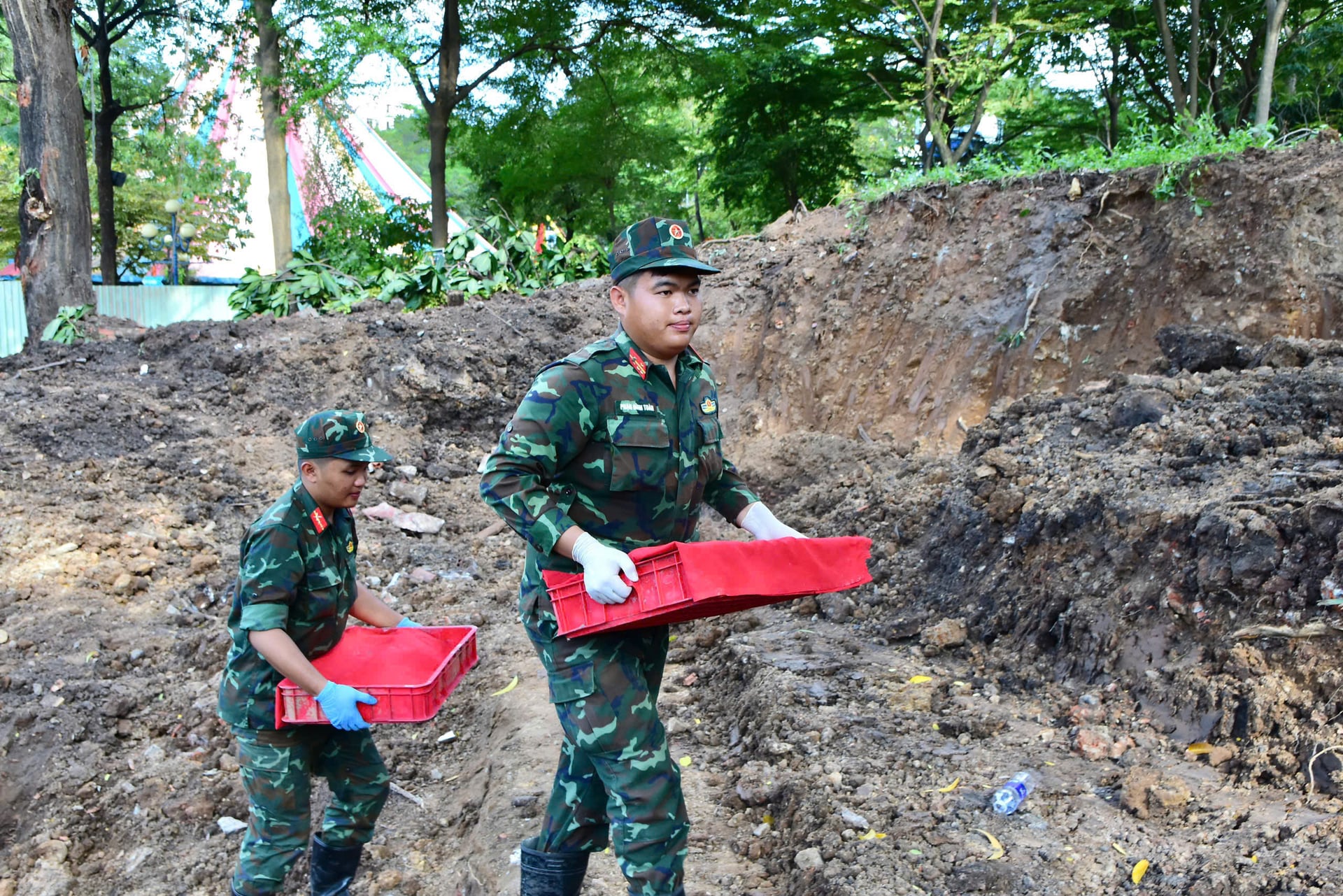
According to the search team of the Ho Chi Minh City Military Command, teams found and recovered five more remains in sector B of Le Thi Rieng Park on November 12.
The teams processed more than 620 cubic metres of soil that day. The command deployed three excavators, one dump truck and two 3.5-ton trucks.
The search at the park is being conducted in two phases. During the first phase, teams found and recovered 731 remains, and the city held memorial and burial ceremonies on October 14.
During the second phase, from October 15 through November 12, teams recovered 286 individual remains, 64 of them with accompanying objects.
From June 23 through November 12, teams found and recovered 1,017 remains at Le Thi Rieng Park. Objects were found with 371 of them. The total includes 984 individual remains and 33 remains from eight mass graves: two in sector A and six in sector B.
The search in sector B is continuing.
Sources: Thanh Niên