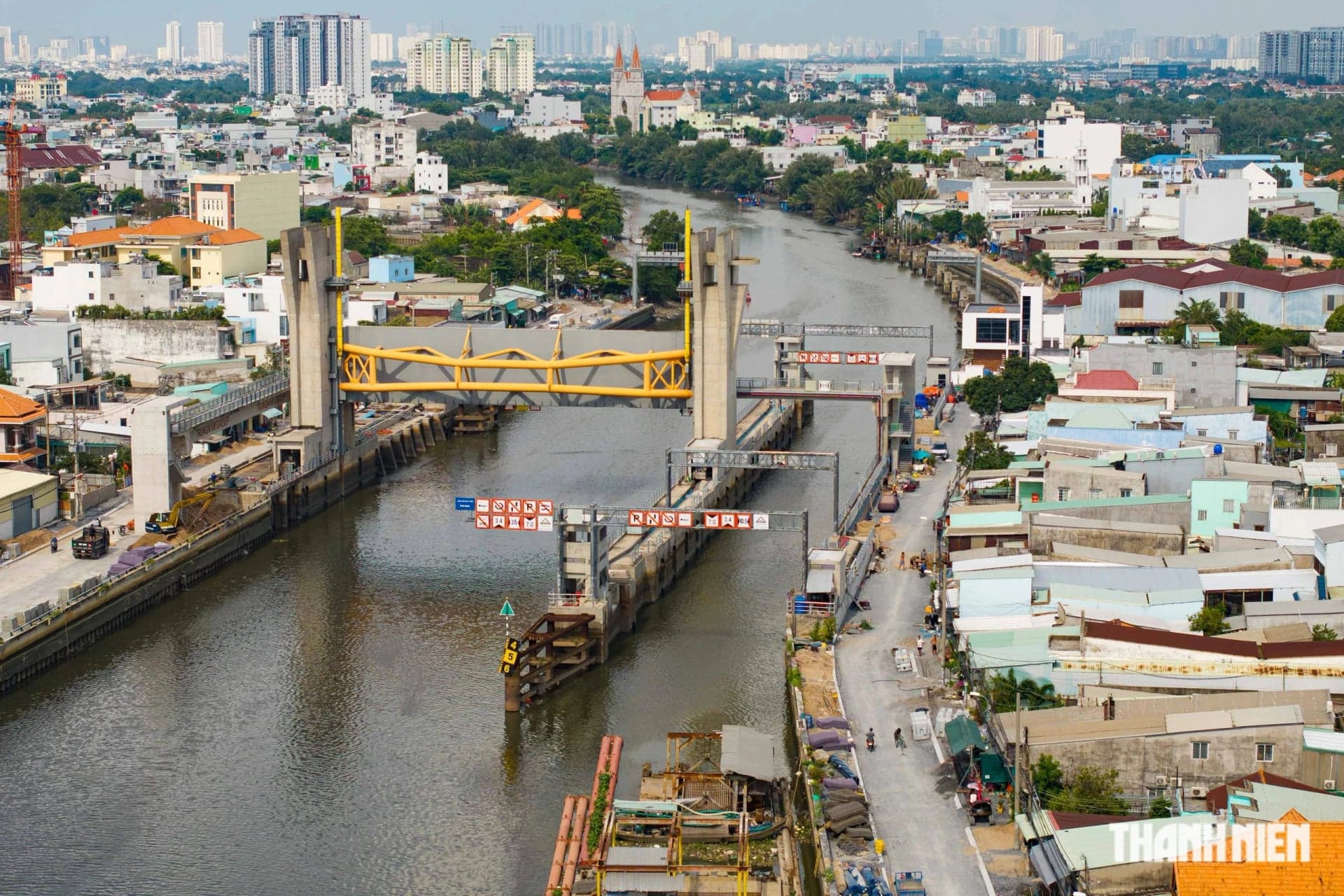
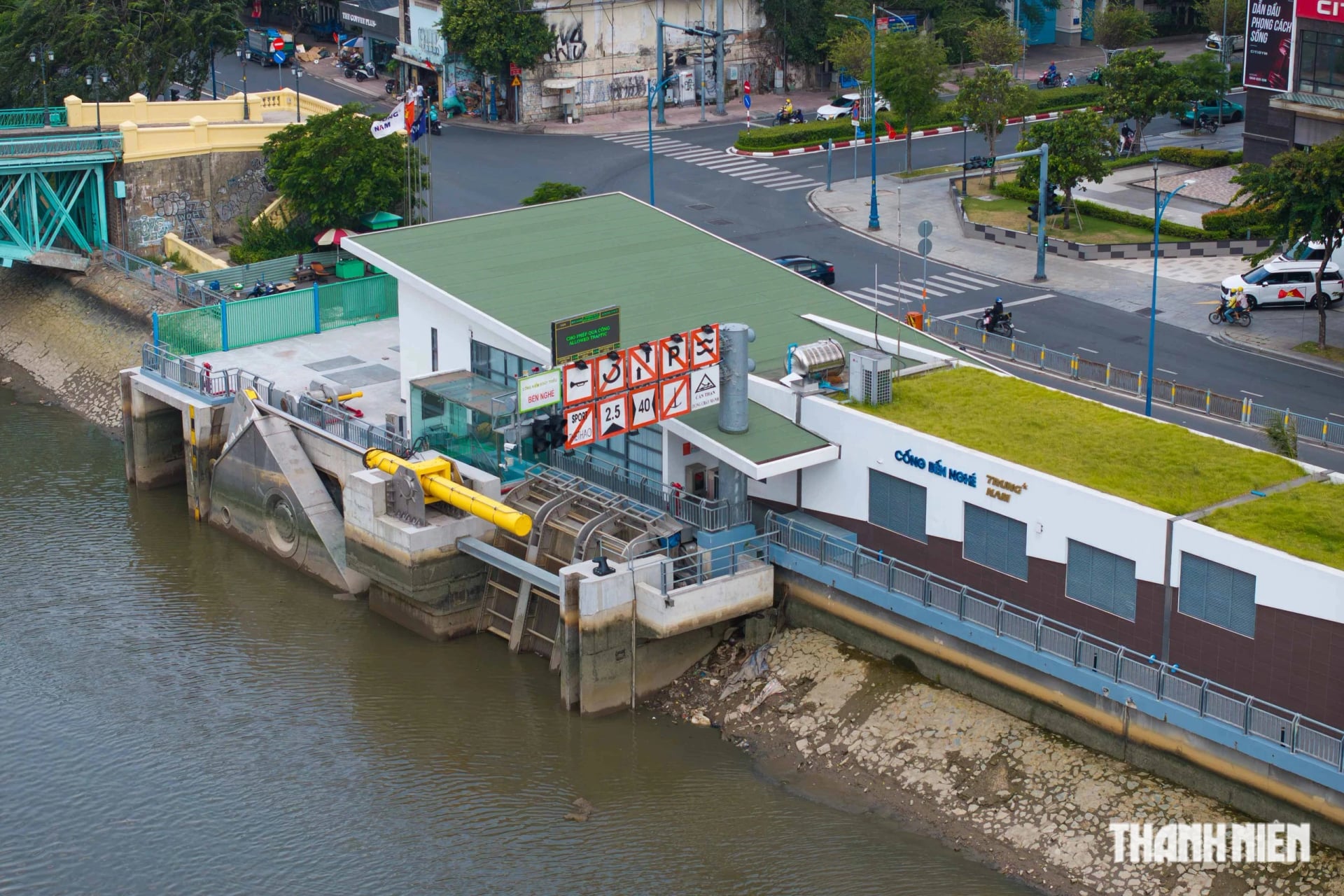
Flood-control gates from Ho Chi Minh City's VND 10 trillion flood-protection project are scheduled to begin operating in late November 2026. A representative of the city's People's Council deputies said the structures would help regulate water, but could not eliminate flooding across the city.
On the morning of November 11, Deputy Group 16 of the Ho Chi Minh City People's Council held a voter meeting ahead of the council's regular year-end 2026 session. Residents from Phu Nhuan, Cau Kieu, Tan Son Nhat and Tan Son Hoa wards attended.
The gates will not eliminate flooding across Ho Chi Minh City
Voters in Quarter 23 of Tan Son Nhat Ward asked deputies about the schedule for metro lines, the ring road project and measures to address flooding after heavy rain and high tides.
Residents of Quarter 24 in Cau Kieu Ward also asked the city to provide a plan for dealing with flooded areas, including locations where the Xuyen Tam and Doi canal projects are being carried out.

Pham Hong Son, secretary of the Party Committee and chief of the Ho Chi Minh City Party Committee Office, told voters that the gates from the VND 10 trillion project would officially begin operating in late November 2026.
Son cautioned that operating the gates would not mean flooding would end across Ho Chi Minh City. The system will regulate water, help reduce flooding in the most severely affected areas and limit inundation as much as possible. He said the city also faces land subsidence relative to sea level and rising sea levels.
Son said flood control would also require clearing waterways, protecting the environment and carrying out projects for roads, bridges and canals. He urged residents not to throw away rubbish that could block drains.
On public transport, Son said Metro Line 1 is already operating. Eight more railway lines are being developed, with a plan to complete and put them into service in 2030.
Voters propose measures for sidewalks and food safety
Nguyen Van Lap, a voter from Tan Son Nhat Ward, said that after enforcement campaigns, violations involving the occupation of roads and sidewalks continued to recur.
He proposed setting up self-management groups for businesses operating from street-front premises, providing places for street vendors and informal businesses, and strictly handling deliberate violations. He said enforcement should be maintained regularly.
Nguyen Ngoc Thu, a voter from Quarter 24 in Cau Kieu Ward, called for stronger food safety inspections ahead of the 2027 Tet holiday. She also asked the city to pay attention to social and health insurance policies and support levels for people working in residential quarters, especially those holding several positions.
Pham Hong Son said the deputy group had recorded the requests on food safety, support policies for residential-quarter workers and specific local issues for referral to the relevant authorities.
Sources: Thanh Niên