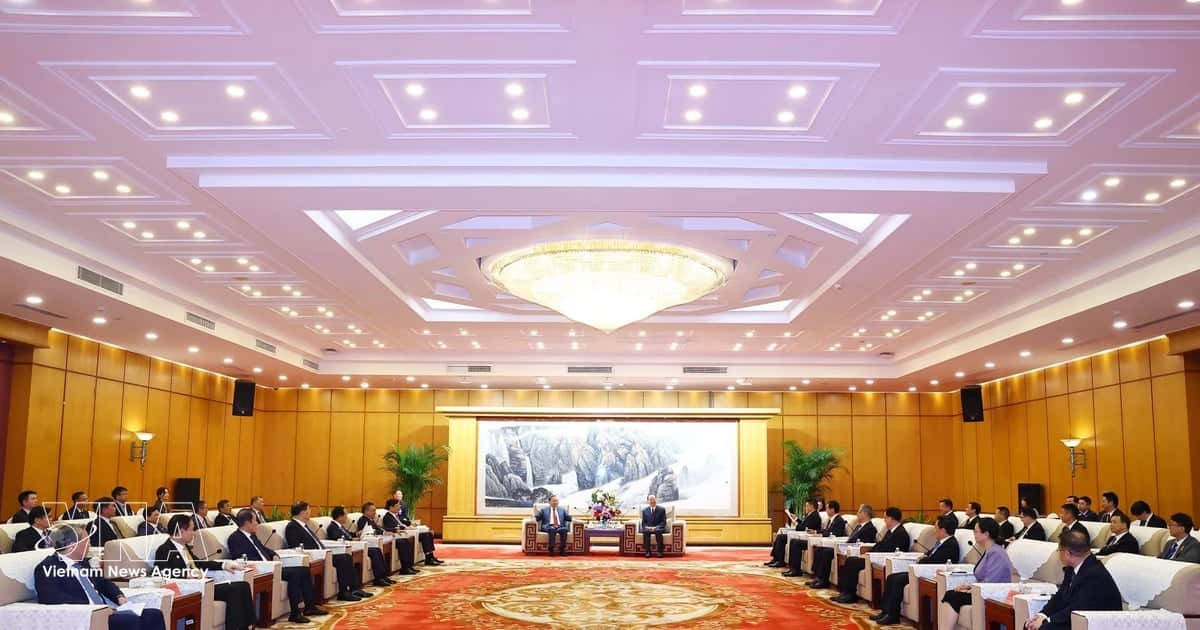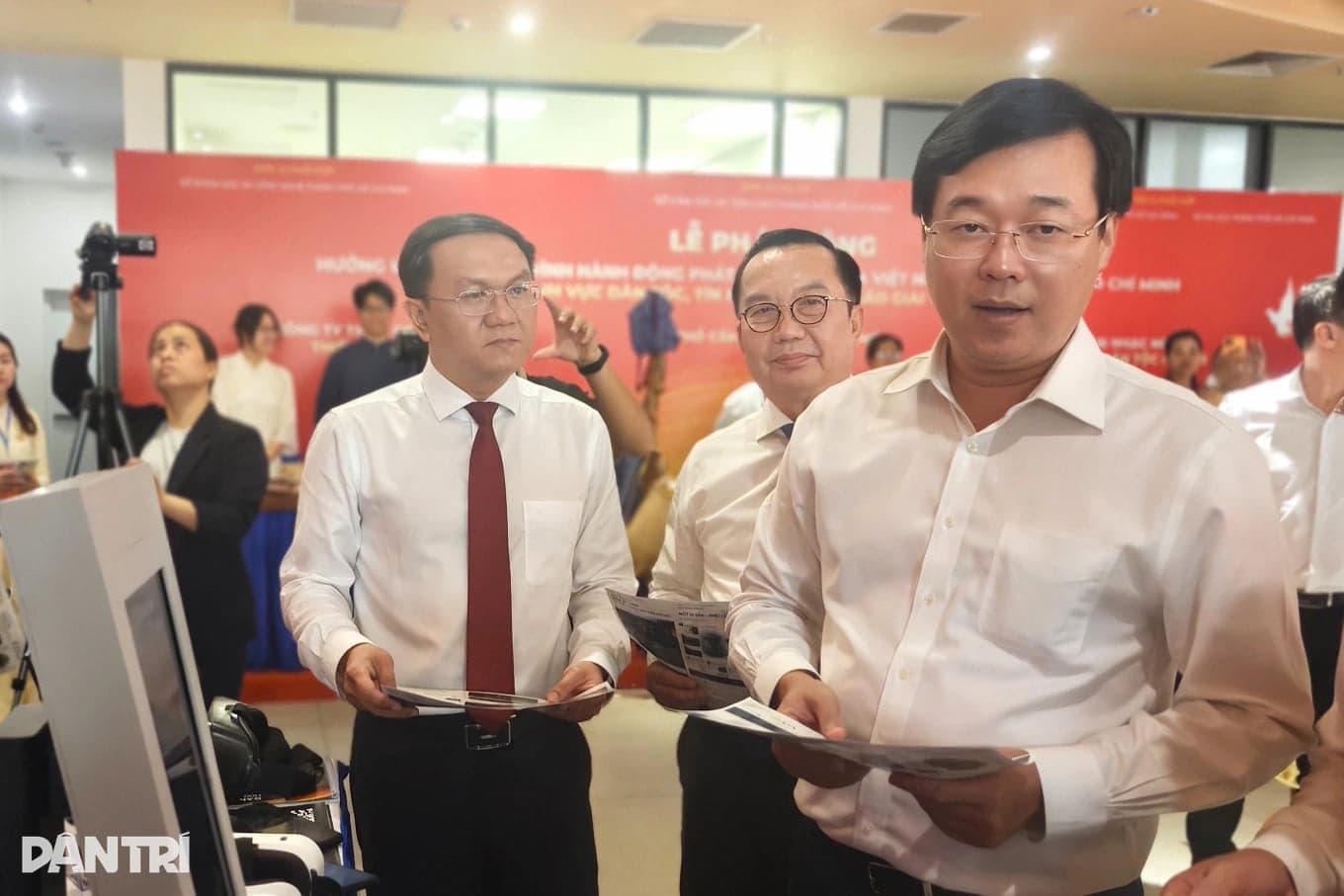
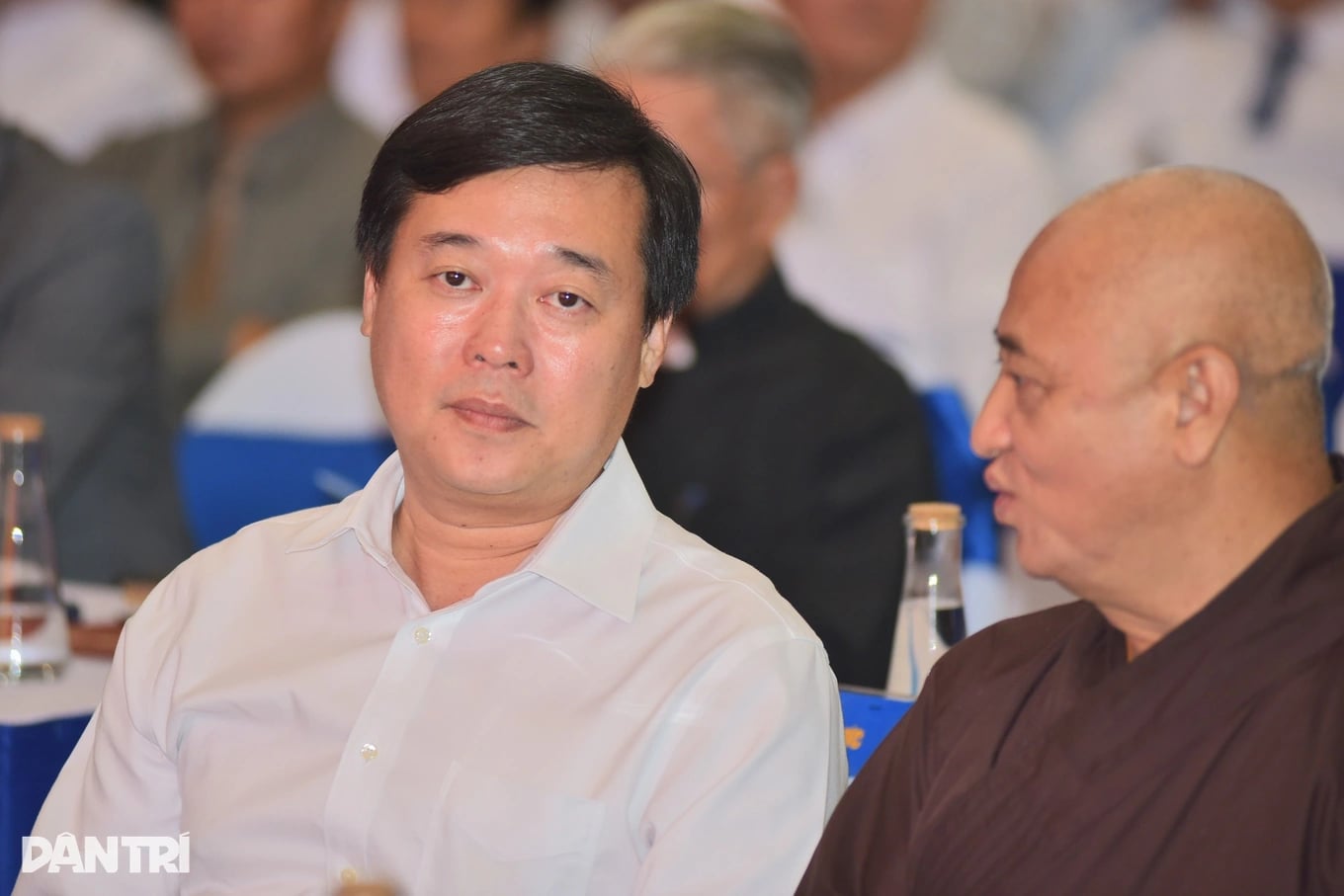
The programme was organised by the Ho Chi Minh City Department of Ethnic Affairs and Religion. Representatives of central ministries and agencies, city authorities, the Vietnam Fatherland Front in Ho Chi Minh City, religious dignitaries, respected community figures and ethnic minority groups attended the ceremony.
It was Le Quoc Phong's first event after the Ho Chi Minh City People's Council elected him chairman of the city People's Committee earlier that morning. Before the ceremony, Le Quoc Phong and the delegation visited an exhibition of traditional culture portraying the diversity of ethnic and religious communities.
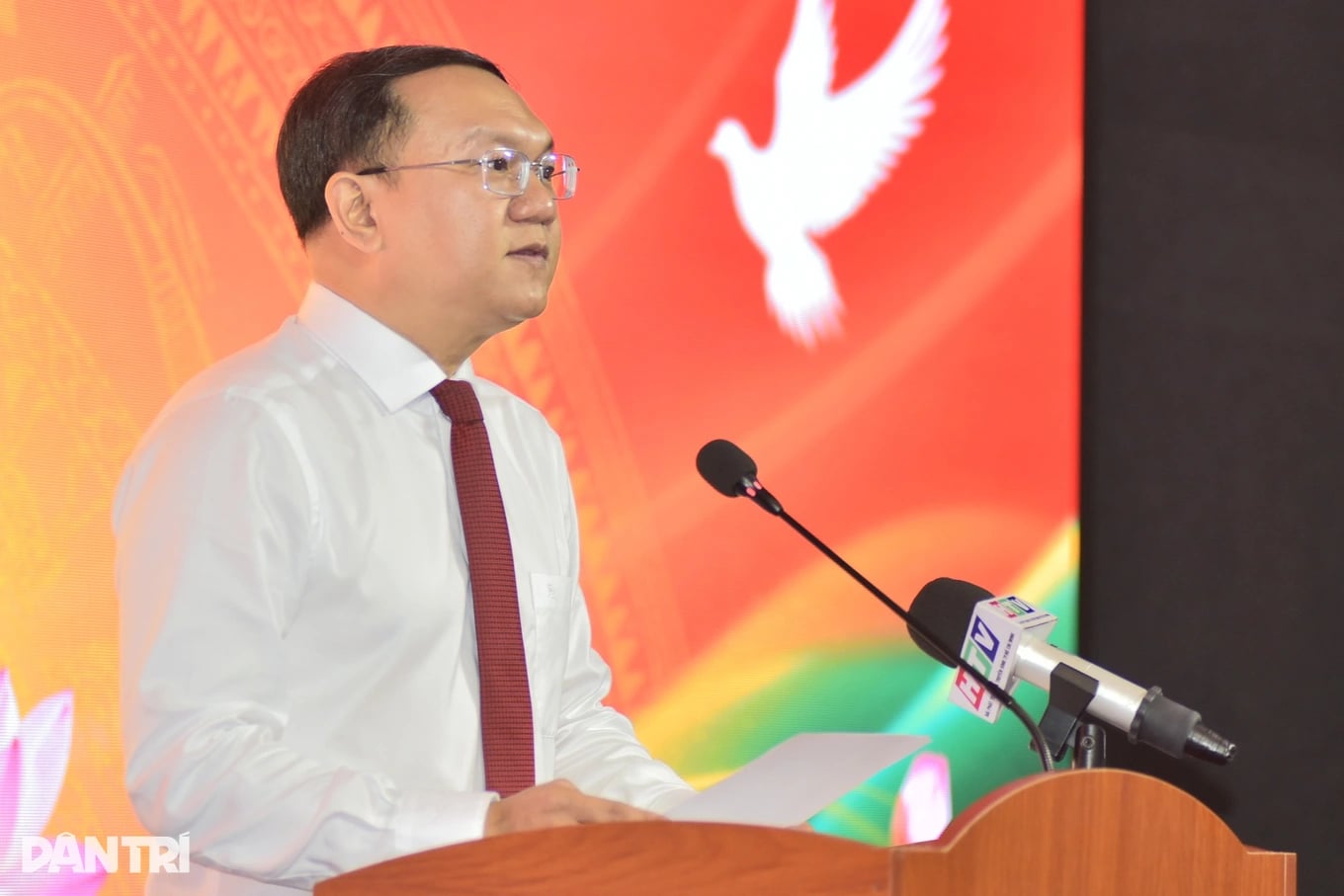
Opening the ceremony, department director Lam Dinh Thang said that in 12 days the country would mark Vietnam Culture Day on November 24 for the first time, 80 years after the first National Culture Conference. He described the ceremony as a practical activity held ahead of the occasion.
"Resolution 80 of the Politburo calls for the positive role of religious culture and beliefs to be promoted, the cultural identity of ethnic minorities to be preserved, and respected people and religious dignitaries to help spread cultural values. In other words, Resolution 80 names the very people who are in this hall today," the department director said.
To put the policy into practice, the department issued Plan No. 123 for cultural development tasks in the fields of ethnic affairs, beliefs and religion for 2026-2030.
The programme has three directions: "Preserve identity, spread goodwill and connect for development." Cultural preservation will include passing on languages and writing systems, holding festivals and supporting traditional crafts, as well as digitising heritage and gradually building a digital map of the city's heritage sites.
For beliefs and religion, the department wants each place of worship to become a cultural address for its neighbourhood. This is intended to expand the model of green, civilised and safe religious sites and support the city's social welfare work.
The department said it would coordinate the work, listen to participants, help resolve problems in line with the law and recognise effective initiatives. The programme is expected to be reviewed in 2028 and concluded in 2030.
The department director called on religious organisations, places of worship, communes, urban wards, special administrative zones and ethnic communities to carry out specific projects suited to local conditions. Possible activities include ethnic-language classes, civilised festivals, green places of worship and cultural tourism sites.
At the ceremony, the Ho Chi Minh City departments of Ethnic Affairs and Religion, Culture and Sports, and Tourism signed a cooperation programme for 2026-2030.
Under the agreement, the agencies will inventory valuable religious and worship buildings, prepare heritage-recognition dossiers, add religious sites to the city's digital heritage map, create cultural and spiritual tourism routes, and develop the Yuanxiao Festival, ethnic minority festivals and major religious celebrations into regular cultural and tourism events.
The central principle is to agree visitor rules with religious organisations and protect the solemnity of places of worship.
Representatives of 13 religions active in Ho Chi Minh City presented statements of support and committed to specific tasks with targets and timelines. Places of worship and respected representatives of the city's ethnic communities also joined the programme.
Sources: Dân Trí