
Nearly 500 students and lecturers at the Faculty of Veterinary Medicine of the Vietnam National University of Agriculture in Hanoi received rabies prevention training at a workshop on Wednesday.
The workshop was organised by SBCC Vietnam and the Soi Dog Foundation in collaboration with the university. It aimed to prepare students to become agents of behavioural change in rabies prevention.
The programme gave participants the knowledge, skills and sense of responsibility needed to help people in their communities change behaviours that increase the risk of rabies transmission.
Associate Professor Dr Bùi Trần Anh Đào, dean of the university's Faculty of Veterinary Medicine, said at the event that young people need practical skills and that academic knowledge should be combined with social responsibility.
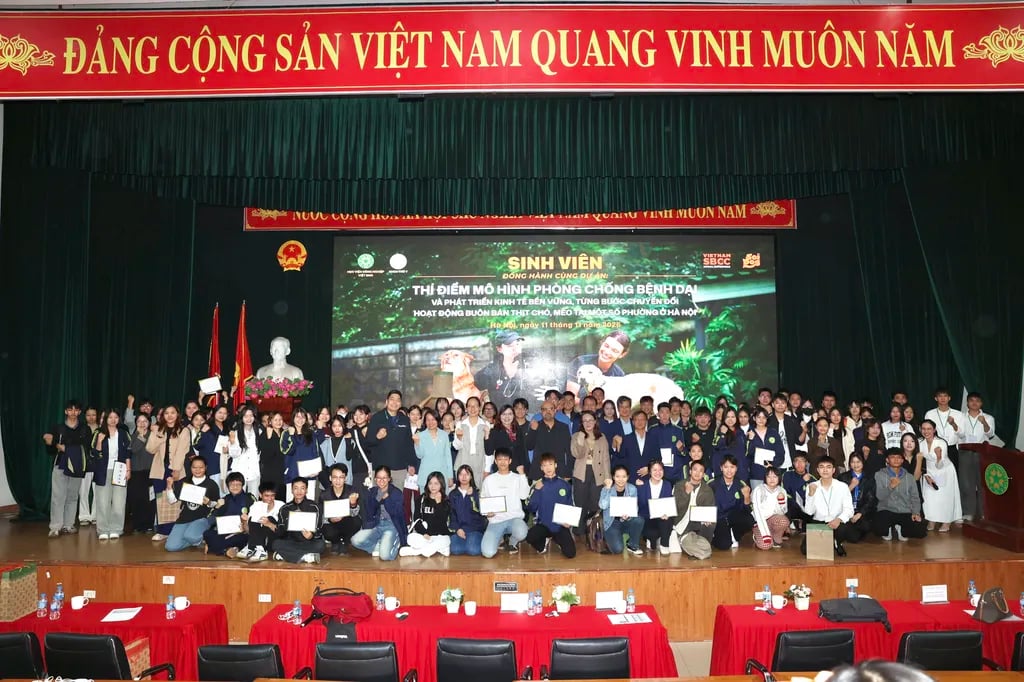
“As they become veterinarians, our students must master technical skills and be ready to lead efforts to protect public health. Partnerships between the university and specialised organisations help turn knowledge from the lecture hall into benefits for society,” she said.
Rabies is a zoonotic disease that is almost always fatal once symptoms appear, but it is entirely preventable. In line with the World Health Organization's global strategy, Việt Nam has set a national goal of zero human deaths from rabies by 2030. The collection, transport, slaughter and sale of dogs and cats for meat have been identified as high-risk stages in the chain of transmission.
In July 2025, the Hà Nội People's Committee approved the project “Pilot Model for Rabies Prevention and Sustainable Economic Development: Phased Transition of the Dog and Cat Meat Trade in selected wards in Hà Nội”.
The project combines rabies prevention and control with support for dog and cat meat businesses to help them move toward safer and more sustainable livelihoods. It has three stages: vocational training, start-up assistance and market links.
Veterinary students, veterinarians, epidemiologists and animal welfare experts have professional training and can communicate information in an accessible way to their families, friends and online communities.
The programme focused on turning scientific knowledge into concrete action for rabies prevention and public health.
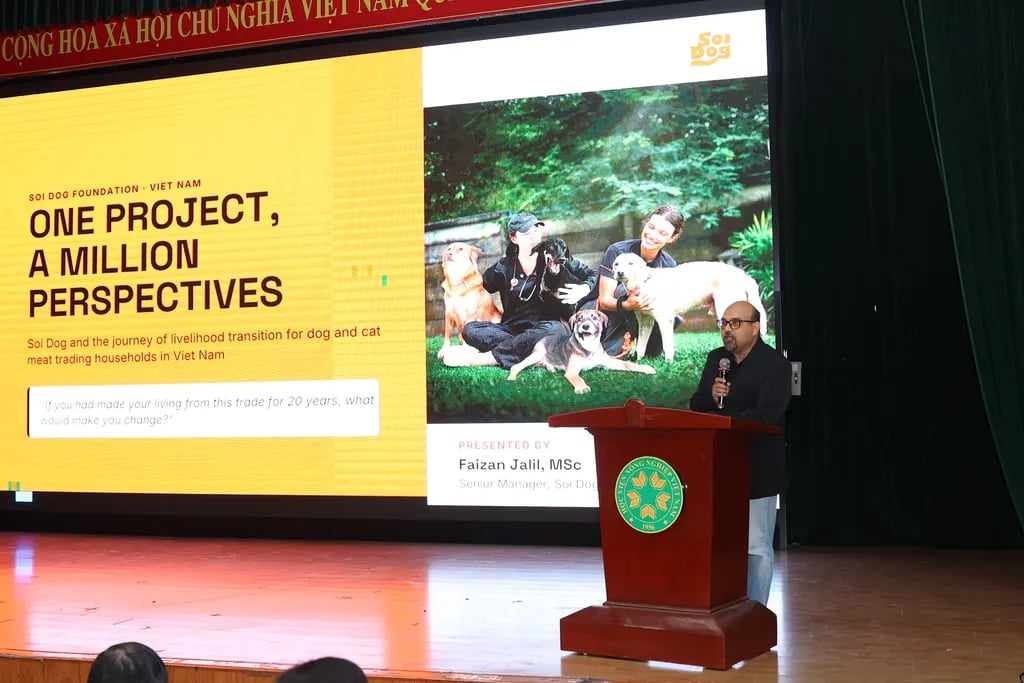
At the event, experts presented an overview of the rabies situation in the capital and traced the chain of transmission from the trade and slaughter of dogs and cats to humans. They stressed the need to control the disease through a One Health approach linking human, animal and environmental health, and described practical actions young people can start taking now.
Soi Dog Foundation senior manager Faizan Jalil described the organisation's global mission and presented Hanoi's livelihood transition model as a way to prevent rabies at its source.
“Experience in many countries shows that when young people act together, society listens and changes. The model being carried out in Hanoi shows that rabies prevention, animal welfare and secure livelihoods can go together. Tomorrow's veterinarians will be the main force carrying these changes forward and expanding them,” Jalil said.
SBCC Vietnam director Bùi Thị Duyên said social and behaviour change communication connects rabies prevention and animal welfare policy with everyday life.
“To change a deeply ingrained habit, we need people who can inspire others and understand the issue well. Each student ambassador here helps bring Hanoi closer to the goal of zero deaths from rabies,” Duyên said.
Besides deepening students' knowledge of rabies, zoonotic diseases and their link to the dog and cat meat trade, the event allows them to take part directly in the project in 14 pilot wards across Hanoi.
Through the student ambassador network, scientific knowledge will be turned into accessible messages for families, neighbourhoods and online communities, helping achieve the national goal of zero human rabies deaths by 2030.
Sources: Viet Nam News