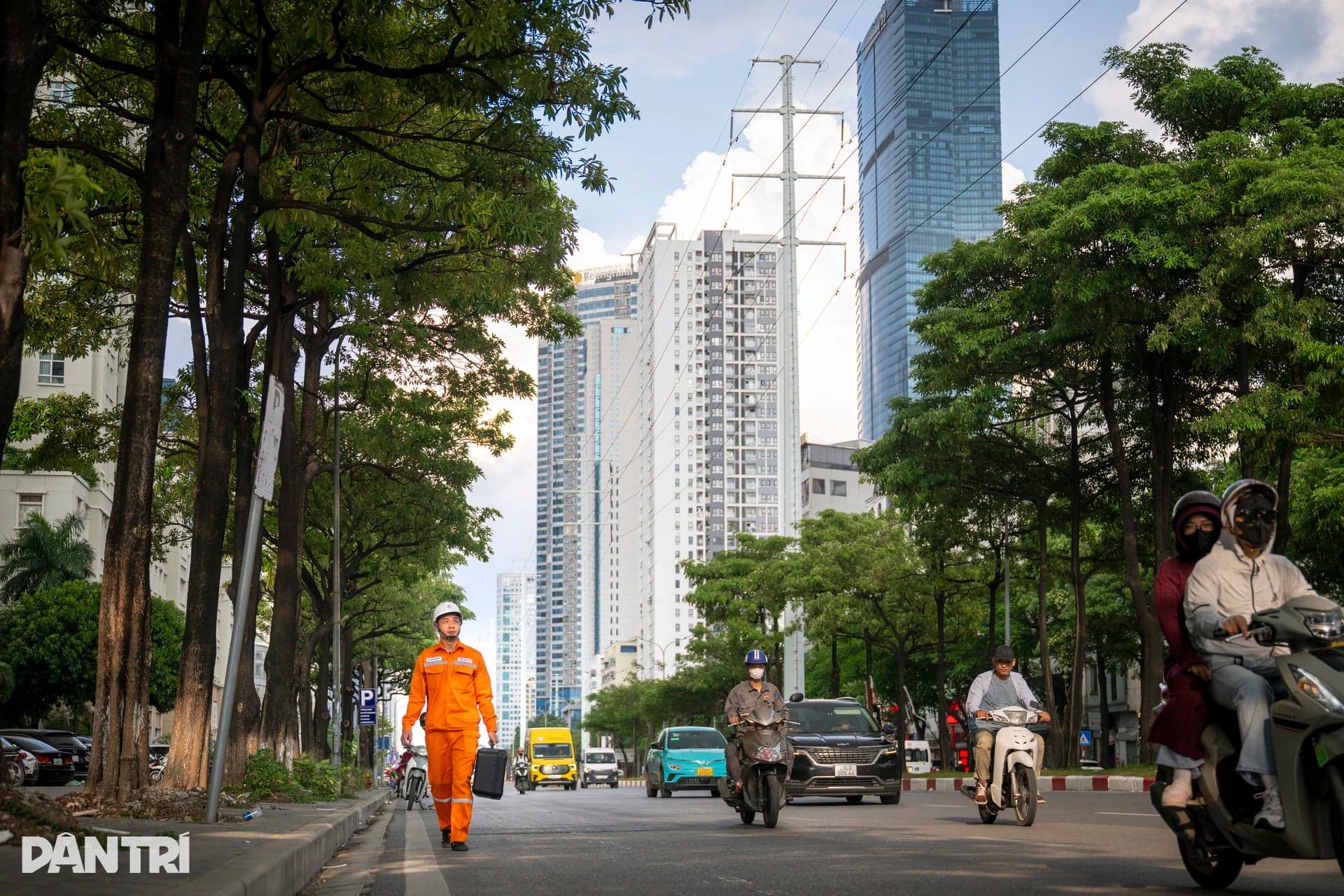
Engineers from Hanoi High-Voltage Grid Company operate unmanned aerial vehicles (UAVs) to inspect power lines and detect signs of possible faults early.
At 1 p.m., a flight team from the Operations Monitoring Centre arrived on Me Tri Street for a scheduled inspection of a high-voltage line.
Engineer Nguyen Tien Cong, 28, took the UAV from its specialised case, fitted the propellers and checked the hardware before the flight.
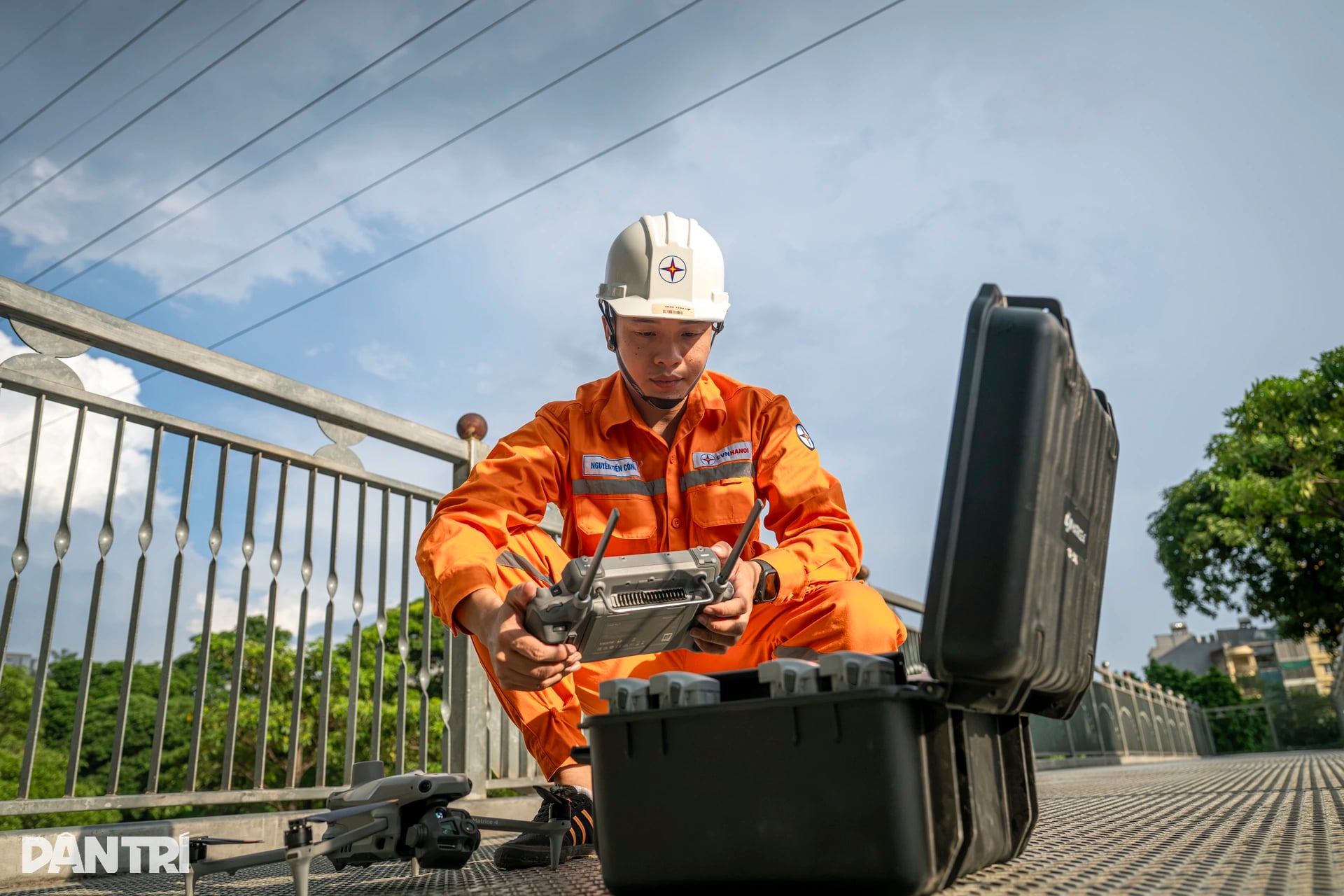
Each flight team has only two people. The equipment fits into a specialised case that can be transported by motorbike.
During 15 minutes of preparation at the site, Cong loaded a memory card containing pre-set coordinates for an automated flight route and established a live data link to the Operations Monitoring Centre.
“For each scheduled flight, we prepare a detailed plan about three days in advance and notify the local military command of the ward or commune 24 hours beforehand. The flight team can start work only after the military authority approves it,” Cong said.
Hoang Quang Tho, head of the Operations Monitoring Centre at Hanoi High-Voltage Grid Company, said the unit currently manages and monitors 136 110kV and 220kV lines and 69 substations across central Hanoi, areas north of the Red River and western Hanoi.
He said UAVs had completely replaced scheduled inspections that required workers to climb towers. The change shortened the work and removed the climbing risk for employees.
The drone took off vertically from a safe open area and headed towards the insulators and conductors of the high-voltage line.
To operate the aircraft safely near the high-voltage network, engineers take a one-month basic course of about 8 to 12 sessions. The course covers preparation, long-range flight control and image-data processing after a flight.
The engineer watches the controller screen and keeps the aircraft at a minimum safe distance from the line: 7 metres for a 110kV line and 10 metres for a 220kV line.
Engineer Nguyen Tien Cong said the high voltage can endanger the equipment if the safe distance is breached. Strong winds or drizzle can also affect the UAV sensors, so the team stops the flight immediately.
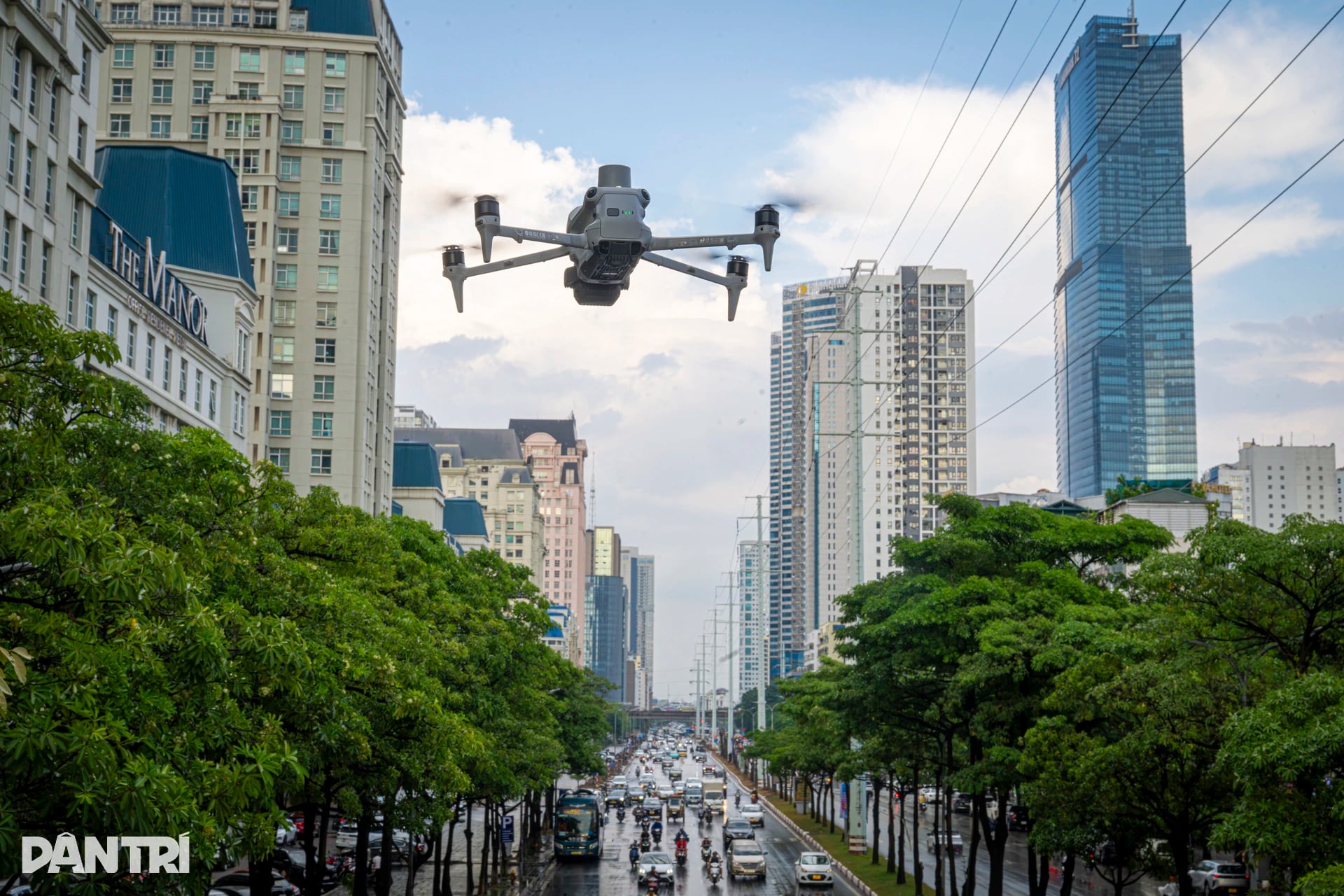
The UAV carries optical and thermal cameras and a camera with 112x zoom. They can show small components, including clamps, split pins, connectors and insulators.
“The naked eye or binoculars on the ground cannot see small details or parts hidden on top of a tower. With the UAV’s 112x magnification, even small chips in an insulator and the thinnest wire damage appear clearly on the screen,” Cong said.
During the inspection, the thermal camera detected an unusual area. The clamp at the end of phase C reached 42°C, while the ambient temperature and the other phases were 25°C.
If the heat is not detected in time, it can melt and break the clamp and cause a widespread power outage.
Nguyen Tien Cong saved the image data and temperature readings and sent them to the Operations Monitoring Centre.
Nguyen Thi Hoa Ly, a monitoring officer at the centre, said the UAV’s integrated cameras allow staff to continuously monitor all 136 lines and 69 substations according to the work schedule and during abnormal situations.
After 40 minutes in the air, the UAV landed safely in the open area. The team inspected 12 towers, saved several hours and removed the need for workers to make a dangerous climb.
The team carries out about three field inspections a week on average. Each flight lasts about 40 minutes, matching the aircraft’s battery capacity, and covers 10 to 12 single towers. In one working day, the team can conduct scheduled inspections of 50 to 60 towers.
At the centre, staff discuss the data by phone beside screens showing warnings and monitoring results. Images and readings from the UAV are sent to the centre and help identify signs of faults in Hanoi’s power grid earlier.
Sources: Dân Trí