
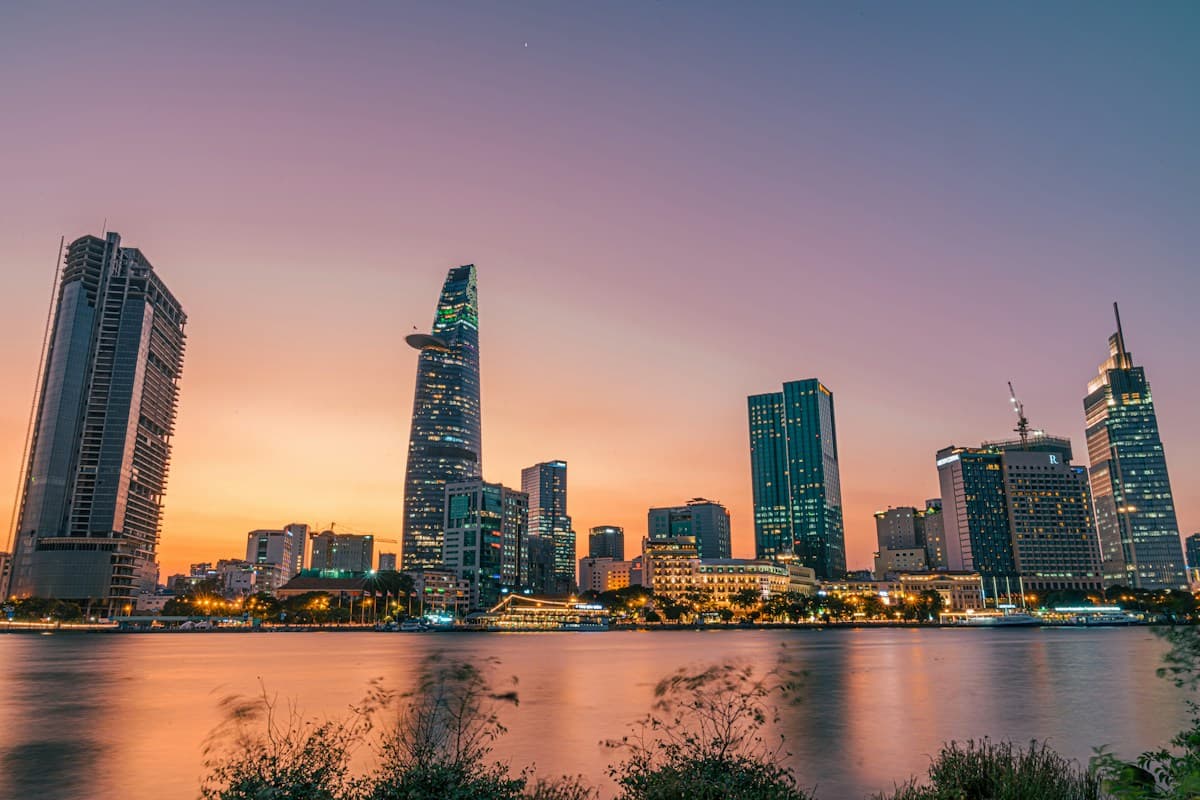
Central areas
The familiar names District 1 and District 3 remain useful geographic references for central Ho Chi Minh City. For visitors, this area is convenient because major historical sites, restaurants, offices, nightlife, and walkable streets are close together. For long-term living, the main trade-offs are price, noise, and traffic.
Thao Dien
Thao Dien has long been associated with an international environment: cafés, restaurants, schools, services, and a large supply of furnished housing. It is convenient if you actually use that infrastructure, but test your daily commute in advance if work is in another part of the city.
Binh Thanh
The zone between the traditional centre and eastern areas often provides a useful compromise: modern housing, quick access toward central districts, and extensive everyday infrastructure. The exact building and its access roads matter more than the neighbourhood label by itself.
Phu My Hung and the south
The southern planned urban area, with wider streets and international services, is popular with families and people who work nearby. If you need to travel into the old central core every day, distance becomes the main disadvantage.
How to choose an area
- Put your office or school on the map first.
- Test the route during rush hour.
- Visit the area after heavy rain if possible.
- Check walking access to groceries, cafés, and a clinic.
- Take a test ride in the evening.
- Only then compare apartments.
Questions and answers
Where is best for a first-time tourist?
Central areas are easiest if you want short trips to major sights and more walkable access.
Which area is popular with expats?
Thao Dien is one of the best-known options because of its international infrastructure.
Which areas work well for families?
It depends on school and work location; Phu My Hung and parts of Thao Dien are often considered for family life.
How should I choose an area for work?
Use real rush-hour travel time rather than kilometres.