
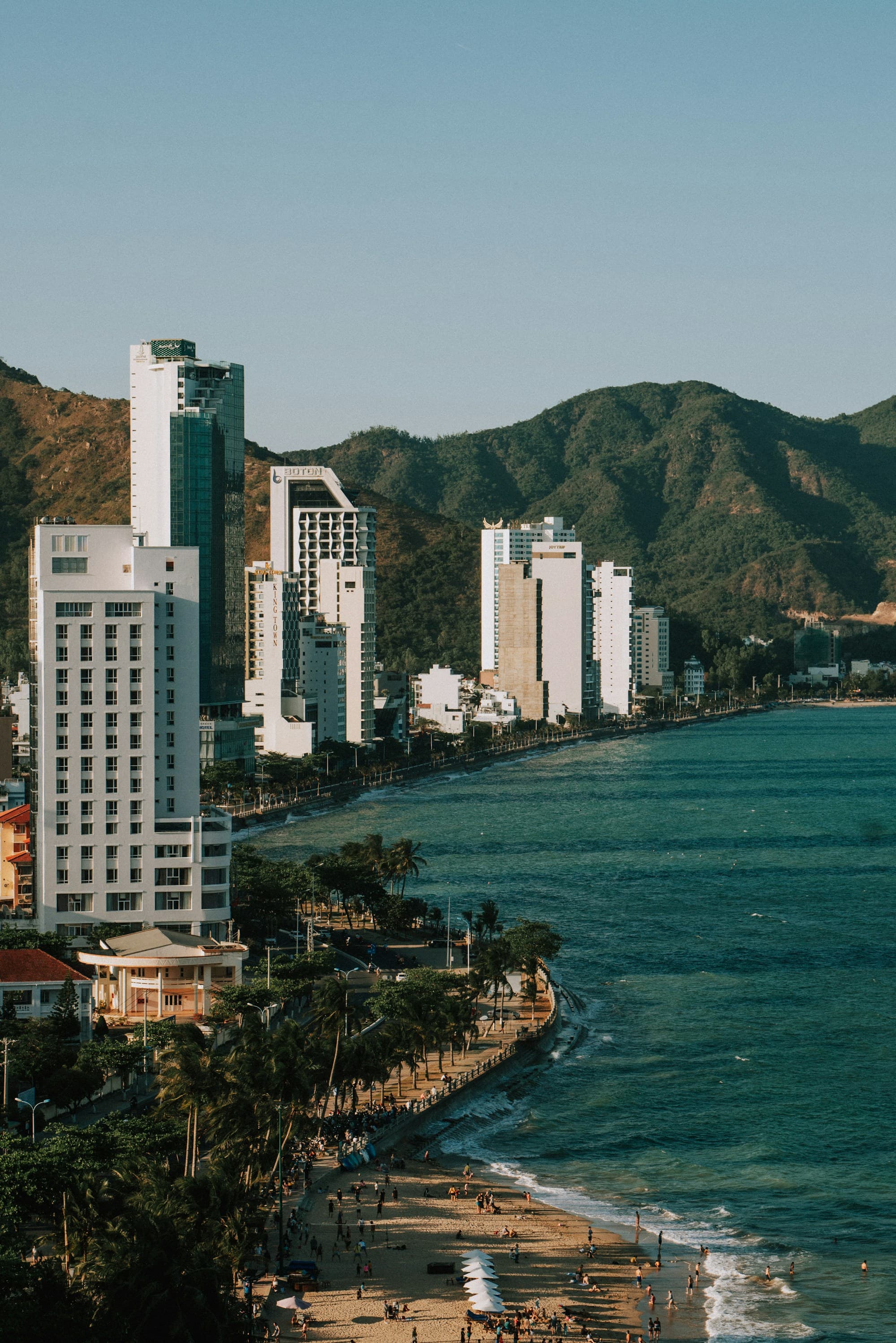
Tran Phu Beach
The central city beach follows Tran Phu Street and the promenade. Its main advantage is access: step out of the hotel, cross the road, and you are at the sea. Mornings are active with exercise and walks; evenings bring more people to the waterfront.
North and Hon Chong
North of the centre, the coastline feels more residential. Hon Chong works well for people who want to live near the sea without being in the densest tourist zone. Wave conditions, beach width, and ease of entering the water vary by stretch and season.
Beaches and islands outside the centre
Nha Trang Bay and the surrounding coast offer island trips, snorkelling stops, and beaches that require a dedicated outing. Treat these as day-trip options rather than extensions of the city promenade, and check transport and sea conditions before going.
Choose by scenario
| Scenario | Look at |
|---|---|
| Live close to the sea | Tran Phu or northern areas |
| Morning runs and walks | City promenade |
| A quieter beach day | Northern stretches or trips outside the centre |
| Snorkelling / islands | Organised island routes |
| Travelling with children | Actual sea conditions and an easy entry into the water |
Season and waves
Do not use the rule 'Nha Trang always has calm sea'. Wind, waves, and water clarity change with season and weather. Before a longer beach trip, check the forecast; before swimming, look at actual conditions and local beach flags.
Questions and answers
What is Nha Trang's main beach?
The urban beach along Tran Phu.
Where is quieter?
Northern stretches around Hon Chong often feel calmer than the central tourist area.
Can you swim year-round?
Sea conditions change by season and day; use actual waves and local warnings rather than a blanket rule.
Are there beaches outside the city?
Yes. The region has additional beaches and island routes that work well as separate outings.