
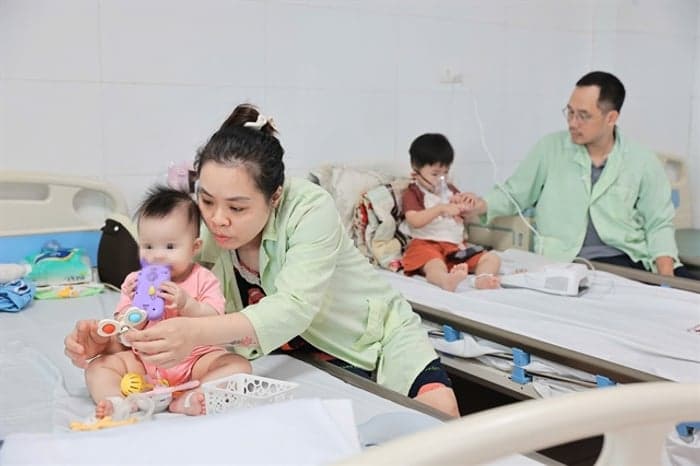
Seasonal flu cases are rising in several localities in Vietnam, particularly among young children. Doctors have warned that the illness can cause serious complications, although most patients recover within about a week.
In the northern region, cases of influenza A among children have risen in recent weeks.
The National Children's Hospital has received about 70 children with influenza A each week since early October, three times the number recorded in previous weeks, Tuổi Trẻ newspaper reported.
Most patients were under five years old. Some developed complications including pneumonia and respiratory failure.
At Hanoi Children's Hospital, flu patients currently account for about half of paediatric inpatients in its infectious disease department.
The number of children seeking medical care for flu has increased since late August. About 100 children visit the hospital each day, and 10 to 20 per cent require hospitalisation.
In Ho Chi Minh City, disease surveillance has also recorded a rise in acute respiratory infections.
During the first week of October, the city recorded 151 flu cases, bringing the total since the beginning of the year to 397. Influenza A/H1N1 2009 accounted for the majority.
Dr Do Thien Hai, deputy director of the National Children's Hospital's Centre for Tropical Diseases, said flu is common among children and cases may increase during seasonal transitions.
Children under five are particularly susceptible, partly because they often spend time in schools and daycare centres, where viruses can spread easily, Hai said.
Flu and the common cold share some symptoms, but they differ in how they develop. Children with flu typically develop a sudden high fever lasting about three days, together with coughing, sneezing and a runny nose. Common colds generally cause milder symptoms and patients tend to recover more quickly, he said.
Dr Le Van Chuong, deputy head of the Infectious Diseases Department at Thu Duc City Hospital in Ho Chi Minh City, warned that seasonal flu is not an ordinary cold and can cause serious complications, particularly among high-risk groups.
Older people, pregnant women, children and those with chronic conditions such as cardiovascular, respiratory or kidney diseases, anaemia, metabolic disorders or weakened immune systems face a higher risk of severe illness, Chuong said.
People with underlying respiratory or cardiovascular conditions are particularly vulnerable to severe outcomes from flu. Those taking immunosuppressive drugs or undergoing cancer treatment may develop more severe illness and require longer treatment, Hai said.
Complications can include pneumonia and respiratory failure, while high fever may cause seizures in children. Although most patients recover within about a week, people should seek medical attention if symptoms persist or become unusual.
Patients with persistent high fever, a poor response to fever-reducing medication, severe fatigue or poor appetite should be taken to a medical facility for evaluation and timely treatment, doctors advised.
Do not self-medicate
Doctors also warned against using antiviral drugs and antibiotics without medical guidance to treat flu at home.
Antiviral drugs can shorten the duration of illness and reduce the risk of complications in some cases, particularly when treatment begins early, usually within 48 hours of symptom onset, Dr Chuong said.
Such drugs should be used under medical guidance rather than purchased and taken without consultation, he said.
Antibiotics do not kill flu viruses and therefore should not routinely be used to treat influenza. Doctors may prescribe them when medically indicated, such as when a bacterial infection occurs alongside the flu.
Doctors also recommended that families take preventive measures for children and older people. Annual flu vaccination helps reduce the risk of infection and severe illness.
Sources: Viet Nam News

