
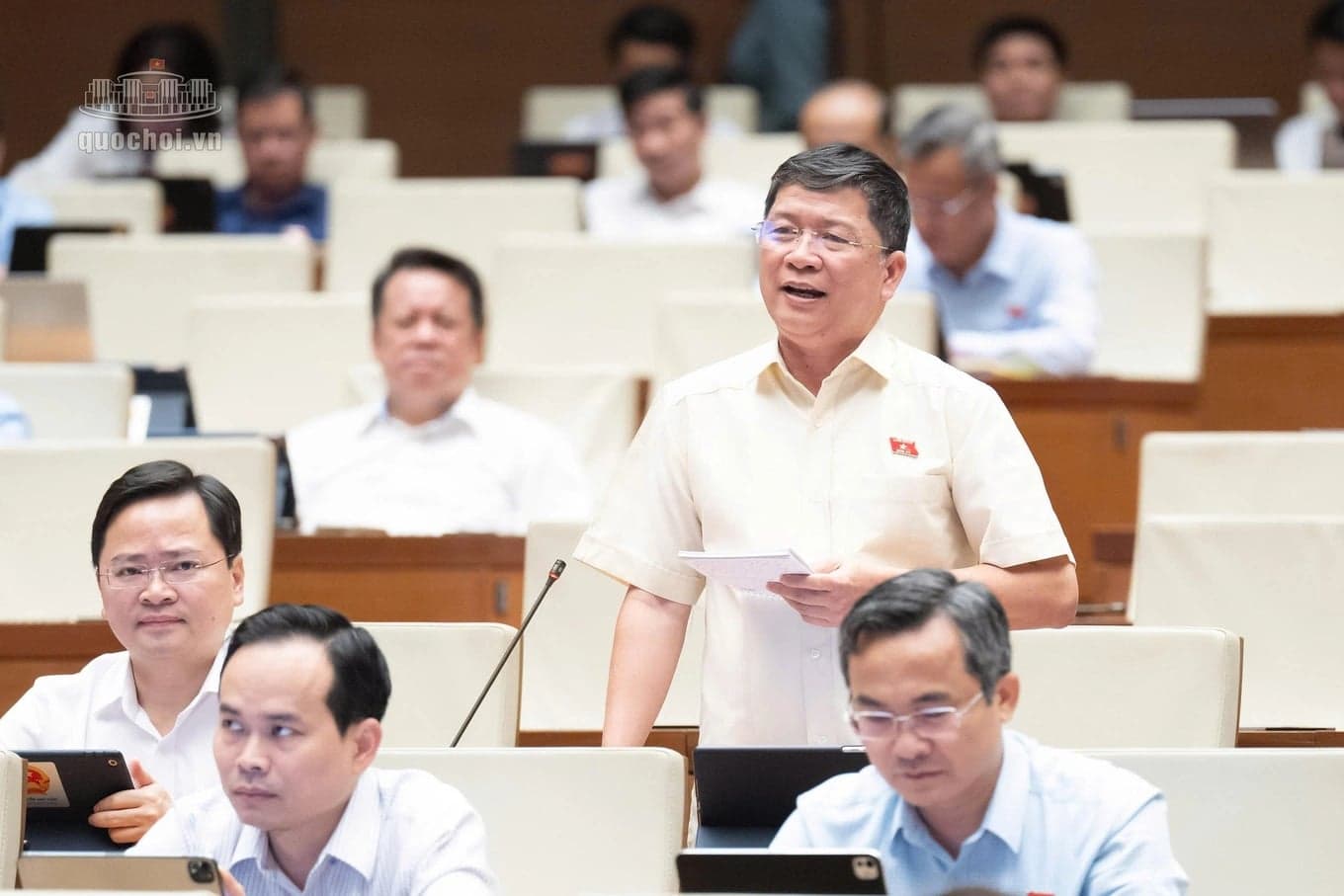
Land used by families for generations
On the morning of October 29, during debate on amendments to the Land Law, National Assembly deputy Ta Van Ha, deputy chairman of the National Assembly Committee on Culture and Social Affairs, raised an issue reported by voters in several regions. It concerns plots that families have used for generations and inherited from their ancestors.
He gave the example of a 700-square-metre plot. Older land certificates used inconsistent descriptions: some listed “TC”, meaning residential land, while others listed residential land, garden land or land for perennial crops. In every case, however, the use term was recorded as long term.
According to the deputy, when certificates are replaced, some plots have only about 200–300 square metres recognised as residential land with long-term use. The remaining area is classified as land for perennial crops, with a limited use term.
When the State acquires such land, the area outside the residential portion is compensated under agricultural-land rules. Ta Van Ha said this has caused public dissatisfaction during compensation and site clearance.
The problem also appears when parents divide land among their children. In some families with several children, parts of the same residential compound have already been divided for houses and living space. When the division is formally registered, the area connected to the parents’ old house may already have reached the residential land limit. This creates difficulties for the portions given to the children.
“This is a practical problem. If we amend the law this time, we need to study a way to resolve it for people,” Ta Van Ha said.
Balancing residents’ and the State’s interests
Deputy Nguyen Trung Kien, a full-time member of the National Assembly committees on defence, security and external relations, agreed that families with many children could be disadvantaged. He also noted cases in which a rural household uses a 500–700 square metre plot but only 360 square metres is recognised as residential land when the certificate is replaced.
In his view, compensation when the State acquires such land could disadvantage the household. At the same time, he noted that some plots left from earlier land-use practices cover 5,000–7,000 square metres. Older certificates may have recorded them as land with long-term use or as residential land. Compensating all of that area at residential-land rates would also be inappropriate because it would affect the State’s interests.
He proposed studying a limit that takes the number of children in a family into account. A family with one child could have one limit, while families with two, three or four children could be assigned a corresponding calculation.
He said the approach should reduce losses for residents when land is acquired, sites are cleared or land is inherited, while also protecting the interests of the State and companies carrying out projects.
Nguyen Trung Kien therefore proposed considering the plot’s size and the family’s circumstances when setting the limit, rather than treating all historically established plots in the same way.
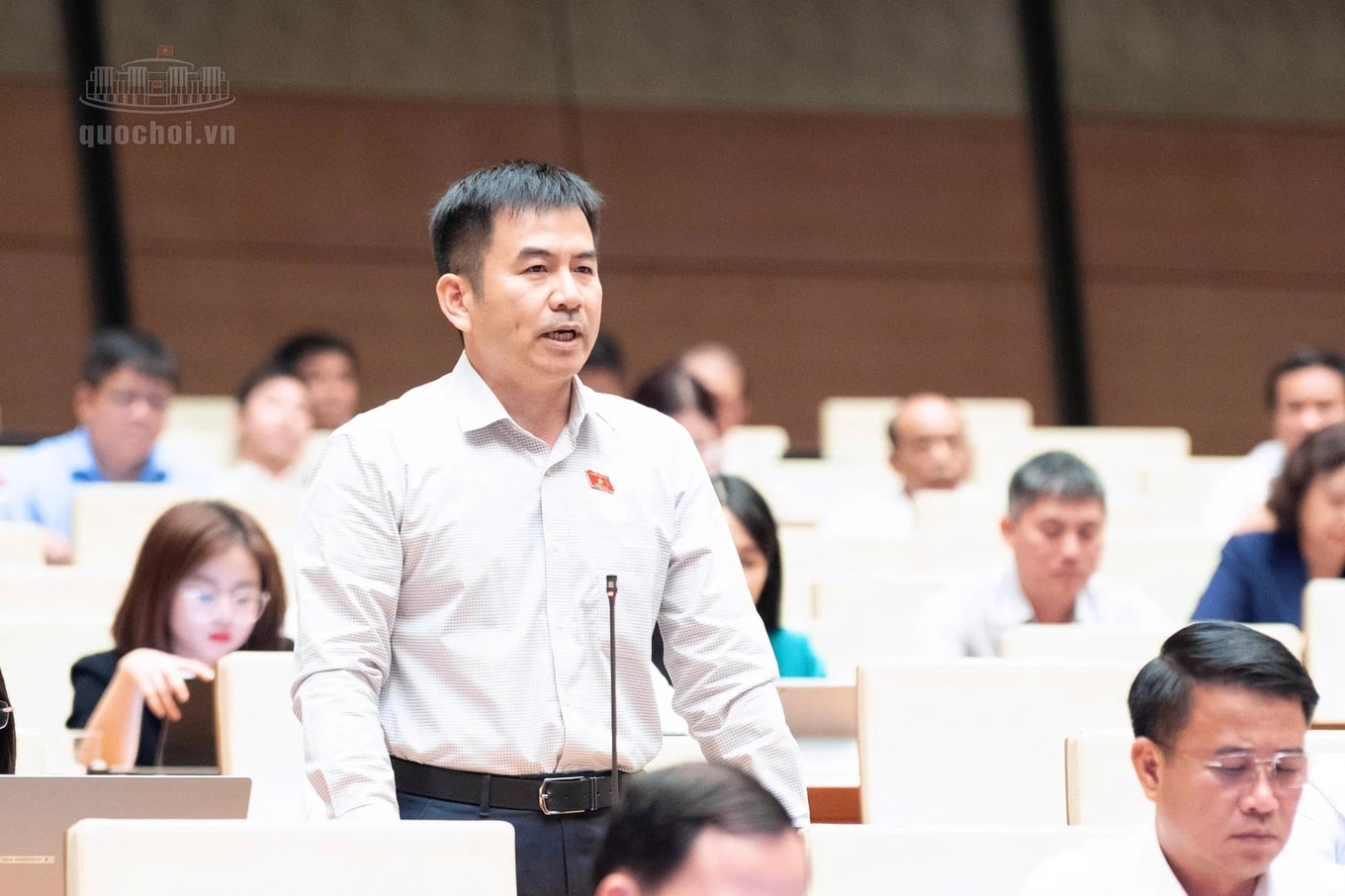
Separate rules proposed for gardens and ponds near homes
Deputy Nguyen Ngoc Ha, deputy chairman of the National Assembly Committee on Defence, Security and External Relations, proposed clarifying rules for gardens and ponds connected to residential land.
He said Clause 1, Article 9 of the draft law groups agricultural land into three categories: cultivated land, forestry land and other agricultural land. This would make the classification simpler. However, a garden on or next to residential land in a rural area, as well as a garden within an urban home compound, could be grouped with “other agricultural land” and given only a limited use term. Applying the same regime could disadvantage residents in terms of use duration, compensation value, inheritance and gifting rights.
The deputy cited voters’ questions: “What is the garden in our family’s red land certificate called now? Do we have to redo the certificate? If the State acquires it, which land category will determine compensation?”
He said a family garden or pond inside a residential area is connected to the place where the family lives. The land may have been cleared by ancestors and inherited by several generations. It can also support a family’s livelihood and provide land that may later be converted to residential use or divided among children when they start families.
The deputy said this type of land should be distinguished from land used for perennial crops such as coffee, cashew and tea. Those plots are allocated under limits, have a defined use term and are linked to raw-material production plans.
He proposed a separate name for “garden land and ponds on the same plot as, or next to, residential land in a residential area” and rules allowing this category to be used stably for the long term.
Conversion to residential land would use simpler conditions and reasonable financial obligations. When the State acquires the land, residents should receive compensation and support that reflect its actual value.
Nguyen Ngoc Ha also proposed making clear that correcting the land category on an existing certificate would not incur a fee or reduce the user’s lawful rights and interests.
For categories called “other”, the deputy proposed a precise explanation so local authorities would not interpret them differently. He said the scope of these categories should be defined in the law itself, without allowing subordinate regulations to expand them.
Sources: Dân Trí

