
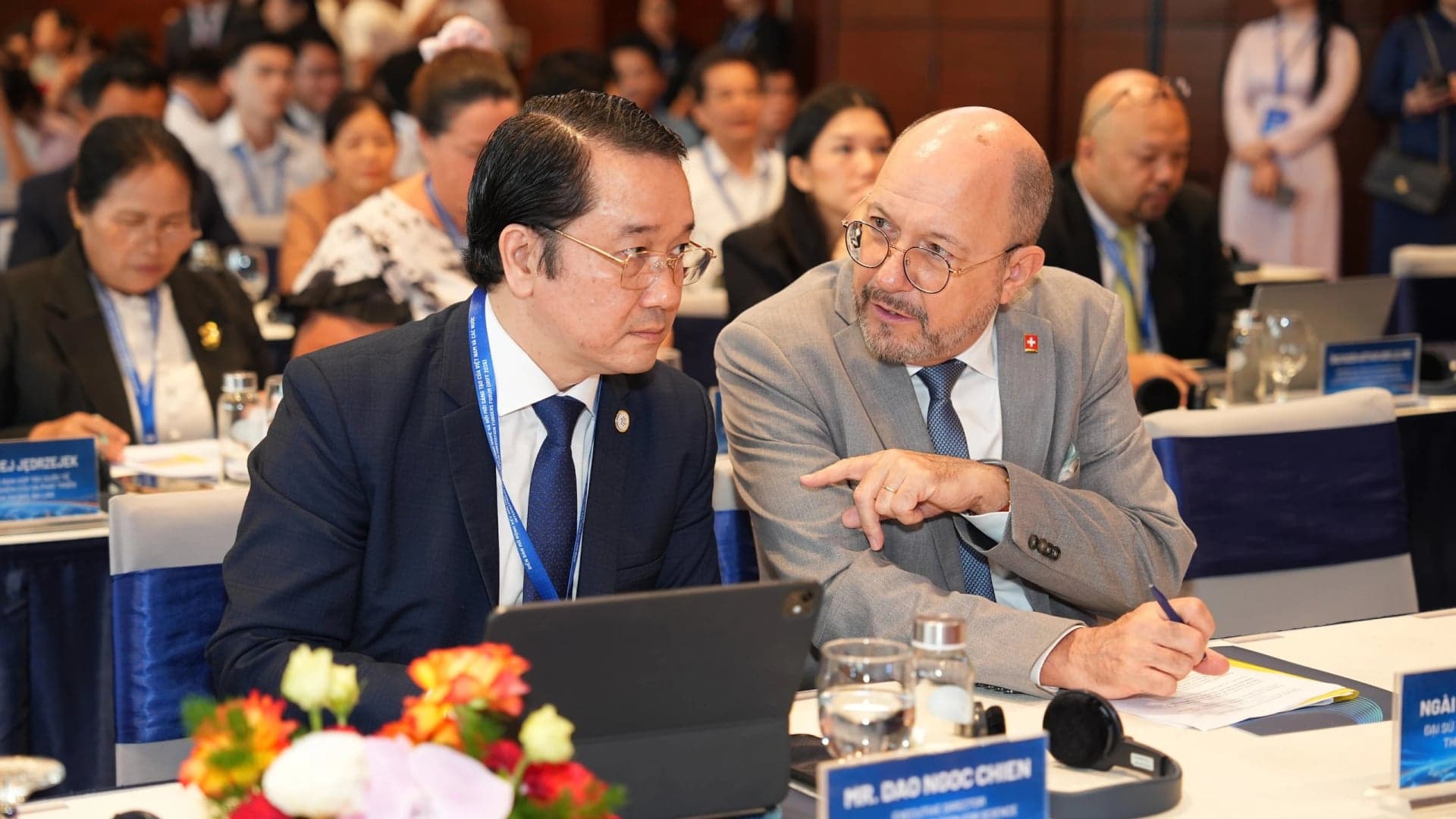
Experts said Vietnam's research funding system should move from formal procedures to measuring real results and build closer links between the government, scientists and businesses to solve major problems.
On November 5, the National Convention Center in Hanoi hosted the opening session of the expanded Forum on Cooperation in Science, Technology and Innovation between Vietnam and other countries, or IRIFF 2026, organized by the National Foundation for Science and Technology Development, known as NAFOSTED.
More than 300 Vietnamese and international delegates discussed how investment in science can create lasting research capacity and useful products instead of stopping at acceptance reports or agreements on paper.
Measuring real results
Minister of Science and Technology Vu Hai Quan said that under Politburo resolutions 57-NQ/TW and 59-NQ/TW, Vietnam aims to spend 2% of GDP on research and development by 2030. More than 60% of that funding is expected to come from society and businesses, rather than only from the state budget.
“Vietnam wants international cooperation to move beyond receiving knowledge and technology. It must progress to joint research, joint innovation and solving shared challenges. Cooperation should be measured by programs put into practice, technologies developed and practical value created, not only by the number of agreements,” the minister said.
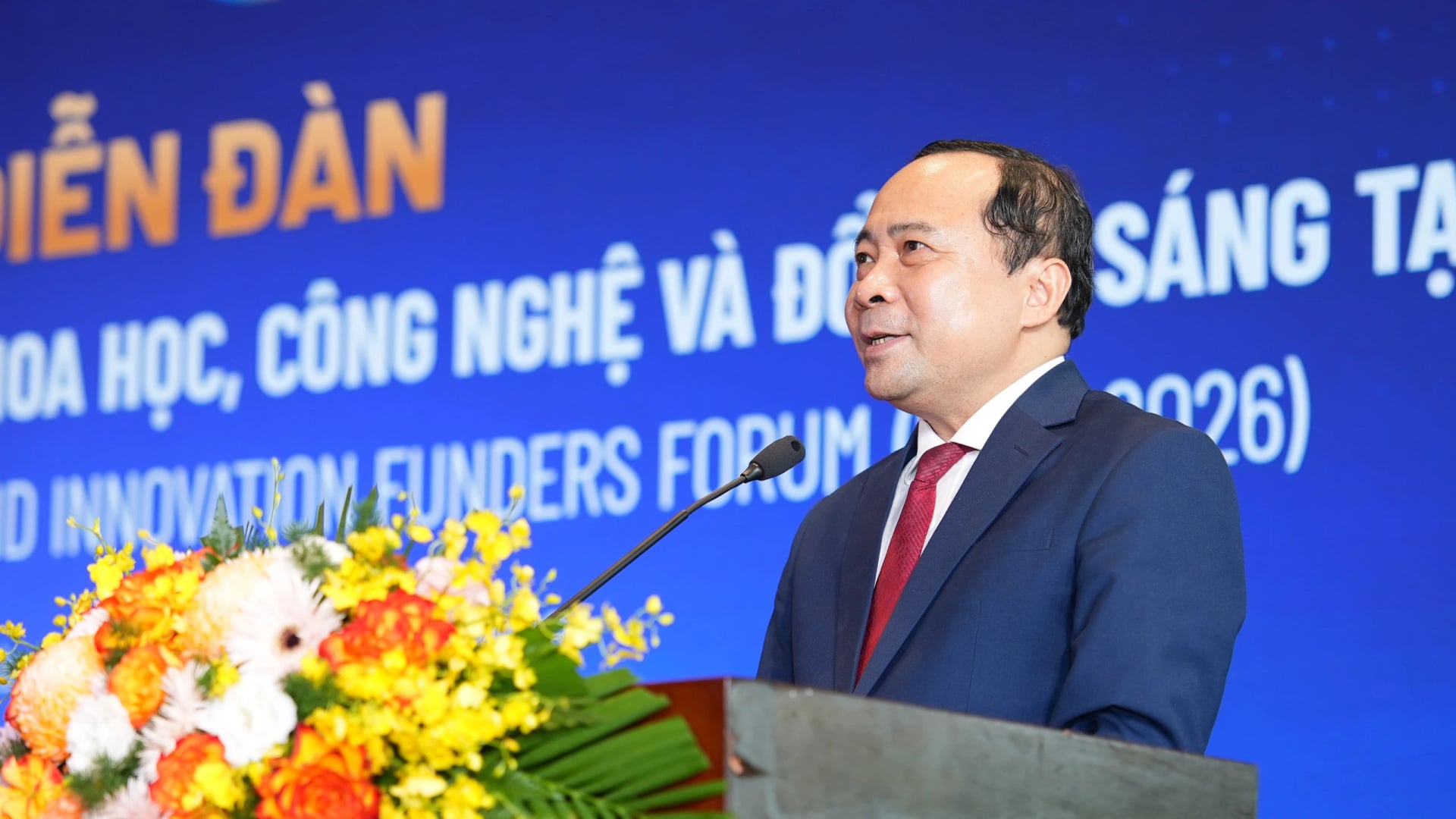
Vu Hai Quan also said that mastering strategic technologies requires a link between the “three sides”: the state, scientists and businesses. They should define problems together, contribute resources and share benefits when a product reaches the market.
Dao Ngoc Chien, director of NAFOSTED's executive agency, said domestic and foreign funding bodies need to move beyond formal networking toward co-funding, jointly setting research problems and sharing costs, data and risks.
“Basic research needs stable, long-term investment, respect for academic freedom and acceptance of scientific risk. Applied research and technology development must address practical problems, with businesses and end users involved from the beginning to test and scale the results,” he said.
Funding major problems instead of isolated projects
Many experts said the hardest question is no longer how much to invest, but where and how to invest in order to create the greatest impact.
Associate Professor Lam Quang Vinh of Vietnam National University Ho Chi Minh City pointed to a weakness in the old funding model: money was allocated to individual projects. Their goals often stopped at project acceptance and a research paper; staff worked temporarily for each project, while equipment bought for it became closed off and belonged to the individual or group that ran the project.
Vietnam National University Ho Chi Minh City is therefore moving to a three-to-five-year, long-term package funding model for strong interdisciplinary research groups. It follows the full “3P” cycle, from international publication to patent and commercial product.
Dr. Le Mai Lan, vice chairwoman of Vingroup and chairwoman of the VinUniversity Council, shared lessons from seven years of operating the VinIF Innovation Foundation, which provided more than VND 1 trillion in funding between 2019 and 2026.

The most valuable lesson, she said, was the number of international publications and patents, as well as redefining the work of young researchers by treating doctoral research as a profession with pay and suitable working conditions.
The traditional funding model usually starts with a scientist's proposal, while businesses, which have practical problems, data and the ability to bring products to market, have not been fully involved. As a result, many research findings have not been widely applied.
“Based on that experience, we gradually moved from funding individual projects to funding solutions to major challenges, with businesses involved from the stage of defining the problem and throughout the process. Instead of only accepting research proposals, we proactively identify strategic problems in AI, semiconductors, energy, health care and smart transport.
This connects basic research, applied research and technology development while promoting cooperation across disciplines, universities and institutes. Research problems come not only from laboratories, but also from factories, hospitals and daily life,” Le Mai Lan said.
Sources: Thanh Niên

