
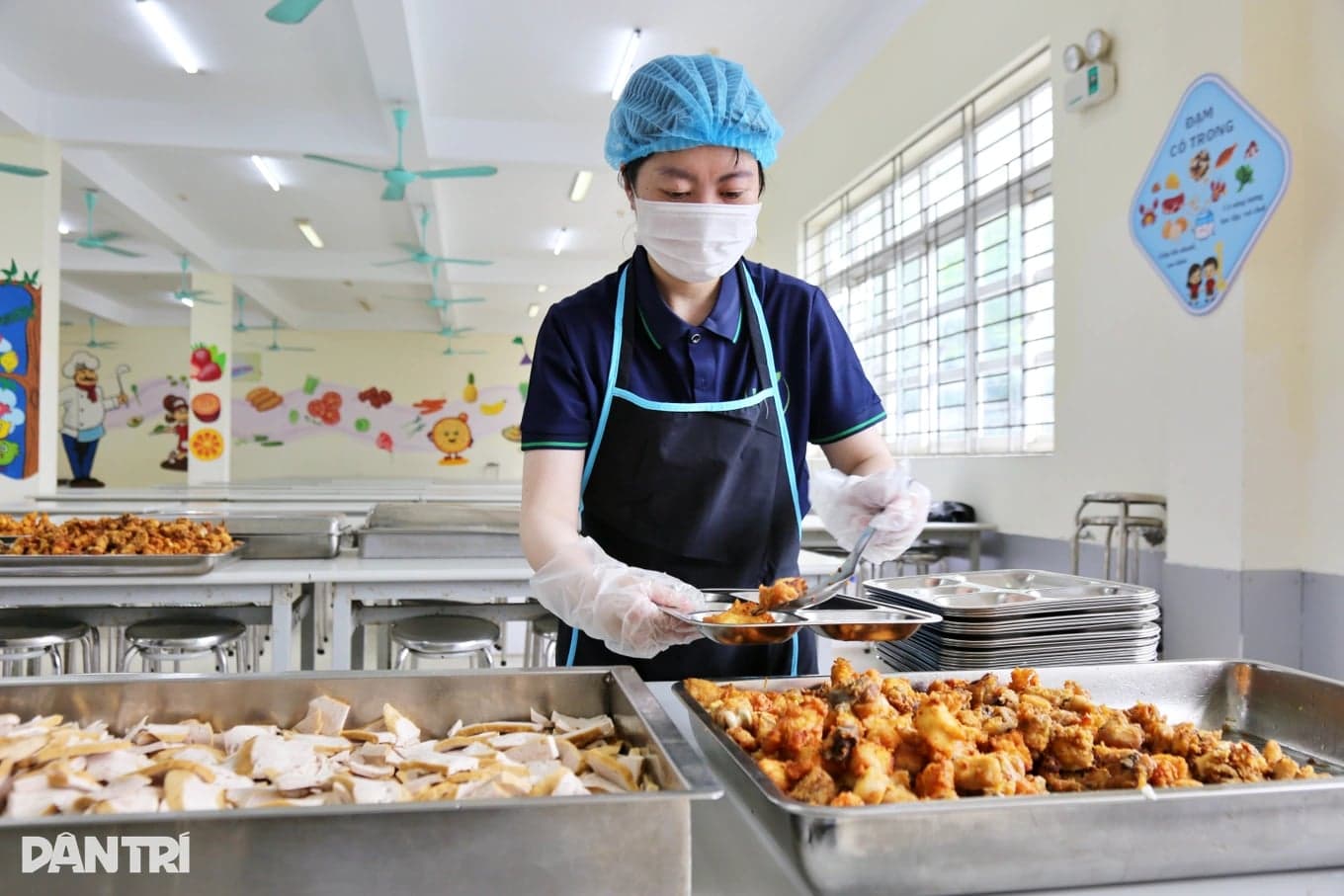
Vietnam's Ministry of Education and Training has opened a draft circular for public comment on meals at boarding and day-boarding schools and canteen services at preschools and general education institutions. The draft sets out the responsibilities of the parties involved in school meals.
Under the draft, a school would have to do more than check meal quality each day. It would also have to prepare an emergency response plan.
Article 12 of the draft says an educational institution must draw up a plan to prevent and respond to food-safety and meal-quality incidents, or include those measures in its school-safety plan. The school would work with health authorities to hold response drills.
If a hazard is found or a food-safety incident is suspected, the head of the educational institution would decide whether to temporarily stop receiving or using the service, or suspend related activities.
At the same time, the school would have to take preventive measures to limit disruption to boarding and day-boarding meals and to the care of students.
Under the ministry's proposal, when an incident is suspected or there is a risk of one, the school would have to carry out a plan to protect students and other affected people on the school premises.
The draft calls for immediate notice to health authorities, management agencies and the service provider. The school would also have to provide first aid under professional guidance and take people suffering from food poisoning to a medical facility for emergency treatment.
The school would also have to keep food, prepared meals, retained samples, ingredients and related records and documents in their original condition. These materials would support the investigation, product traceability and efforts to determine the cause of the incident.
The draft says the educational institution must work with health authorities to investigate the incident, trace the origin of products and handle food poisoning under the rules. Parents or legal guardians would have to receive timely and accurate information.
Alongside the incident response plan, the drafters propose requiring the head of the educational institution to regularly check and supervise meal services. This would include comparing menus, stated quantities and actual portions with the information that was published and agreed.
Education authorities, health authorities and other relevant units would conduct inspections within their functions, duties and powers. They could coordinate interagency inspections when necessary. The draft also calls for unscheduled inspections when there is a risk, an incident or signs of a violation.
Parents or legal guardians would be allowed to take part in monitoring meal services and submit complaints or recommendations to the school head or a competent authority. The draft stresses that parental monitoring would not replace the responsibility of the school or the competent authorities.
The draft circular was published on the online portal of the Ministry of Education and Training. The public comment period runs from October 28 to November 7.
Sources: Dân Trí

