
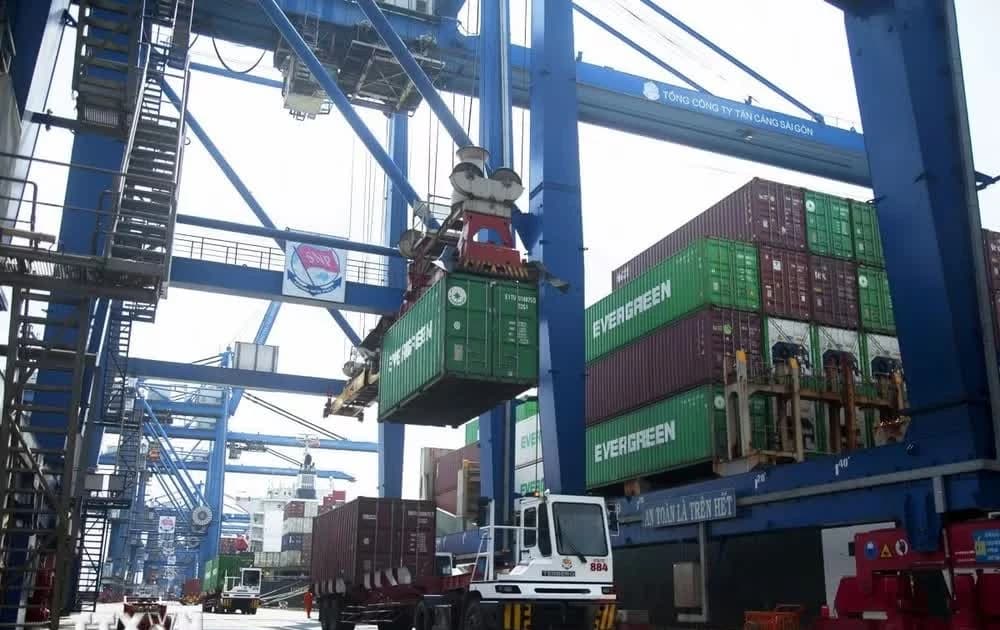
The state visit to Denmark by To Lam, General Secretary of the Communist Party of Vietnam Central Committee and President of Vietnam, is giving fresh impetus to bilateral relations, particularly trade.
Complementary strengths
Denmark is one of the European Union's leading investors in Vietnam, with companies operating in seaports, maritime transport, logistics and green industries.
According to the Ministry of Industry and Trade, trade has a complementary structure. Vietnam mainly exports textiles and garments, footwear, seafood, wooden products, iron and steel products, machinery, electronic components and consumer goods to Denmark. It imports machinery and equipment, pharmaceuticals, chemicals, technology products and materials for manufacturing and the green transition.
The EU-Vietnam Free Trade Agreement provides a framework for tariff reductions, improved market access and expanded trade opportunities. Two-way trade reached 609.47 million USD in the first eight months of 2026, up 37.5% year-on-year. Vietnam's exports totalled 346.81 million USD, up 27.7%, while imports rose 53% to 262.66 million USD.
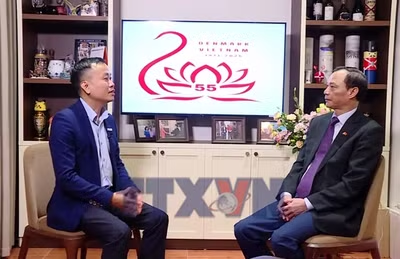
Vietnamese Ambassador Nguyen Le Thanh said bilateral relations had developed substantially over the past 55 years. Diplomatic relations began in 1971, followed by a Strategic Partnership in 2011, a Comprehensive Partnership in 2013 and a Green Strategic Partnership in 2023.
Vietnam is becoming increasingly important to Denmark's Indo-Pacific strategy. Economic, trade and investment cooperation remains a major driver, while Danish businesses increasingly view Vietnam as a dynamic market and long-term investment destination.
At the end of July 2026, Denmark had 179 valid investment projects in Vietnam with total registered capital of nearly 2.5 billion USD, ranking 21st among 153 investing countries and territories. LEGO, Maersk, Pandora, Vestas and Novo Nordisk have established or expanded operations in Vietnam.
Strengthening cooperation
At a working session with Vestas, Deputy Minister Truong Thanh Hoai said Vietnam considers onshore, nearshore and offshore wind power a priority for energy security, electricity demand and the energy transition.
Wind power development will add clean electricity to the national grid and create opportunities in renewable-energy manufacturing, technical services, ports, logistics, operations and maintenance. Hoai called on Vestas to share international experience, work with Vietnamese authorities and businesses, expand cooperation with domestic suppliers and support technology transfer and workforce training.
Ambassador Thanh said Vietnam was shifting towards growth driven by science and technology, innovation and digital transformation under Politburo Resolution No. 57-NQ/TW. The countries' complementary strengths create opportunities for joint research, technology development, new products, market expansion and deeper participation in global value chains.
Priority should be given to green-energy cooperation from policy and planning to investment, industrial development and renewable-energy supply chains. Other opportunities include artificial intelligence, robotics, biotechnology, energy technologies, advanced materials, maritime affairs, logistics and green supply chains.
These advantages provide a basis for stronger business links, infrastructure and logistics services, and sustainable green value chains.
Sources: VietnamPlus / Vietnam News Agency

