
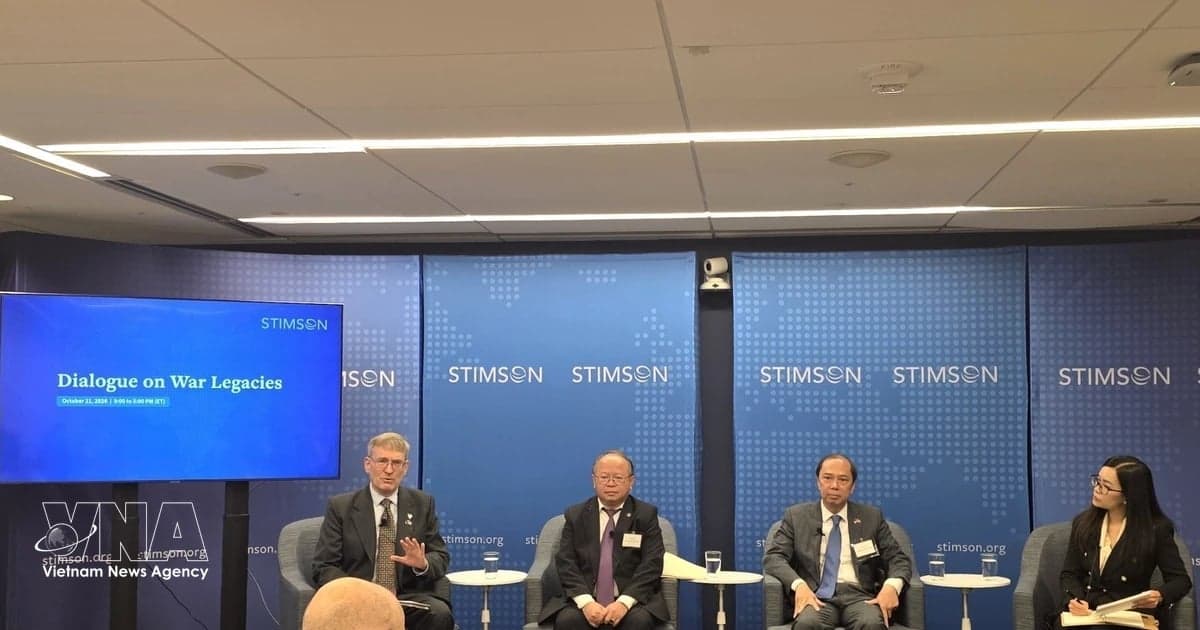
The Vietnamese Embassy in the US has expanded cooperation with US partners to address the consequences of war. The effort focuses on mobilising support and resources for Vietnam’s national 500-day campaign to search for, recover and identify the remains of fallen Vietnamese soldiers.
Speaking at a dialogue on war legacies in Southeast Asia organised by the Stimson Center in Washington, D.C. on October 21, Vietnamese Ambassador to the US Nguyen Quoc Dung briefed US government agencies, non-governmental organisations and experts on Vietnam’s work to address war consequences. He called for international support for the urgent humanitarian effort.
Dung said Vietnam has consistently cooperated fully and in good faith with the US to seek information about missing US servicemen and remains committed to the humanitarian mission. Vietnam is also carrying out a national 500-day campaign, launched in April, to search for, recover and identify the remains of fallen Vietnamese soldiers.
Vietnam has mobilised unprecedented resources under the campaign and aims to recover around 7,000 sets of remains. Efforts are also being intensified to match DNA samples through a centralised database of relatives of fallen soldiers and to clear unexploded ordnance left from the war in key former battlefields.
The diplomat said time is becoming critical in the search for fallen soldiers. Former battlefields are increasingly being turned into residential areas, roads, farms and industrial zones, erasing physical traces. Veterans and witnesses are ageing, leaving fewer opportunities to collect their accounts. Meeting the campaign’s goals requires combining Vietnam’s field records and oral histories with US wartime archives, forensic anthropology and advanced DNA technology.
In the coming weeks, Vietnamese experts and colleagues from Texas Tech University will return to the National Archives and Records Administration facility in College Park, Maryland. They will continue examining roughly 2–3 million pages of wartime archives that may contain clues to fallen Vietnamese soldiers, including coordinates in military reports, temporary burial sites, troop movements, old maps and aerial photographs.
Dung said universities, veterans, historians, archivists and technology experts could all make meaningful contributions. Artificial intelligence could help search and cross-reference millions of pages of documents, but it cannot replace human memory. Technology must therefore be combined with eyewitness accounts, and action is needed now.
The ambassador said cooperation on war legacies had helped transform Vietnam-US relations into a Comprehensive Strategic Partnership. He said the clearest results were seen in children being able to attend school safely, people with disabilities gaining greater independence and families finally welcoming loved ones home after decades of waiting.
On October 19, Dung discussed the campaign’s objectives and significance, as well as Vietnam’s cooperation with US partners, with lecturers and students from the University of Georgia in Washington, D.C.
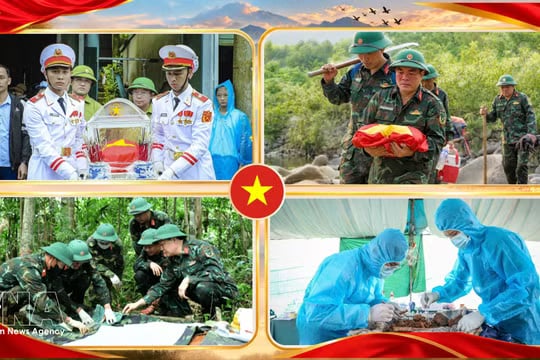
The university is involved in training on remote-sensing technologies to locate suspected burial sites, environmental DNA research, field sampling methods and the analysis of commingled remains. It is also helping establish a joint research and working group for a DNA laboratory in Hanoi.
According to the diplomat, Vietnam is working closely with US partners to examine National Archives and Records Administration archives, including clues to mass graves. US cooperation in sharing military operational data and providing DNA identification technology expresses responsibility and reconciliation. It shows how the two countries can address their historical legacy through mutual respect and understanding.
Sources: VietnamPlus / Vietnam News Agency

