
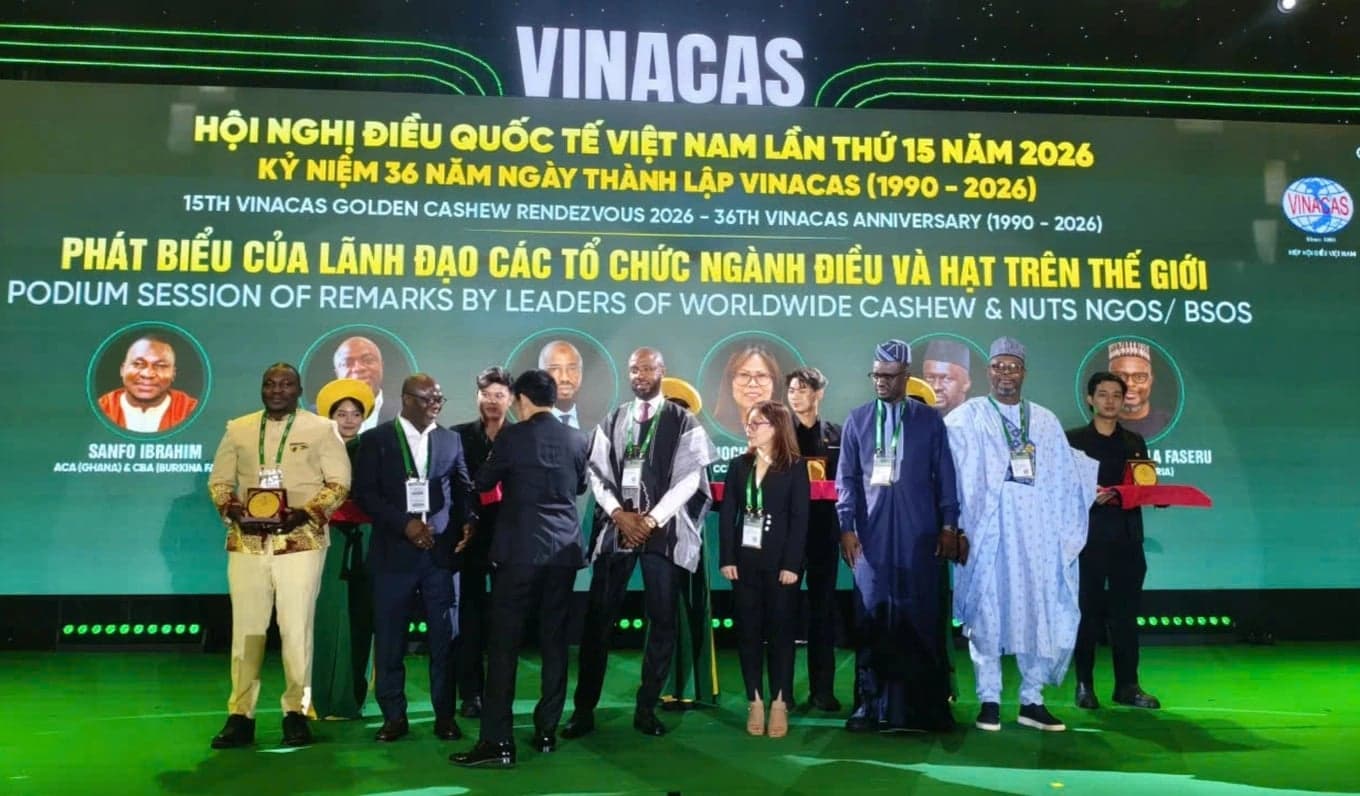
At the 15th Vietnam International Cashew Conference in Ho Chi Minh City, the Vietnam Cashew Association (VINACAS) and the Interprofessional Cashew Association of Senegal (ICAS) signed a cooperation memorandum. The two sides aim to build a stable and sustainable cashew supply chain between their countries.
Under the agreement, the organizations will share information on policy, production, post-harvest technology, processing, imports and exports, and quality standards. VINACAS and ICAS also agreed to organize business-matching programs, support trade and work together to resolve problems arising in purchases and sales.
The cooperation comes as the global cashew supply chain undergoes major changes. Raw-material producing countries are increasingly developing domestic processing instead of exporting only raw cashews, while major processing centers such as Vietnam are seeking to raise product value and secure supplies.
From raw-material trading to production links
Senegal produces about 150,000 tonnes of raw cashews a year, with about 98% exported. Vietnam receives about 70% of Senegal's raw-cashew exports.
The agreement between the two associations is expected to help companies move from ordinary trading relationships to long-term cooperation, improve market transparency and make the supply chain more efficient.
Other African cashew-producing countries are also seeking deeper cooperation with Vietnam.
At the conference, Dansoko Madani, deputy chairman of Guinea's Chamber of Agriculture, said most of Guinea's cashew exports over the past five years had gone to Vietnam.
Guinea has about 2 million hectares suitable for cashew cultivation. In 2025, it exported about 215,000 tonnes of raw cashews, while domestic processing accounted for only about 2%.
Madani said Guinea was pursuing policies to develop raw-material areas and processing industries, including support for seedlings, expansion of specialized growing areas, quality improvements and farmer training.
The Guinean representative also called on Vietnamese companies to cooperate and invest in processing plants in the country to use its raw-material base and develop a cross-border supply chain.
In Southeast Asia, Cambodia also aims to increase its domestic processing capacity sharply.
Kuoch Chanry, deputy chairwoman of the Cashew Federation of Cambodia, said the country currently has 48 cashew-processing facilities, more than 60% of them small or micro businesses.
Under its industry development policy, Cambodia aims to raise domestic processing to 25% by 2027 and 50% by 2032. It is also offering tax incentives and developing infrastructure to attract processing investment.
These moves show that countries with raw-material resources want to retain more value within their supply chains. For Vietnamese processors, this creates both competitive pressure and opportunities for investment cooperation.
Vietnam seeks a new role in the global value chain
According to VINACAS, Vietnam exported about 798,000 tonnes of cashew kernels worth more than $5.4 billion in 2025. It remained the world's largest processor and exporter of cashew kernels for the 19th consecutive year.
Large processing capacity, however, comes with considerable reliance on imported raw materials. In the first nine months of 2026, Vietnam imported nearly 2.775 million tonnes of raw cashews worth more than $4.43 billion, mainly to supply domestic factories.
Meanwhile, raw-material suppliers are expanding local processing, changing the international division of production in the supply chain.
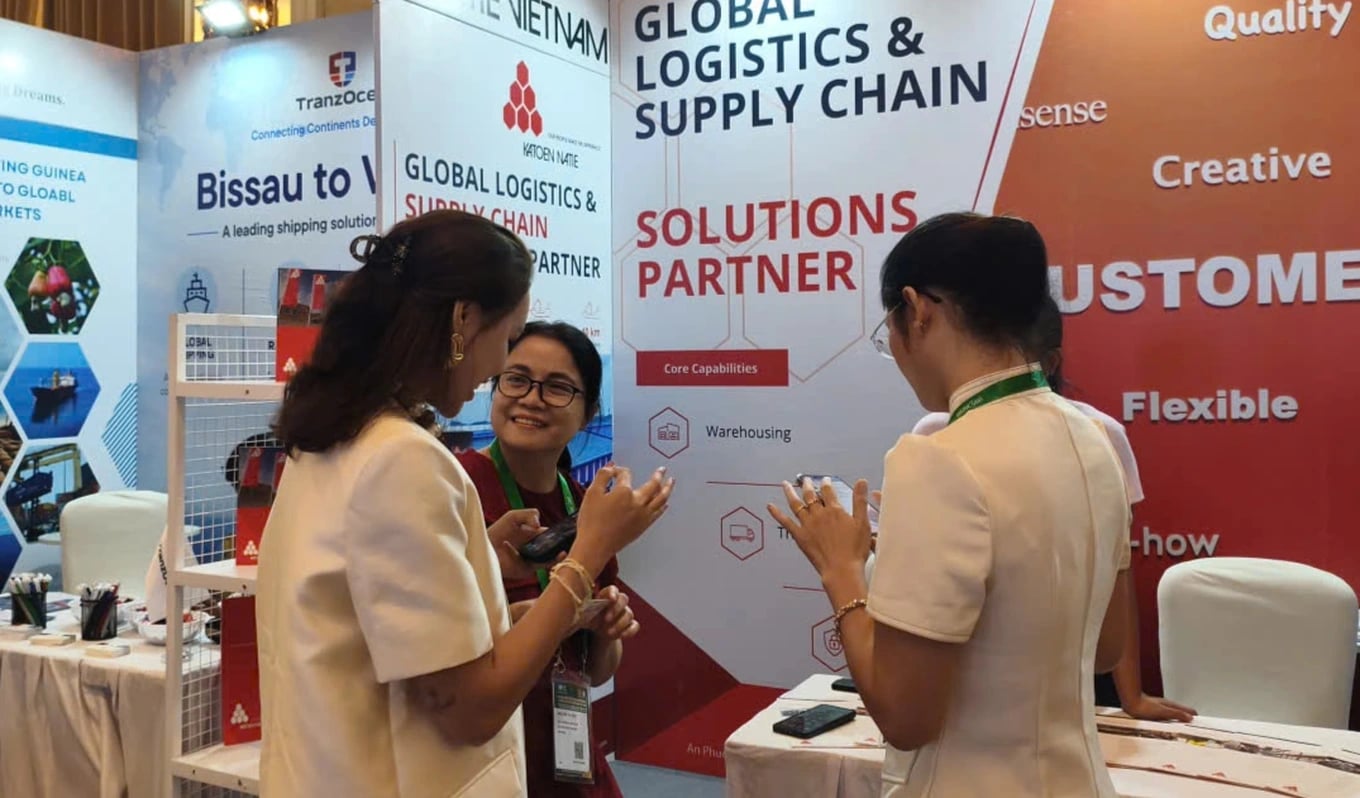
Tran Ngoc Hai, deputy head of Vietnam's Trade Promotion Agency under the Ministry of Industry and Trade, said the cashew industry faced structural and long-term challenges. He said the sector needed to change its approaches to production, exports and international cooperation.
Hai said the Trade Promotion Agency supported VINACAS and companies studying joint ventures, partnerships, acquisitions and mergers with foreign businesses. He also mentioned investment in logistics centers, processing plants and distribution centers in key markets.
This approach could help Vietnamese companies take a larger role in the value chain, from organizing raw-material areas and processing technology to building brands and reaching end consumers.
Ashok Krishen, chairman of the International Nut and Dried Fruit Council (INC), proposed stronger cooperation among countries on common quality standards and technical requirements.
He said harmonized standards could facilitate trade, reduce differences in quality requirements and improve the industry's competitiveness.
Pham Van Cong, chairman of VINACAS, made the same point when discussing the future of the global cashew industry.
Cong said a sustainable supply chain should provide balanced benefits for all participants. Cashew growers need suitable incomes, factories need stable supplies, trading companies need markets and consumers need quality products at reasonable prices.
To achieve this, countries and companies need to share information on supply, demand and prices and jointly distribute risks and opportunities across the value chain.
The VINACAS chairman also said the cashew industry needed to shift from competing on price and volume to competing on quality, brands, technology and added value. Along with strengthening raw-material links, companies need to develop more processed products, improve traceability, reduce emissions and meet rising international-market standards.
Industry representatives said the Senegal agreement, Guinea's invitation to invest and Cambodia's plans to expand processing showed that new forms of cooperation were emerging between Vietnam and cashew-producing countries.
Vietnam, a leading processor and exporter of cashew kernels, now has an opportunity to expand its role into raw-material development, technology transfer, production organization and market connections.
Sources: Dân Trí

