
Healthcare facilities across Vietnam are expanding infrastructure, strengthening specialised medical capabilities and adopting advanced technologies to improve service quality and give people greater access to modern healthcare. Recent developments in Hanoi and other localities show efforts to develop specialised treatment, standardise professional practices and apply AI and advanced medical techniques.
Expanding infrastructure and specialised care
On October 17, the second campus of the National Hospital of Obstetrics and Gynaecology was inaugurated in Kieu Phu commune, Hanoi. After more than two months of trial operations, it demonstrated its capacity to receive, examine and treat patients. Deputy Prime Minister Pham Thi Thanh Tra called on the hospital to follow the principle of “Two campuses, one team, one professional standard”; the campus is intended to become a model of modern specialised healthcare in ASEAN.
Minister of Health Dao Hong Lan listed six tasks: consistent standards across both campuses, patient safety, advanced techniques alongside workforce training and support for lower-level facilities, adequate medicines and equipment, digital transformation, and a professional and humane care environment. On October 20, the second campus of Hanoi Heart Hospital in Xuan Dinh ward began operations with its International Department. The project is expected to strengthen cardiovascular care for Hanoi and neighbouring provinces, provide advanced treatment locally, reduce referrals and treatment abroad, and develop a high-quality hospital under Hanoi’s 2025–2030 healthcare projects.
Bach Mai Hospital became the first medical facility in Vietnam to receive Advanced Stroke Centre certification from the World Stroke Organisation. It is the highest level in the organisation’s system, awarded after an independent assessment covering 68 professional criteria and a rigorous quality evaluation. The certification confirms the hospital’s stroke emergency and treatment capacity and encourages nationwide standardisation.
Science, technology and AI in medicine
At a conference in Ninh Binh on October 23–24, hospitals from the northern coastal region discussed applying AI to management, diagnosis and treatment. Provincial Health Department Director Pham Thi Phuong Hanh stressed scientific evidence, practical conditions, patient safety, workforce training, standardised procedures and data security.
On October 23, Hue Central Hospital hosted the 2026 Southeast Asian International Endoscopy Symposium. Experts from Vietnam, Thailand, Cambodia and Laos discussed and demonstrated endoscopic retrograde cholangiopancreatography, endoscopic ultrasound and related methods. Hospital Director Prof. Dr. Pham Nhu Hiep said the hospital had also mastered bile duct stone extraction and lithotripsy.
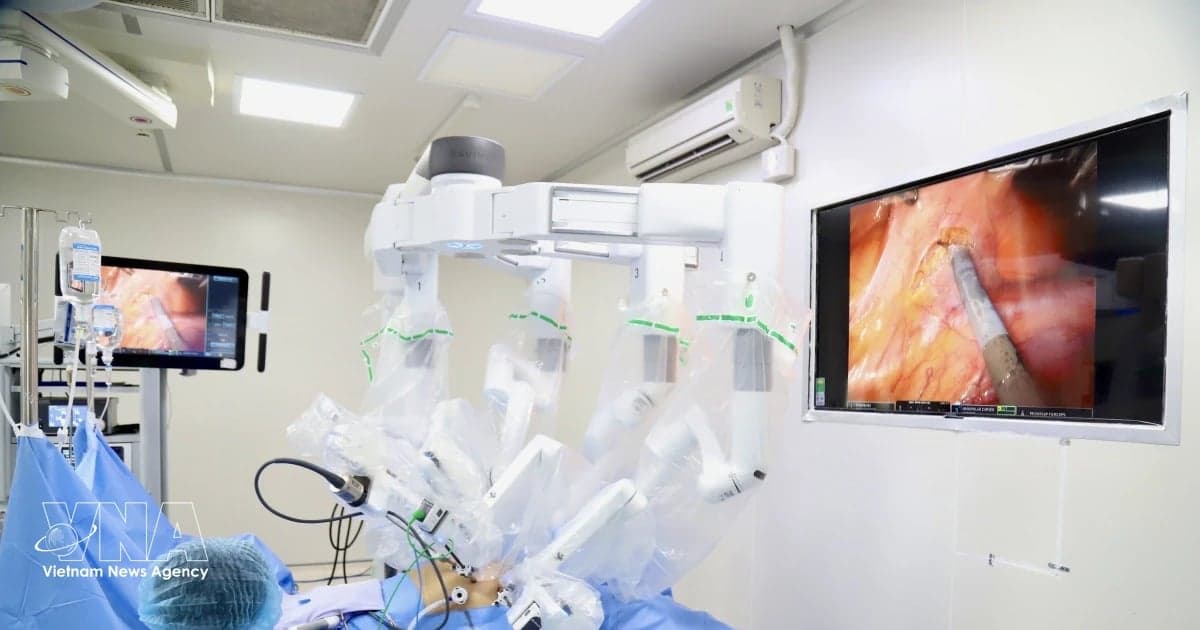
On October 22, Binh Dan Hospital in Ho Chi Minh City reported more than 4,320 robotic surgeries since 2016, mainly for prostate, kidney, colorectal and bladder cancers. It is expanding training and technology transfer, including to two hospitals in the Philippines.
On October 20, S.I.S Can Tho International General Hospital put into operation a Siemens Healthineers MAMMOMAT Revelation 3D mammography system integrated with AI. It is the first such system in the Mekong Delta and supports breast imaging and early screening for women in Can Tho and neighbouring provinces.
Adopting medical advances requires investment in equipment and technology, workforce training, standardised procedures, patient safety and treatment-outcome assessment. These measures are intended to improve healthcare quality in line with the Political Bureau’s Resolution No. 72-NQ/TW on healthcare development.
Sources: VietnamPlus / Vietnam News Agency

