
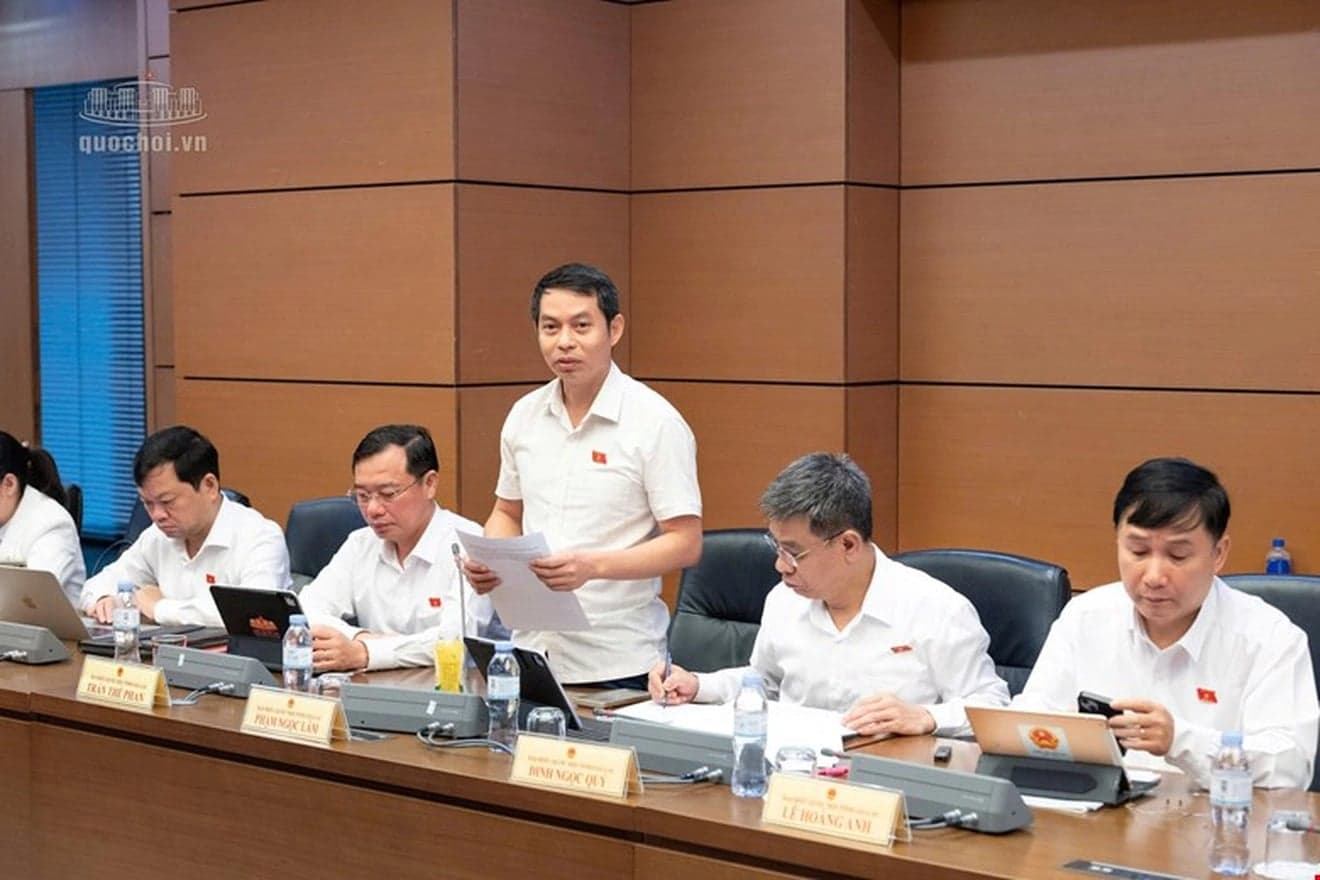
Vietnam's National Assembly discussed on October 21 whether to retain or abolish licenses for tobacco distribution, wholesale and retail sales.
Several lawmakers said regulation should rely less on licensing procedures and put more emphasis on inspections, supervision and post-market checks. They said this could reduce the administrative burden on companies and household businesses while preserving the goal of preventing tobacco-related harm.
On October 21, during the second session of the 16th National Assembly, lawmakers discussed a bill amending the Law on Prevention and Control of Tobacco Harms. According to the National Assembly's electronic portal, many lawmakers also focused on administrative reform and new ways to regulate tobacco businesses.
Health Minister Dao Hong Lan said one of the four main areas of the amendments is reducing business conditions and simplifying administrative procedures. She said this is consistent with institutional reform and aims to create a more favorable and transparent business environment while improving state management.
Scrapping licenses would not mean ending oversight
At a group discussion, Pham Ngoc Lam, a lawmaker from Gia Lai province, supported continued strict control of tobacco businesses because they are a conditional business sector. He said requiring a license for every tobacco business activity could create barriers and increase administrative procedures and compliance costs for companies.
According to Lam, some stages of tobacco distribution, wholesale and retail sales can be regulated through business conditions and traders' rights and obligations, combined with stronger inspections, supervision and post-market checks, instead of mandatory licensing.
Lam said the 2025 Investment Law allows several forms of regulation for conditional business sectors and does not require a license in every case. The state can retain necessary business conditions and choose a method suited to each activity.
Doan Thi Thanh Mai, a lawmaker from Hung Yen province, also called for considering the removal of licenses for tobacco distribution, wholesale and retail sales and switching to business conditions and stronger post-market checks.
She said a business license is not the direct and only tool for limiting access to tobacco or reducing demand. Those goals require measures covering supply from production and imports, tax policy, sales locations, buyers and selling practices.
The proposals highlight the need to distinguish necessary business conditions from a mandatory licensing procedure. Removing an administrative procedure would not remove companies' legal compliance duties or weaken public-health protections.
Lawmakers also raised the need for consistency in administrative reform.
Lam warned that retaining a mandatory licensing requirement in the law could lead to the return of procedures for issuing, amending, supplementing and reissuing licenses that were supposed to be discontinued under Resolution No. 19/2026/NQ-CP.
That would increase the time and compliance costs of companies and household businesses, while requiring authorities to spend resources receiving and processing applications instead of inspecting and supervising actual business activity.
Lam cited an estimate that one license costs about VND 6 million to obtain and is valid for five years, equivalent to VND 1.2 million a year for one establishment. With a large network of tobacco businesses nationwide, total compliance costs could become a significant burden on society.
He said money should not be weighed against health, but policymakers should consider a regulatory model that can reduce unnecessary costs while improving tobacco-harm prevention.
Focus on supervision and post-market checks
The proposal to abolish licenses for tobacco distribution, wholesale and retail sales also raises the question of what mechanisms would replace them so that no legal gap emerges.
Lam said the answer could be a new regulatory approach, wider use of technology and more effective post-market checks. Traders would still have to meet all business conditions and comply with rights and obligations set by law.
Instead of requiring another licensing procedure, authorities could use and connect business registration data, electronic invoices and product-traceability information to monitor trade. Information about sales locations should also be provided in a simple way using existing data, without creating a new procedure under another name.
Post-market checks should focus on violations that directly affect market oversight and public health, including the sale of smuggled or counterfeit tobacco, sales to people under 18 and sales at prohibited locations.
Mai also called for clear divisions of responsibility between local authorities and enforcement agencies and wider use of technology in inspections, supervision and handling violations.
On supply controls, Phan Thi My Dung, a lawmaker from Tay Ninh province, said sharply restricting legal supply would not make demand disappear and could push some demand into the illegal market.
She said priority should be given to legal, transparent and traceable supply that meets tax obligations, alongside stronger measures against smuggled tobacco.
Lawmakers also discussed a proposal to ban the display of tobacco products at wholesale and retail outlets.
Tran Van Khai, a lawmaker from Ninh Binh province, proposed allowing stores to list tobacco product names and prices in a standard format without images or advertising. Taking products out of storage to hand them to buyers, conduct an inventory or arrange stock should be distinguished from displaying products.

The National Assembly discussion showed that both licensing reform and tighter display rules need to balance public-health protection with policies that can work in practice.
An effective rule needs a clear objective, must be easy to follow and check, and must allow violations to be handled in practice. That would make tobacco-harm prevention more substantive while supporting a transparent, stable and consistent business environment.
Sources: Dân Trí

