
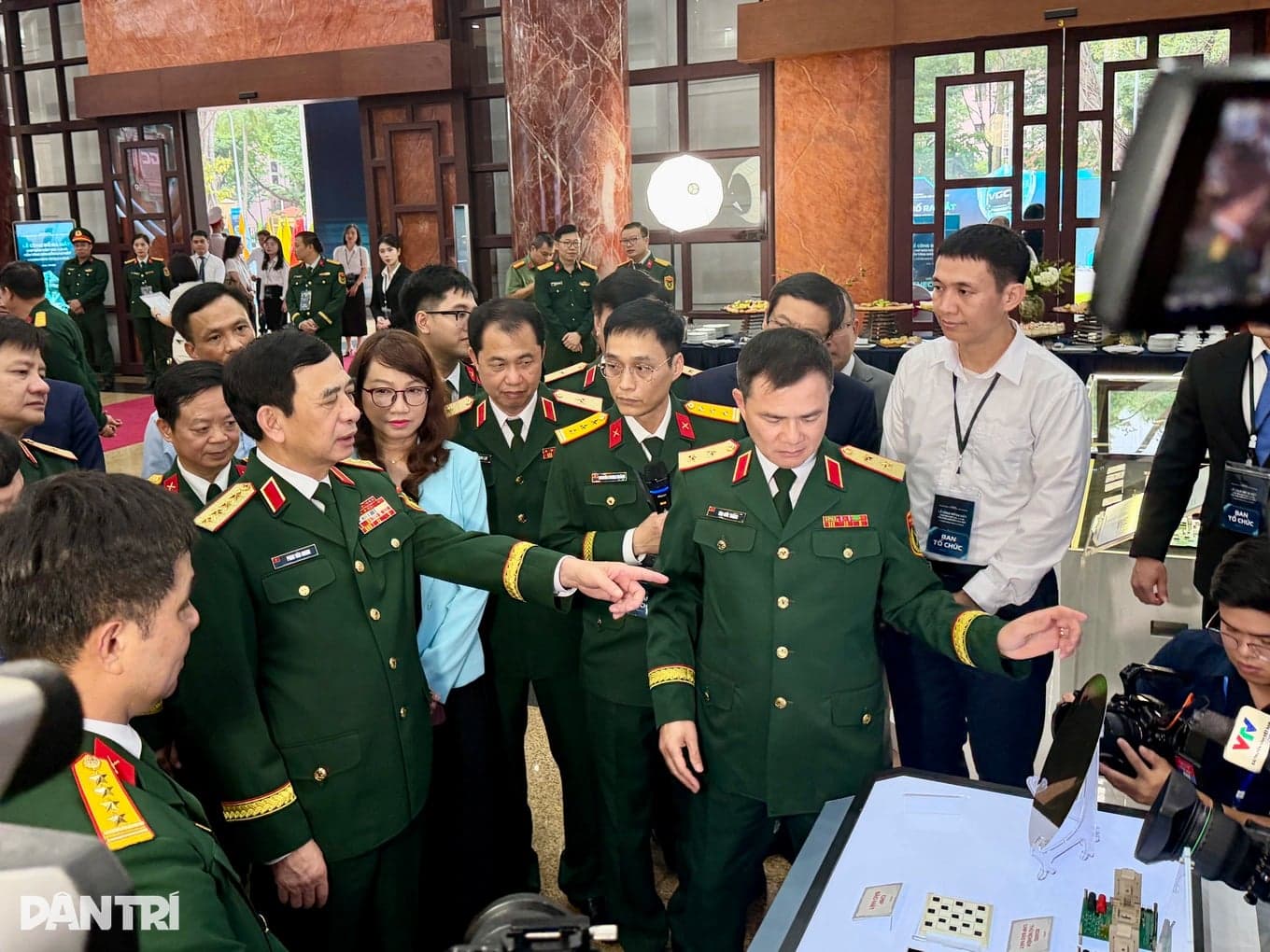
Ban Cơ yếu Chính phủ and Viettel, Vietnam's military industry and telecommunications corporation, presented the VGC v1.0 security chip and a domestically designed secure semiconductor platform in Hanoi on November 3.
The event was attended by General Phan Văn Giang, a Politburo member, deputy prime minister and minister of national defence, along with leaders of ministries, agencies and related organizations.
VGC v1.0 puts Vietnam's cryptographic algorithm into hardware
VGC v1.0 is the first product in the secure semiconductor platform jointly developed by the two organizations. The developers said the chip has a 10 by 10 mm package, contains about 300 million transistors and was made using a 28 nm CMOS process.
Measurements showed that the chip encrypts and decrypts data about 15 times faster than a software-only solution when performing the same task. The development team also applied technical measures to protect the design before it was sent to a fabrication plant, reducing the risk of leaks or reverse engineering.
Ban Cơ yếu Chính phủ and Viettel said VGC v1.0's notable feature is the direct integration of Vietnam's cryptographic algorithm into hardware. The approach is intended to strengthen data protection rather than rely only on software encryption.
During development, Ban Cơ yếu Chính phủ defined security requirements, developed the algorithm and set evaluation criteria. Viettel's Semiconductor Centre designed the integrated circuit and turned the design into a chip.
The first batch of VGC v1.0 passed technical tests in the first quarter of 2026 and received a certificate covering use in the socio-economic sector.
Several technology companies elsewhere have integrated dedicated hardware security into their devices. Examples include Google's Titan M in some Pixel phones and Apple's Secure Enclave on its platforms. These components support security tasks and protect data on devices.
Planned uses in digital signatures and critical infrastructure
VGC v1.0 is initially being used in secure USB storage devices for Party, state and defence agencies. The developers plan to add the chip to the national digital-signature authentication system, which currently has more than 2 million certificates in circulation.
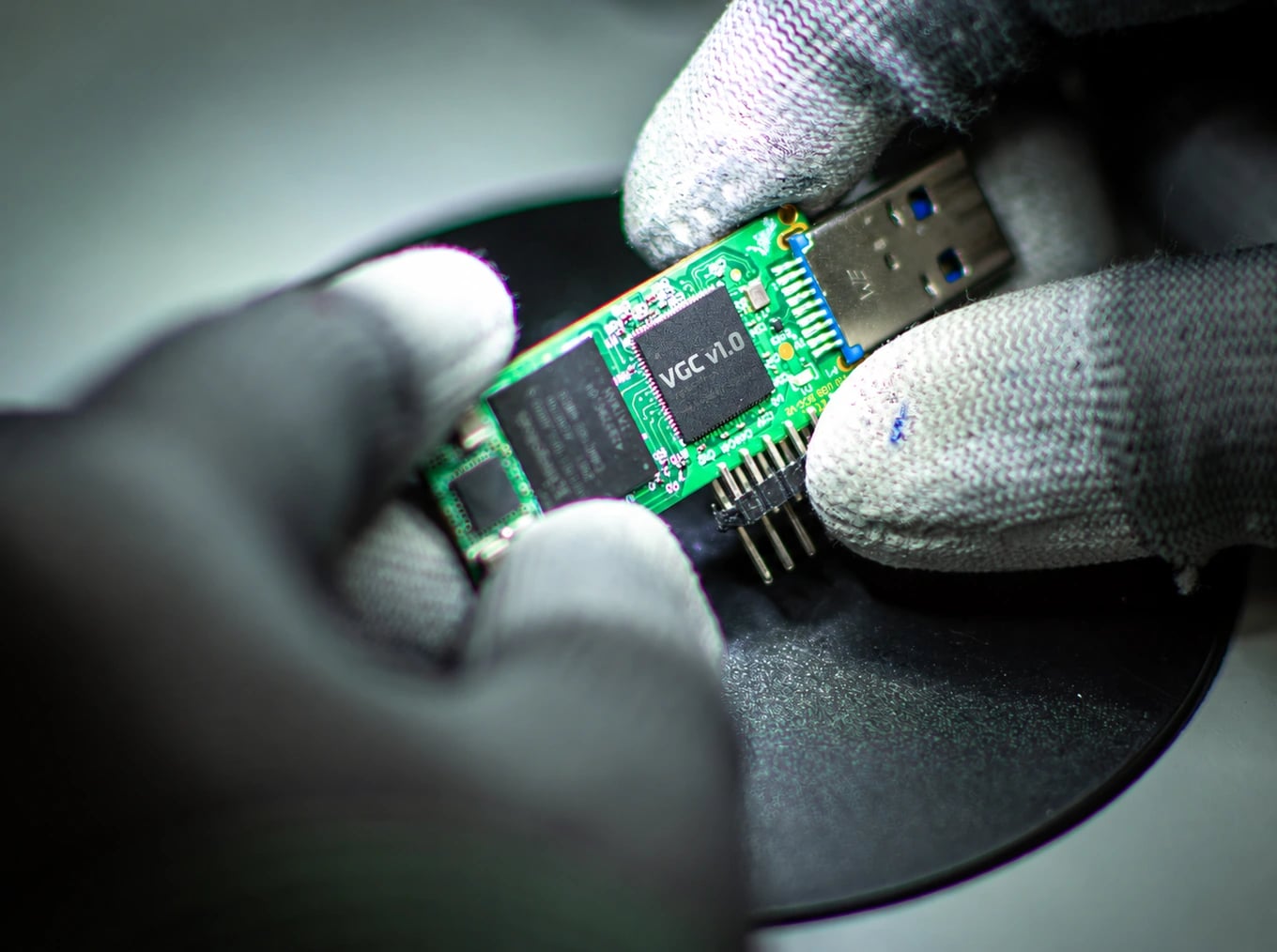
Beyond defence and security, the chip could be used to protect records, contracts and customer data at financial organizations and banks, as well as in surveillance cameras, environmental sensors, monitoring stations and information systems in critical infrastructure such as electricity, water, oil and gas, and telecommunications.
Lieutenant General Vũ Ngọc Thiềm, head of Ban Cơ yếu Chính phủ, said VGC v1.0 was only a starting point. Products used to protect state secrets must meet all applicable standards and requirements.
Thiềm said technological capability matters only after its safety, reliability and effectiveness have been tested in practice.
Speaking at the event, General Phan Văn Giang said semiconductor chips had become a strategic resource, while cryptography was a core tool for protecting information and data.
"Mastering a secure semiconductor platform is not only a science and technology task but also a political task, a practical contribution to protecting national sovereignty in cyberspace and defending the country from an early stage," Phan Văn Giang said.
A platform for future chip generations
The two organizations also presented a secure semiconductor platform based on the open RISC-V instruction-set architecture. It allows engineers to modify processor designs, control the architecture and verification process, and provides a foundation for developing future chip lines.
Lieutenant General Tào Đức Thắng, a member of the Party Central Committee and Viettel's chairman and chief executive, said researching, designing and developing secure semiconductor chips was difficult and required years of accumulated knowledge, technology and highly qualified personnel.
Thắng said that with a suitable strategy, concentrated resources and sustained effort, Vietnam could gradually narrow the gap and move toward mastering strategic technologies.
At the event, Ban Cơ yếu Chính phủ and Viettel signed a cooperation agreement covering four main areas: mass production of VGC v1.0; development of a multicore secure integrated-circuit platform; training specialists in chip design, cryptography and hardware security; and testing, certification and evaluation of products on real devices before use.
Together with Viettel's project to build a high-tech semiconductor chip manufacturing plant in Hòa Lạc, the secure semiconductor platform is expected to strengthen Vietnam's domestic chip design and manufacturing capabilities and reduce dependence on foreign technology.
Sources: Dân Trí

