
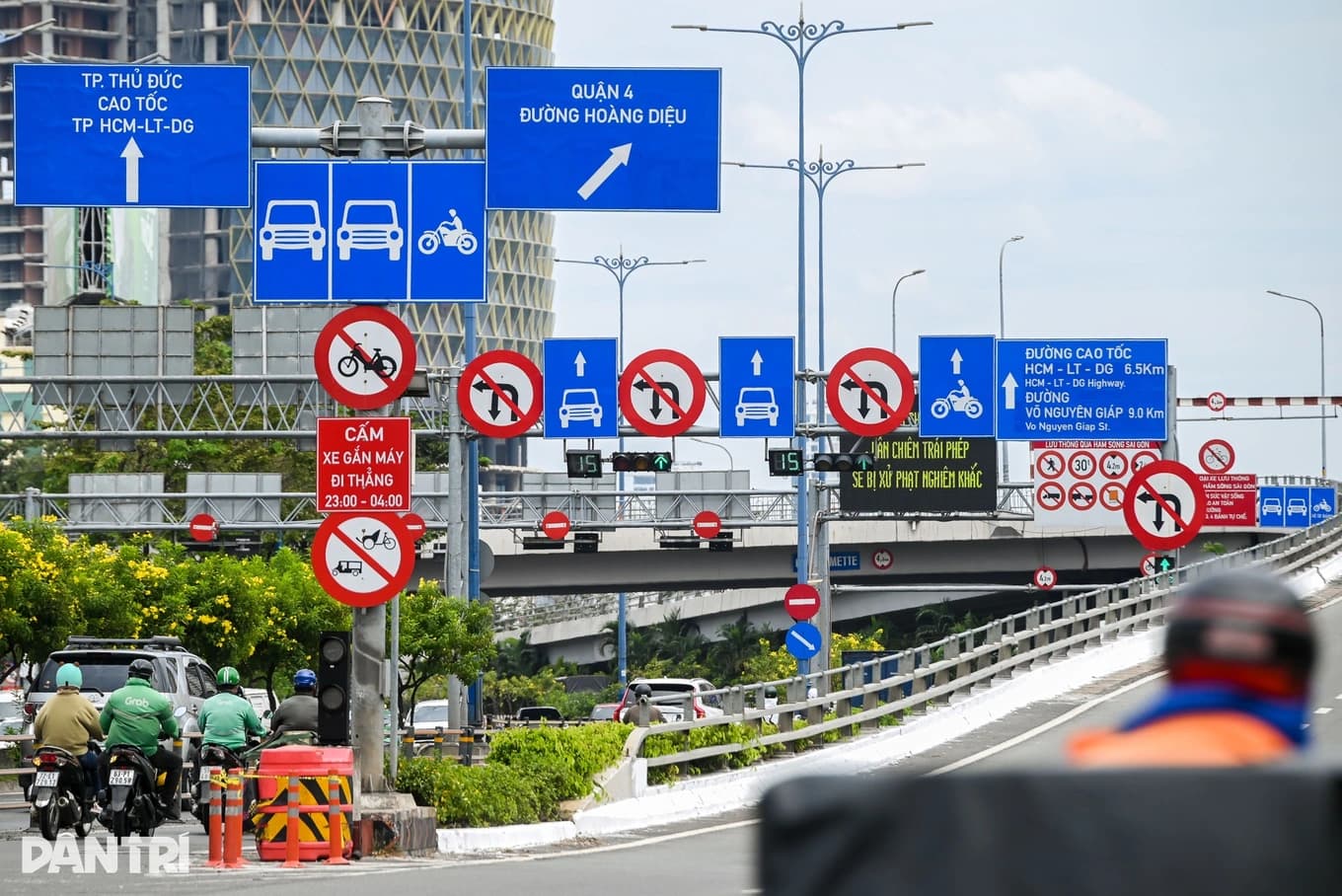
Vietnam’s Road Administration is drafting a national technical regulation on road signalling. The document is expected to replace QCVN 41:2024/BGTVT.
The draft proposes changes to rules on road signs, traffic lights, road markings and guidance systems on expressways.
Updating road guidance signs
One proposal concerns signs naming localities. They would be brought into line with Vietnam’s two-tier local administration model. The Road Administration says the model has operated nationwide since July 1, 2025, while provincial-level administrative units fell from 63 to 34 provinces and cities.
The current regulation and its illustrations still use names such as provincial cities, districts and townships. The rules for displaying local names therefore need review. The amendments must also be consistent with the Law on Roads, the 2024 Law on Road Traffic Order and Safety, the Law on Local Government Organization and related documents.
For traffic lights, the draft clarifies countdown displays. One shared countdown would not be used for several signal groups if it could confuse road users. The document also clarifies arrow-shaped signals and signals showing vehicle images, as well as the placement, height, distance and visibility of lights.
The draft adds and revises rules on lettering, colours, symbols and displayed information. It proposes an “EV” symbol for electric vehicles. Sign sizes on lower-standard roads, rural roads and special sites would be selected according to actual conditions.
Distances for warning signs
The draft proposes improving the visibility of sign poles where they could be hit or hidden, and clarifies the use of retroreflective materials. Illuminated signs or equivalent solutions could be used where necessary.
Warning-sign distances would be linked to road speed rather than only fixed values. A revised Article 30 would include a table for different speeds, prioritising the 85th percentile operating speed, or V85, where survey data exists. If it is unavailable, design speed would be used alongside terrain, visibility and traffic organisation.
For non-expressway motor roads, the fixed 20–50 metre distance for advance signs before junctions would be replaced by a speed-based calculation and distance table.
A prohibition sign must be placed where the prohibition begins. If terrain or safety prevents this, it may be placed earlier with a panel showing the distance to the start of the prohibition.
New expressway guidance
On expressways, the draft develops guidance for entrances, exits, localities and journey directions. It proposes emergency telephone numbers, including contacts for rescue services and traffic police, and signs for emergency stopping areas.
Rules for variable message signs, or VMS, would be revised to clarify their scope, content and display principles. Colour codes showing traffic conditions on interchange diagrams would help drivers assess conditions and choose a route.
The Road Administration says the drafting process received more than 300 comments from 38 agencies and organisations. Specialists, government bodies and traffic police also took part.
The proposed amendments are intended to address weaknesses in the current road-signalling system and make its use more consistent nationwide.
Sources: Dân Trí

