
Vietnam plans to overhaul its food safety management system by adopting a risk-based approach across the supply chain, strengthening post-market inspections and expanding digital monitoring to protect consumers.
Deputy Minister of Health Do Xuan Tuyen said proposed revisions to the Law on Food Safety cover four areas: integrated supply-chain management, risk-based inspections, digital transformation, and tighter controls on street food and collective kitchens.
He spoke at a two-day international workshop organised by the Ministry of Health and the World Health Organisation in Hanoi. Tuyen said the law enacted in 2010 needed updating because food production, distribution and consumption had changed over the past 16 years. Rapid urbanisation, changing consumer habits and e-commerce had created new challenges for regulators.
“The core objective is not only to manage production and business activities, but also to ensure the quality and safety of food before it reaches consumers,” the deputy minister said. He called for stronger institutions, more effective enforcement, greater corporate responsibility and improved public awareness.
The proposed model would cover the entire chain from farming and production to processing, distribution and consumption. Requirements would reflect product risks: lower-risk products could face simpler procedures, while higher-risk products would face stricter declaration, assessment, inspection and post-market surveillance requirements. Authorities could then focus resources on the greatest risks while reducing unnecessary burdens on compliant enterprises.
Risk-based inspections and digital monitoring
The second reform area concerns inspections. Instead of broad routine checks, the proposal calls for a targeted system based on risk assessments. Authorities would strengthen post-market inspections, detect violations and apply sufficiently deterrent penalties for serious offences. The approach is also intended to reduce unnecessary inspections and facilitate lawful food production and trade.
Digital transformation would support product traceability, supply-chain monitoring and market surveillance as online food sales grow. Better-integrated databases on ingredients, quality and supply chains would help authorities identify hazards and track food through distribution, including e-commerce channels. Tuyen asked international experts to share experience of digital food safety management, traceability and online-business regulation.
Tighter controls on street food and collective kitchens
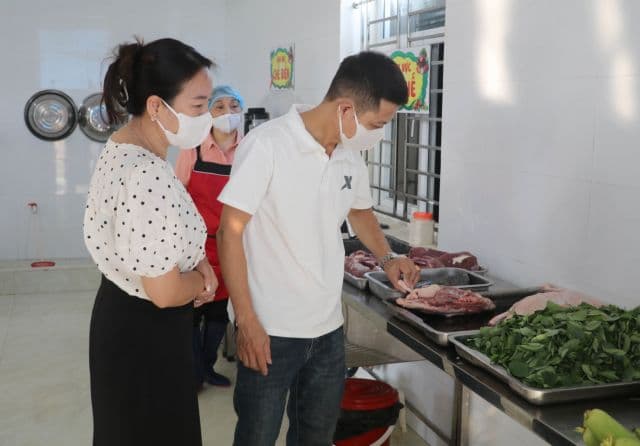
The fourth area concerns street food businesses and collective kitchens, where inconsistent hygiene standards and weak oversight can expose consumers to foodborne illness. Street food businesses operate under varied conditions, while catering arrangements for large groups differ. Some establishments cook on site; others use external suppliers.
The revised framework would clarify the responsibilities of food preparation establishments, catering suppliers and organisations using their services, while strengthening safety controls. The aim is to prevent food poisoning and protect consumers where food is prepared or supplied in large quantities.
International standards and stronger accountability
The workshop addressed aligning Vietnam’s framework with international practices and recommendations from the Codex Alimentarius Commission. The government is also considering a more unified management structure that coordinates responsibilities from central to local levels and strengthens institutional capacity and inter-agency cooperation.
Tuyen said reform would not be enough without stricter business compliance and greater consumer awareness. Some violations result from businesses deliberately ignoring regulations for profit, while some consumers prioritise convenience or low prices over origin and quality.
Businesses need to take greater responsibility for product safety. Consumers should pay closer attention to traceability and quality, while authorities need to enforce regulations consistently and take firm action against violations.
Sources: Viet Nam News

