
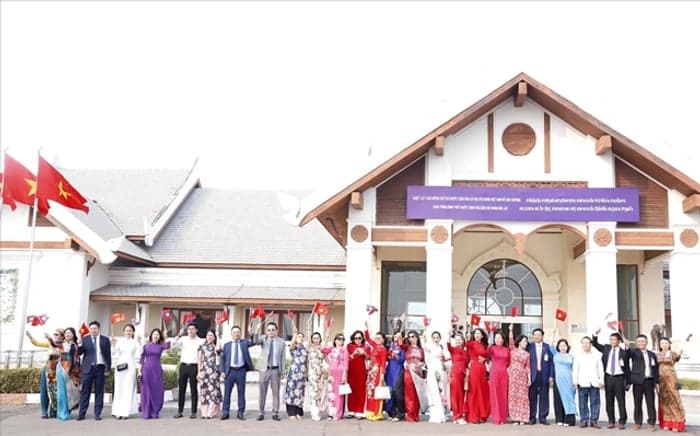
More than 6.5 million Vietnamese people live, work and study in over 130 countries and territories. Viet Nam views the community as a strategic resource and a network of cultural ambassadors carrying Vietnamese identity, knowledge and ambition into the world.
Politburo Resolution 23, dated August 2, 2026, calls for a new approach to the overseas community and mechanisms that turn its resources into a practical contribution to national development.
From care to joint action
The resolution shifts the approach from mobilisation, gathering and care to partnership, mechanism design and resource mobilisation. It is intended to give overseas Vietnamese a direct role in building, developing and defending the country.
Vietnamese Ambassador to Laos Nguyen Minh Tam said the mission works with community associations, supports their material and spiritual well-being, promotes activities linked to their roots and preserves cultural identity. In Laos, organisations created across all 18 cities and provinces have strengthened the network, support and compliance with local law.
The Vietnamese Business Association in Laos says Viet Nam is Laos' second-largest investor, while Laos ranks first among the 88 countries and territories where Viet Nam invests. Vietnamese companies have put more than US$7 billion into nearly 300 projects in telecommunications, banking and finance, energy and high-tech agriculture.
Party and State leaders support overseas communities during foreign visits and embassy meetings. Experts, scientists and intellectuals advise on policy, transfer technology and train workers. Resolution 23 calls for a global Vietnamese connectivity ecosystem, especially in semiconductors, artificial intelligence and innovation.
During a visit to Belgium, To Lam, General Secretary of the Communist Party of Viet Nam Central Committee and President of Viet Nam, met experts and intellectuals in Belgium and Luxembourg. He said love for the homeland is shown through concrete action. Scientists do not need to live in Viet Nam to contribute: proposed mechanisms include task-based contracts, remote work, joint research and payment after delivery.
Culture as soft power
Viet Nam treats each overseas Vietnamese as a cultural ambassador and links identity preservation with cultural outreach and international standing. Young people are reached through education in tradition, history and culture, visits to their historical homeland, start-ups, innovation and exchanges.
Nguyen Thi Xuan Oanh, co-founder of Thailand's first Vietnamese-language school in 2017, has taught Vietnamese since 1962 and still teaches online. She wants children to speak, read and write fluently and keep their pride in their heritage. The Udon Thani community is also known for its business activity, achievements and charity during disasters in Viet Nam.
Pham Van Hung, chairman of the General Association of Vietnamese People in Laos, said the organisation founded in 2009 helps the community do business, live stably, obey the law and strengthen the reputation of Vietnamese people. Preserving the Vietnamese language is a vital task, with language schools, traditional cultural activities and national beliefs maintained and spread.
Sources: Viet Nam News

