
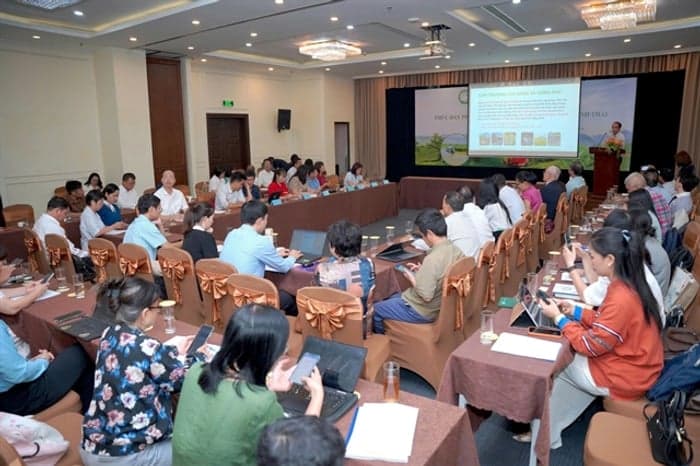
The organic farming sector needs to shift from certifying individual products to building whole production systems that keep soil healthy, protect biodiversity and help farmers cope with climate change. Experts and industry representatives said this at a conference in Hanoi on Tuesday.
The main challenge is not increasing the number of certified organic products but scaling up farming systems that restore ecosystems, create value and give farmers a secure long-term livelihood, said Dao The Anh, president of the PHANO rural development science association and chair of the Agroecology Learning Alliance in Southeast Asia, or ALiSEA.
Certification confirms that a product meets set standards, Anh said. But the number of certified products or hectares says little about soil health, biodiversity, nutrient cycling or dependence on outside inputs.
Ha Phuc Mich, chairman of the national organic agriculture association, said the transition requires a coordinated strategy covering policy, production zoning, research, technology transfer, certification and market development, backed by training and reliable farm inputs.
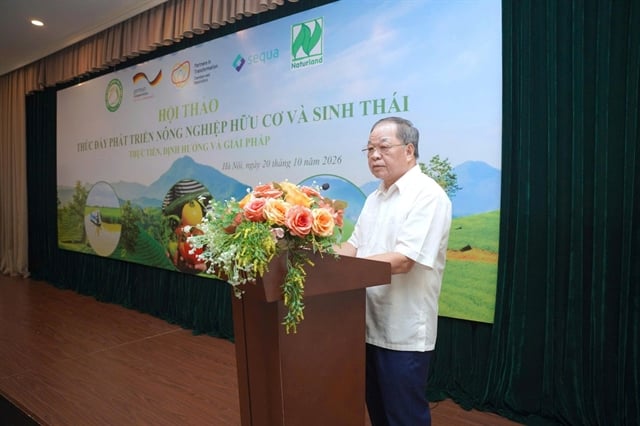
Cooperatives said strong links along the supply chain allow farmers to stay in organic production and expand it.
Doan Tan Dat, director of the Tan Dat agricultural cooperative in Vinh Long Province, said the group started in 2016 with seven farmers growing organic rice on 6.5 hectares. It now has 85 full members and about 800 affiliated farmers working roughly 100 hectares, 30 of them certified organic.
Its products carry organic certification from the United States, the European Union, Japan and Canada. But conversion and certification costs remain a burden, management capacity varies, sales agreements are often fragile, and few cooperatives can invest in processing or marketing.
Dat said farmers, cooperatives and companies each have a role, and all sides must share risks, responsibilities and rewards. He called for market-driven production, tighter quality control, firm contracts, and investment in processing, storage and circular-economy practices.
TH Group runs a closed “pasture-to-table” chain after converting feed-crop land to European and US organic standards. Control Union confirmed in 2017 that its livestock operations and production chain met the European standards in force at the time. The company says its organic herd now exceeds 1,000 cows.
Speakers said the model integrates organic farming from soil and feed through animal husbandry to processing, but replicating it will require support for smallholders and cooperatives with limited resources.
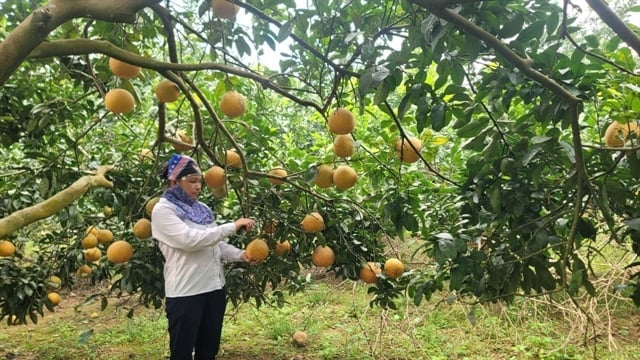
Le Mai Nhat of the Plant Protection Research Institute said growers should favour native or climate-resistant varieties and use integrated pest management with biological and microbial products that rebuild soil and strengthen crops.
Smart sensors and artificial intelligence can track weather and pests and issue early warnings, helping farmers act sooner and cut their reliance on chemicals.
Dao The Anh urged a move from plot-by-plot management to managing entire farming landscapes by improving soil, diversifying crops and habitats, and recycling biomass and nutrients.
Conversion should reflect each area’s ecology, resources and market opportunities rather than a single national template. Production planning should cover land, water, biodiversity, infrastructure and technical services.
Participants called for policies to organise supply zones, strengthen cooperative management, encourage long-term company partnerships and widen farmers’ access to science and technology.
Success, they said, should be judged by product quality, environmental outcomes, the resilience of farming systems and farmers’ incomes.
Certification can help organic and ecological farming restore ecosystems and sustain rural livelihoods when it is treated as one quality tool within a broader strategy, not as an end in itself.
Sources: Viet Nam News

