
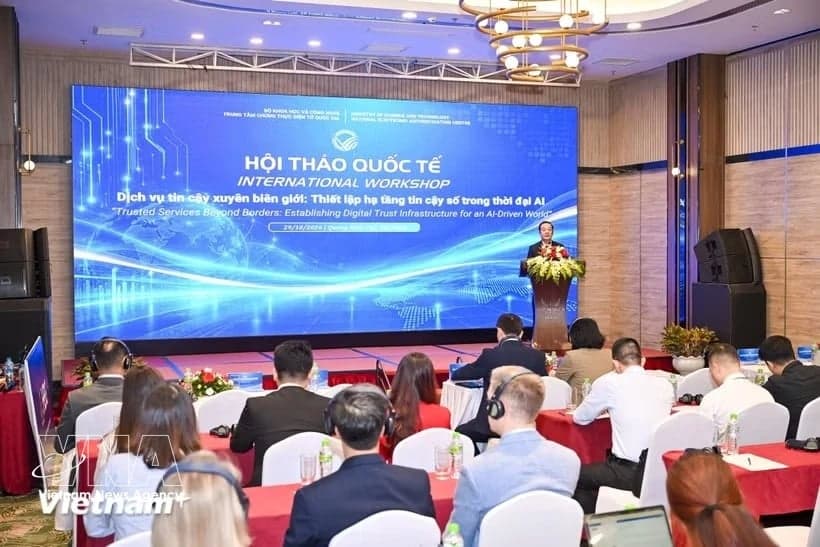
Trust services, including digital signature authentication, timestamping and data message authentication, are essential to the digital economy. They help verify identities and the authenticity and integrity of electronic transactions.
Deputy Minister of Science and Technology Pham Duc Long made the statement on October 29 at an international workshop titled “Trusted Services Beyond Borders: Establishing Digital Trust Infrastructure for an AI-Driven World”.
The workshop took place in Quang Ninh city during Vietnam International Digital Week 2026. It brought together officials, experts and technology businesses from Vietnam and other countries working on electronic authentication, digital signatures and trust services.
Long said that as AI becomes more involved in digital transactions, the origin and integrity of digital content must be checked proactively, rather than only detecting false information after it appears. Clear rules on authority and responsibility are also needed for automated transactions involving AI.
Pham Quoc Hoan, Deputy Director of the National E-Authentication Centre, presented Vietnam’s progress in developing digital trust infrastructure. The country has strengthened its legal framework and national e-authentication infrastructure under the 2023 Law on E-Transactions and trust-service regulations.
Vietnam’s trust service ecosystem covers digital signature authentication, timestamping and data message authentication. The centre has also developed eSign to connect digital signature certification providers.
Hoan said cross-border recognition remains difficult because verifying foreign digital signatures still requires manual procedures and countries use different certification policies, technical standards and regulations.
Interoperability will require mechanisms for exchanging trust lists, assessing equivalent assurance levels and clarifying responsibilities. Vietnam aims to develop a data-message authentication ecosystem that verifies the origin, integrity and creation time of transactions.
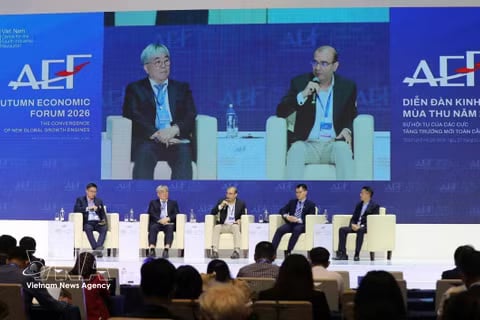
Practical lessons from abroad
Representatives of the Asia PKI Consortium and experts from the UK, the US, Russia and other countries shared experience in digital trust infrastructure, interoperability and mutual recognition of digital signatures.
Consortium Secretary-General Vijayakumar Manjunatha said regional cooperation should proceed in phases. A 2026 survey across 36 countries and territories found that most have legal frameworks for digital signatures or trust services, but mutual recognition agreements remain limited.
The consortium proposed verifying partners’ trust systems, comparing technical standards and assurance levels, and then moving towards mutual recognition. Countries could first pilot interoperability in sectors with high transaction demand.
Nazril Bin Mohd Ghani of Malaysia’s Pos Digicert discussed connecting national trust infrastructures across ASEAN while retaining individual certification systems.
Participants discussed digital content verification, authentication and cross-border recognition. The workshop identified priorities for Vietnam, including recognition rules for foreign trust services, electronic-system interoperability and technologies for verifying digital content provenance.
The National E-Authentication Centre said it will continue international cooperation and study models connecting domestic trust services with cross-border verification and recognition mechanisms for citizens and businesses.
Sources: VietnamPlus / Vietnam News Agency

