
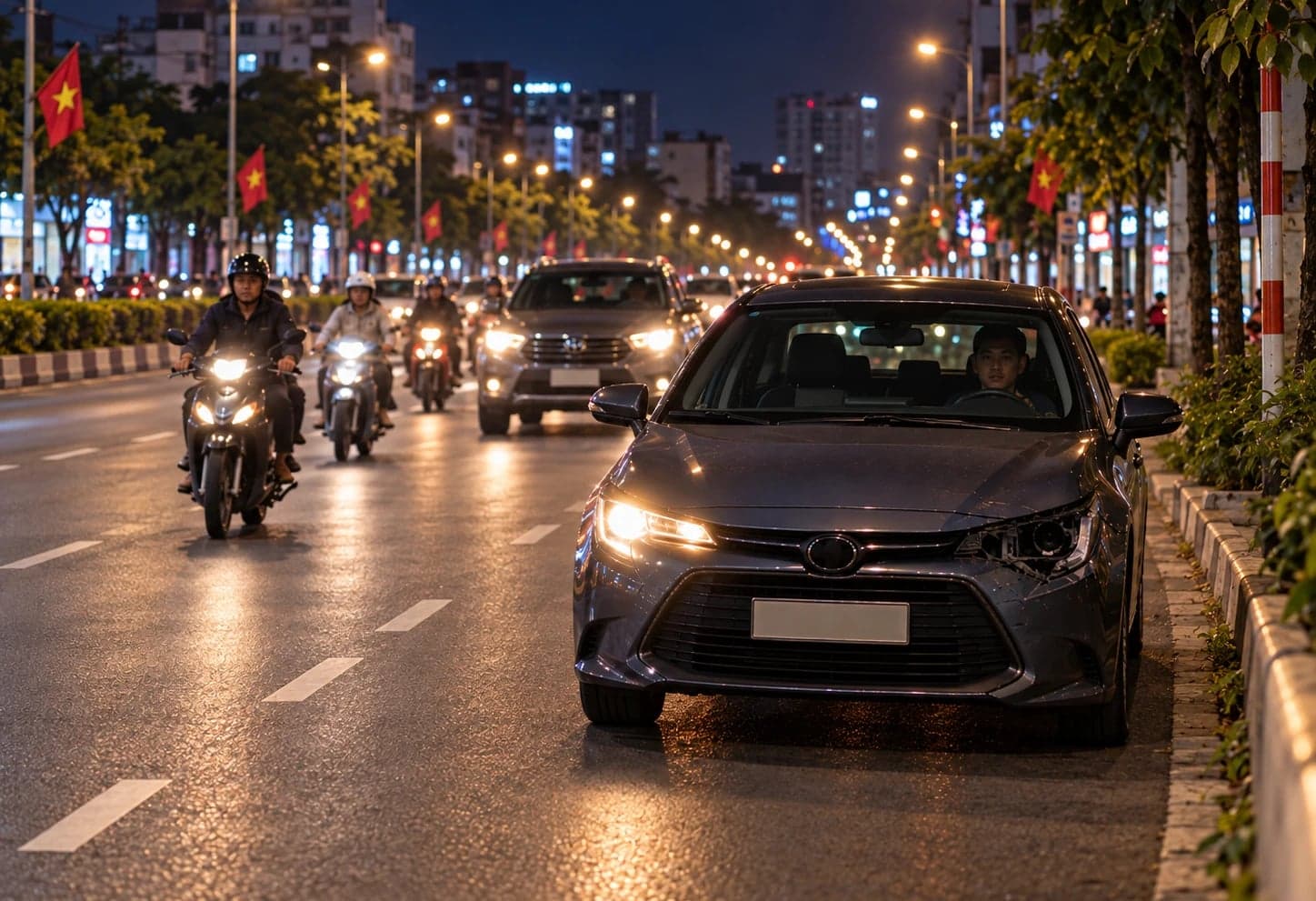
It is not uncommon for one headlight or tail light to stop working during a night trip. Some drivers believe they can continue while the other lamp is still on, but that does not meet safety and technical requirements.
The fault may involve a bulb, fuse, wiring or the lamp assembly. Even when one side still works, the lighting system is no longer fully operational.
One faulty light means the lighting system is incomplete
Article 20, clause 1 of Vietnam's Law on Road Traffic Order and Safety requires drivers to turn on front lights from 6 p.m. to 6 a.m., and in fog, smoke, dust, rain or other weather that limits visibility. At night, working lights help the driver see the road and are also a requirement for road use.
QCVN 122:2024/BGTVT, the national technical regulation used to inspect the technical safety and environmental protection of motor vehicles, sets separate requirements for vehicle lights. Inspectors check the number, type, installation position and operation of front lights. A light that does not turn on when the switch is used is classified as a significant MaD defect.
Similar requirements apply to rear position lights: their number must match the technical documentation, and they must work when switched on. They must also emit red light and remain visible as required by the regulation. The idea that a car with two lights can continue temporarily because one still works does not meet the vehicle's technical requirements.
When a front light fails, the driver has less visibility on that side of the road. The risk is higher on unlit roads and in rain, when pedestrians, motorcycles, potholes or obstacles may be harder to see. When a rear light fails, a driver behind may have difficulty judging the car's position and width in the dark.
Fog lights, daytime running lights and hazard lights are not substitutes for a failed low beam, high beam or tail light. Each type of light has its own purpose and technical requirements.
If a light fails while the car is moving, the driver should not brake sharply or stop in the traffic lane. The safer response is to slow down, find the nearest safe place to stop, inspect the fault and fix it before continuing.
What fine applies to driving with faulty lights?
Continuing to drive with an incomplete lighting system can also lead to a fine. Under point a, clause 2, Article 13 of Decree 168/2024/NĐ-CP, driving a car without the required headlights, license-plate light, brake lights or signal lights, or with lights that do not work or meet design standards, is punishable by a fine of VND 400,000 to VND 600,000.
From 6 p.m. to 6 a.m., and in fog, smoke, dust, rain or other weather that limits visibility, point g, clause 3, Article 6 of Decree 168 provides for a fine of VND 800,000 to VND 1 million for not using, or not fully using, the required lights.
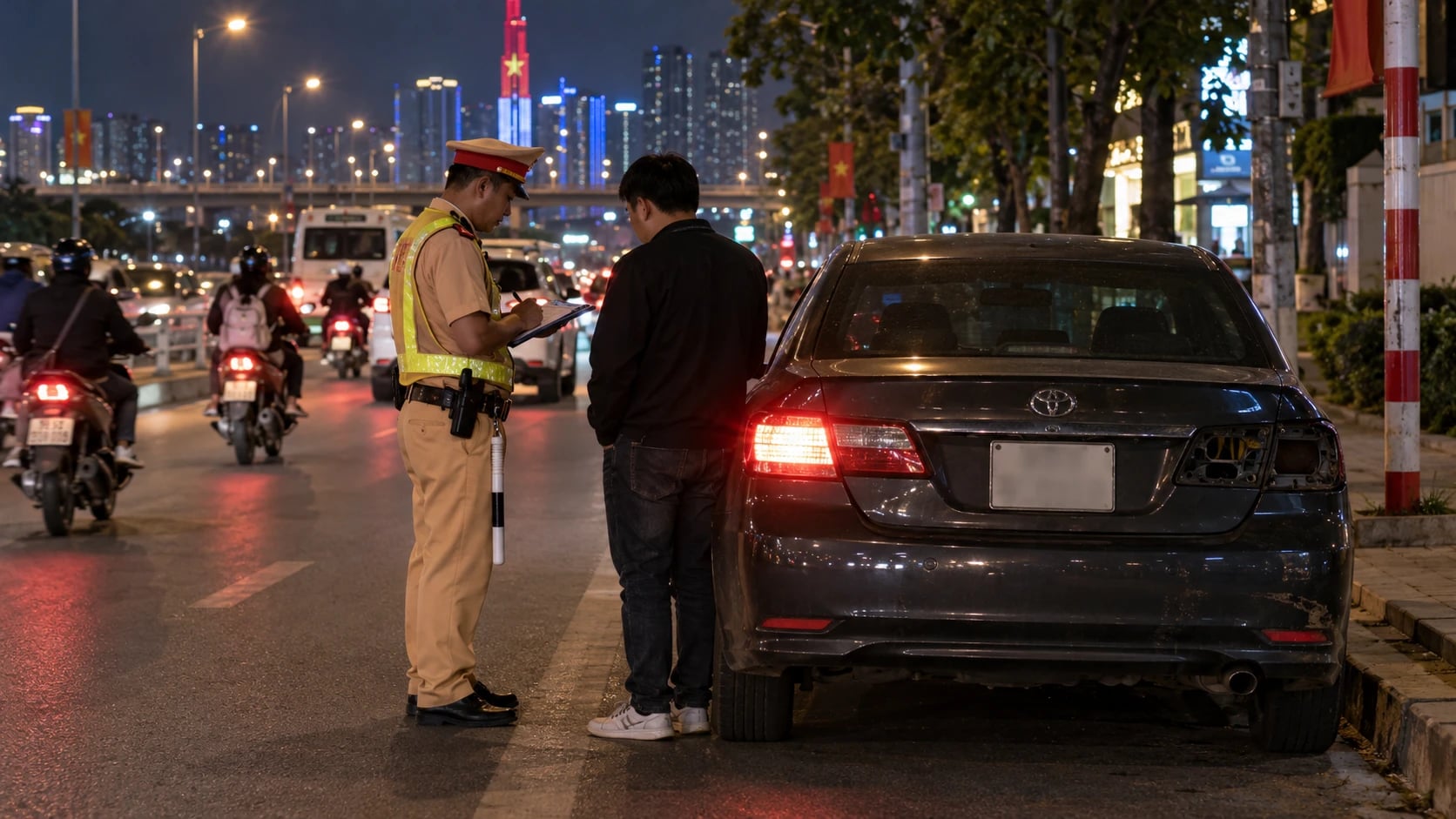
This does not mean that a driver automatically receives both fines whenever one bulb fails. The violation depends on the vehicle's actual condition, the time of travel and the specific offence recorded by the authorities.
The law does not create an exception saying that a driver may continue all night because one light is still working. If part of the lighting system or a position light has stopped working, the vehicle no longer meets the technical requirements. If the fault appears during a trip, slow down and stop at the nearest safe place to check the bulb, fuse or electrical system. If you cannot fix it yourself, call for assistance or a tow instead of continuing a long night drive.
Sources: Thanh Niên

