
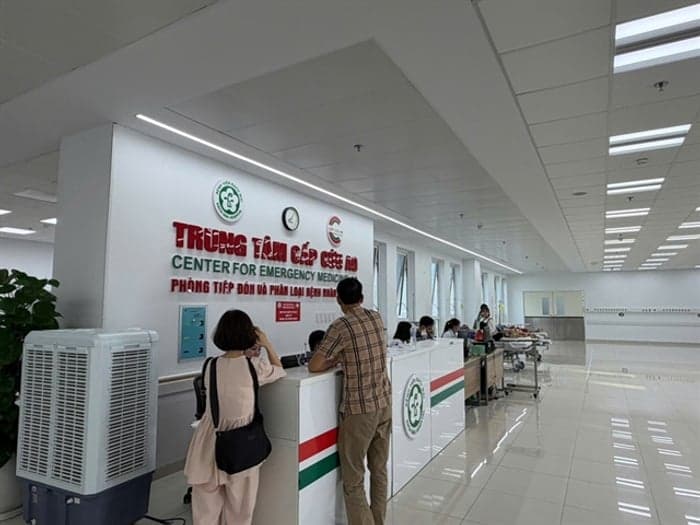
Under Circular 42/2026/TT-BYT, staff at emergency call centres must assess each patient's condition and dispatch an appropriate out-of-hospital emergency service unit.
Priority is given to units capable of reaching the scene quickly. Dispatchers and the medical crew work together to choose the healthcare facility best suited to the patient's condition.
After receiving a dispatch order, the pre-hospital emergency team must promptly reach the scene, provide first aid and emergency care, and carry out other appropriate clinical interventions.
Based on the patient's condition, the team selects a suitable healthcare facility and notifies it to prepare for the patient's arrival. At the same time, it must keep the 113 emergency dispatch centre updated and request further assistance if the situation exceeds its capacity.
The circular also requires out-of-hospital emergency care facilities to receive calls 24/7 and ensure the availability of personnel, vehicles, medicines, medical equipment and information systems. Ambulances must have tracking devices and be connected to the data systems of provincial or municipal police command and information centres.
Healthcare facilities receiving patients must establish a unit to handle emergency-related information 24/7, prepare the necessary personnel, hospital beds, medicines, medical equipment and other resources, and manage patient admission, handover and treatment in accordance with medical examination and treatment regulations.
People's Committees of provinces and centrally governed cities are responsible for directing implementation of the circular and allocating the resources, vehicles and equipment needed for the out-of-hospital emergency medical service system.
Under the roadmap, by January 1, 2027, localities must review and compile a list of out-of-hospital emergency care facilities and vehicles that meet the requirements for joining the system. By July 1, 2027, they must finalise the list of medical personnel assigned to staff the 113 emergency dispatch centre and invest in the necessary infrastructure, vehicles and equipment.
Local authorities must publish the list of out-of-hospital emergency care facilities in their jurisdiction on a provincial or municipal web portal.
They must also work with provincial or municipal police to determine staffing arrangements for emergency response teams, taking into account population size, demand for emergency calls, coordination of out-of-hospital emergency services and the existing emergency care network.
Earlier, Prime Minister's Decision 1515/QĐ-TTg, issued on August 10, approved a master plan for developing the out-of-hospital emergency care system for 2026–2030. The plan sets a goal of launching a national management platform for out-of-hospital emergency services by 2027.
The platform is intended to be integrated with the unified emergency service system, including hotlines 113, 114 and 115, which is being developed by the Ministry of Public Security.
Sources: Viet Nam News

