
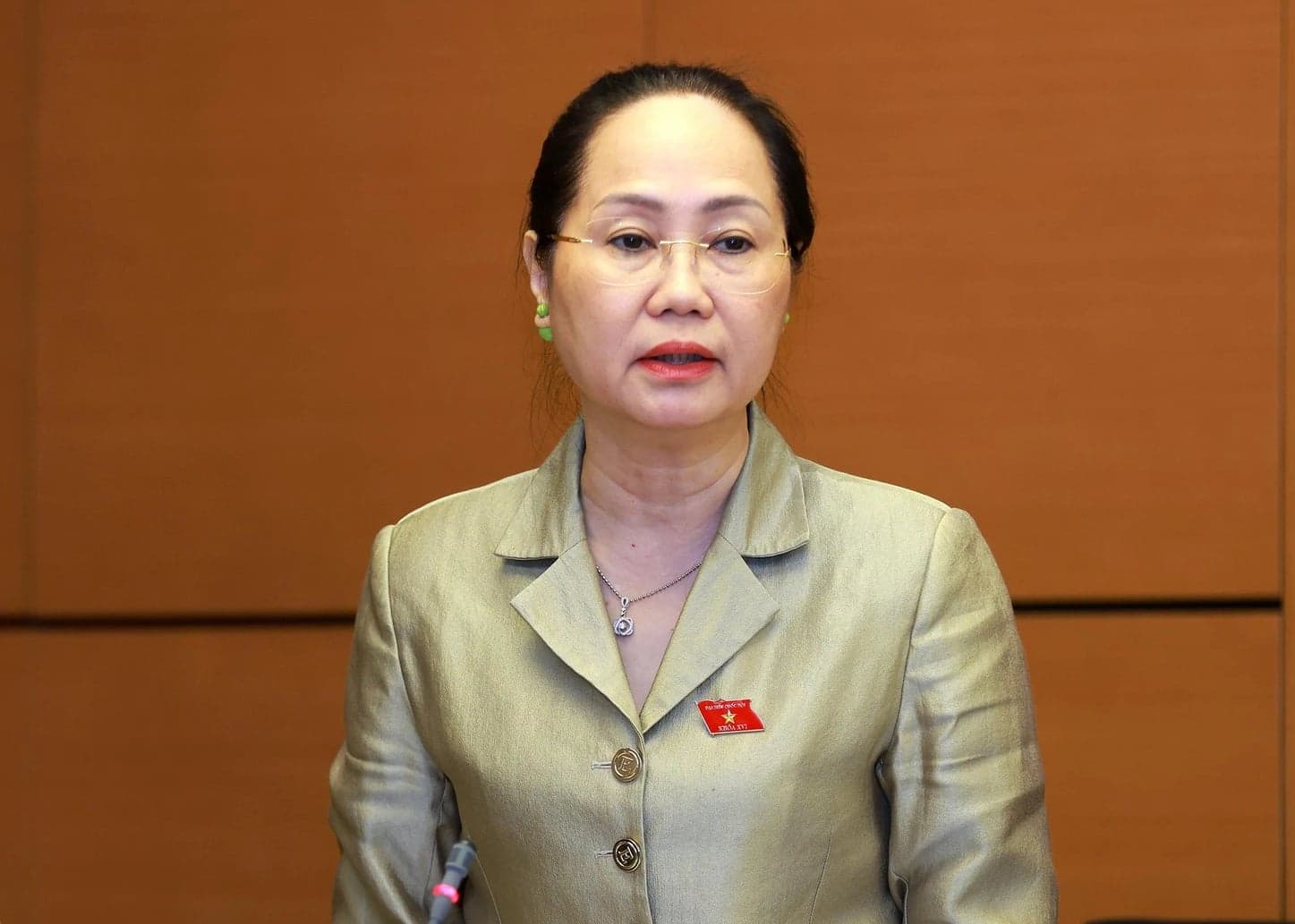
New urban districts are being built in Vietnam, but residents may walk for a long time without seeing trees. Culture, Sports and Tourism Minister Lam Thi Phuong Thanh said dense construction and a lack of public spaces are problems in current urban planning.
On the morning of October 22, Vietnam's National Assembly discussed draft amendments to the laws on land, housing and real estate trading during its second session. Speaking about the draft land law, the minister highlighted several issues related to the management of the cultural sector.
According to Lam Thi Phuong Thanh, Resolution 80 on developing Vietnamese culture calls for preferential land policies and exemptions or reductions in corporate income tax for innovative cultural startups. It also gives priority to the cultural and entertainment industries.
The minister proposed adding a mechanism to reserve land for cultural institutions, libraries and public spaces in land-use plans, especially in new urban districts and residential areas. She said the law should set clear proportions and criteria for land allocated to cultural facilities in those areas.
Lam Thi Phuong Thanh said the approach had already been discussed many times, but had not been implemented consistently or in line with regulations.
"We see land initially being set aside for trees and cultural facilities in urban districts, but once construction is complete, people can walk for a long time without seeing either. There are only houses packed closely together, which makes the space feel oppressive," the minister said.
She said cinemas were also necessary for the development of film. "If there are no cinemas, where will people watch films? How can the film industry develop?"
After administrative reorganizations, some provinces and cities had surplus district cultural centers. Businesses renovated some of the buildings into cinemas, attracting many residents for films and entertainment activities.
Using this example, the minister said land, offices and other state-owned property left over after organizational restructuring should be prioritized for cultural institutions, libraries and community spaces. She also referred to land recovered from the equitization of state-owned enterprises.
Lam Thi Phuong Thanh said around half of cultural and sports facilities currently meet the required criteria, while nearly half do not. After organizations are merged and consolidated, some surplus buildings can be repaired and upgraded to expand the network of such facilities.
The Ministry of Culture, Sports and Tourism is preparing a proposal for the National Assembly on special policies to develop tourism. Several provisions concern land.
For example, at a tourist area or attraction, including a national tourist area or attraction, only part of the site can be used for commercial activities. The rest remains landscape and open space. The minister said applying one land-tax rate to the entire site would therefore not encourage development.
Sources: Thanh Niên

