
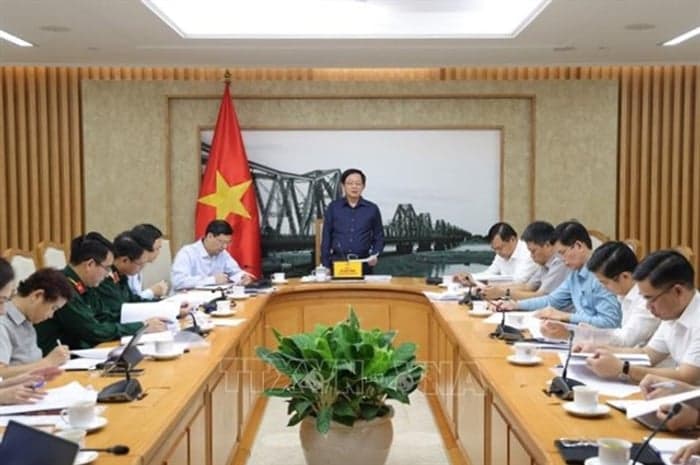
Deputy Prime Minister Ho Quoc Dung directed the Ministry of Agriculture and Rural Development to lead the preparation of response plans for storms, tropical depressions and heavy rain expected in the final months of the year. The main goal is to minimise deaths and property damage.
He gave the orders while chairing a meeting in Hanoi on Thursday morning to review a draft National Natural Disaster Prevention and Control Plan for 2026–2030. The draft was presented by Deputy Minister of Agriculture and Rural Development Nguyen Hoang Hiep and contains eight main focus areas.
The meeting was also attended by Deputy Minister of Construction Le Anh Tuan, Deputy Chief of the General Staff of the People's Army Pham Truong Son, representatives of the ministries of finance, justice, industry and trade, and the National Civil Defence Steering Committee.
According to the agriculture ministry, from 2021 to 2025, Vietnam was affected by 21 of 22 types of natural disasters. They caused 1,455 deaths and missing persons and economic losses of more than VND230 trillion (US$8.9 billion).
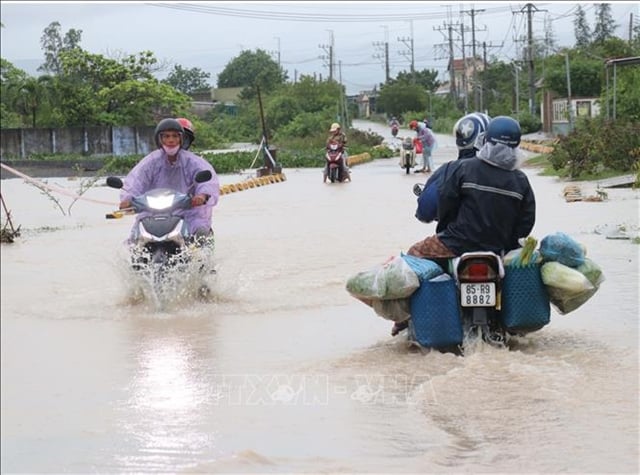
Damage fell significantly in the first nine months of 2026. However, the final months of the year are the peak of the rainy and flood season in the central region, so Ho Quoc Dung urged ministries and local authorities to remain fully vigilant and take prevention and response measures in advance.
The Deputy Prime Minister commended the agriculture ministry's work on the draft plan through 2030. He said the document follows Government directives and incorporates feedback from ministries, local authorities and experts.
"Finalising and implementing this plan is critically important. Vietnam's geography and natural conditions expose the country to nearly every type of natural disaster found worldwide. Climate change is worsening the situation by driving increasingly extreme and severe events that cause significant loss of life and property," he said.
Ho Quoc Dung directed ministries to focus on six main issues in disaster control.
First, they must identify existing shortcomings and challenges and clarify the duties of grassroots authorities.
They must also upgrade monitoring and forecasting systems so accurate information can be delivered in time for the public to take preventive action.
Gaps and conflicts in transport infrastructure planning must be resolved and the planning aligned with flood drainage and disaster prevention requirements. The Deputy Prime Minister stressed that new infrastructure must not increase risks.
Ministries must clearly distinguish between specialised, semi-specialised and local on-site disaster response forces and build a core, highly capable rapid-response unit ready to help when disasters strike.
They must also ensure that infrastructure such as reservoirs, dikes and storm shelters meets disaster prevention and response needs. Modern technology, including unmanned aerial vehicles, should support search and rescue operations and food deliveries to isolated areas that helicopters cannot easily reach.
Communication about disasters must also improve. Warnings should be concise, clear and easy to understand so people can assess the danger and take preventive action.
The Government directed the agriculture ministry to work with other ministries to assess and identify risks specific to each region and area instead of producing a generic list of disaster types.
The central region should focus on severe storms, heavy rain and deep flooding. The northern mountainous region should prioritise flash floods, debris flows and landslides.
The southern region and the Mekong Delta should concentrate on drought, saltwater intrusion, riverbank and coastal erosion, and land subsidence.
"Response scenarios must set out clear action plans for each type of disaster and cover three distinct phases: prevention, response and post-disaster recovery," he said.
For the 2026–2030 draft plan, the agriculture ministry must also incorporate comments from the Ministry of Justice so that it includes only laws and decrees directly related to disaster prevention and response.
The ministry should work with the Ministry of Industry and Trade to conduct a full review of irrigation and hydropower reservoirs. This will support early warning systems and operating rules for interconnected reservoir networks, balancing power generation and irrigation water storage with the need to reduce flood risks and protect downstream areas.
Sources: Viet Nam News

