
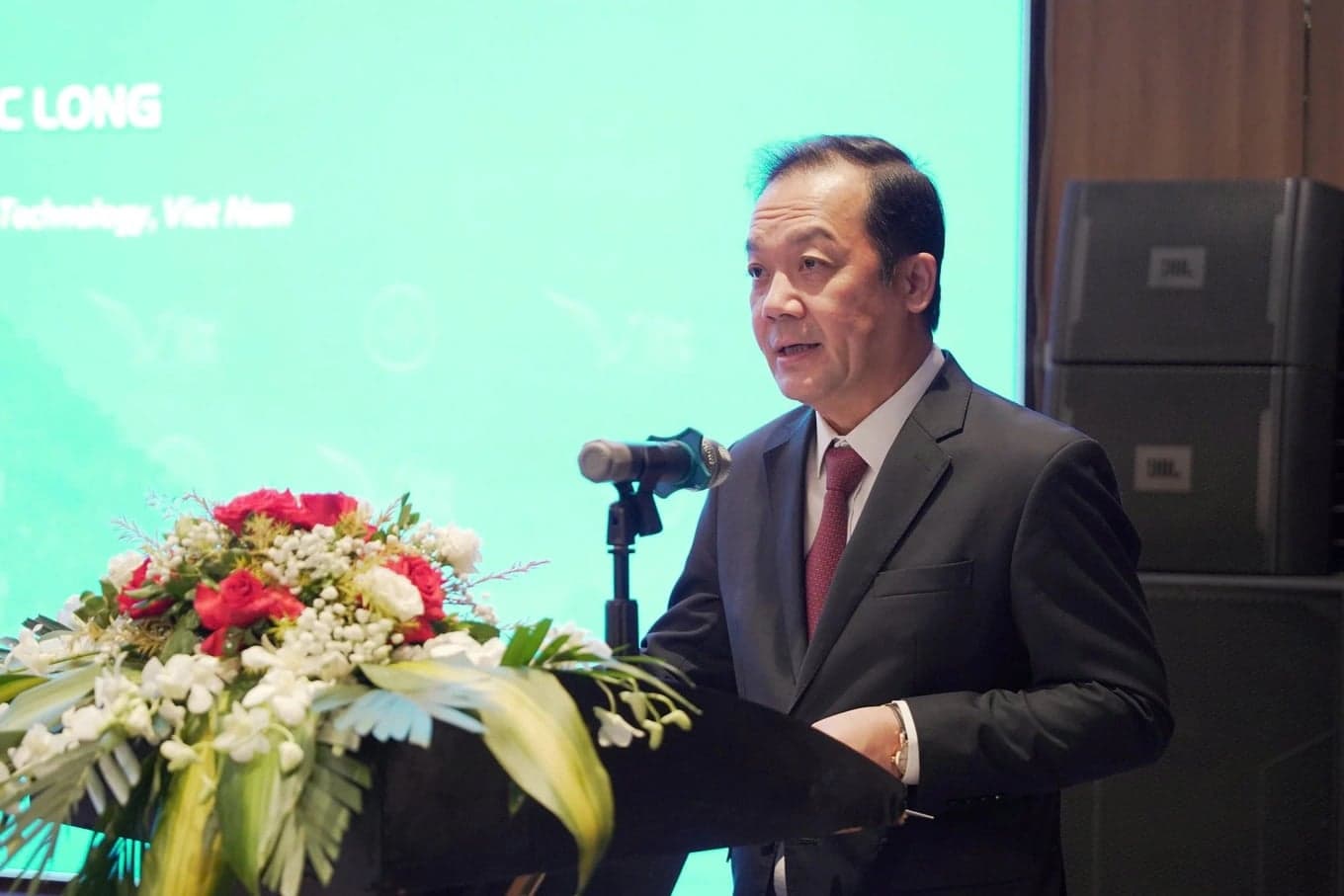
On October 29, Vietnam's Ministry of Science and Technology held the 7th ASEAN 5G conference in Quang Ninh as part of Vietnam International Digital Week 2026.
The conference brought together representatives of regulators, international organizations, technology associations and telecommunications companies from ASEAN countries and partner states. Participants exchanged experience on commercializing 5G, developing applications and preparing for the next generation of mobile networks.
5G must deliver value beyond connectivity
At the opening, Deputy Minister of Science and Technology Pham Duc Long set out the direction: "Use 5G effectively today and proactively shape 6G tomorrow."
He said that after the initial investment and network rollout phase, 5G's main challenge is turning connectivity into economic and social value. Coverage and network quality are important conditions, but they are not enough.
The technology's impact should be seen in higher productivity, better services and new production and business models.
5G development should therefore focus more strongly on industry, logistics, transport, agriculture and healthcare. This requires cooperation between telecommunications and technology companies and the different sectors of the economy.
Operators should do more than provide connectivity and should help build specific solutions for customers. Regulators need to create favorable conditions for testing and innovation.
Alongside 5G use, the deputy minister said the region must prepare for 5G-Advanced, an enhanced version of 5G, and for 6G networks. The tasks include technology research, workforce development, trials, spectrum planning and participation in international standards work.
Investment should match technological maturity and actual demand. Countries should not wait passively, but they should also avoid chasing technology without a clear goal.
According to the deputy minister, ASEAN countries can expand cooperation in research, experience sharing and workforce training, while connecting companies with universities and research institutes. Vietnam is ready to cooperate with ASEAN countries, Japan and international partners on a mutually beneficial basis.
5G for factories, hospitals and transport
Vu Hoang Hieu, a representative of the Authority of Telecommunications under the Ministry of Science and Technology, said Vietnam had moved from 5G trials to large-scale deployment.
From 2027 to 2030, Vietnam will focus on creating added value through 5G applications in industrial production, smart cities, transport, agriculture, healthcare and education.
The conference discussed private 5G networks for factories, connectivity at ports and smart border gates, and applications supporting agricultural production.
Thailand's experience also shows how 5G development can be tied to the needs of individual sectors. According to the country's telecommunications regulator, 5G coverage had reached 98% of the population by June 2026.
Thailand is implementing projects such as Siriraj 5G Smart Hospital, which combines AI, smart ambulances and autonomous vehicles. It is also applying technology at automation centers and in industrial zones using robots.
Cambodia, meanwhile, is prioritizing 5G deployment in the capital, tourist cities, industrial zones and economic gateways. It aims to cover 70–80% of the population with 5G by 2030.
Koizumi Hidechika of Japan's Ministry of Internal Affairs and Communications spoke about fiber-optic development, 5G expansion, optical technology and the distribution of data centers across the country.
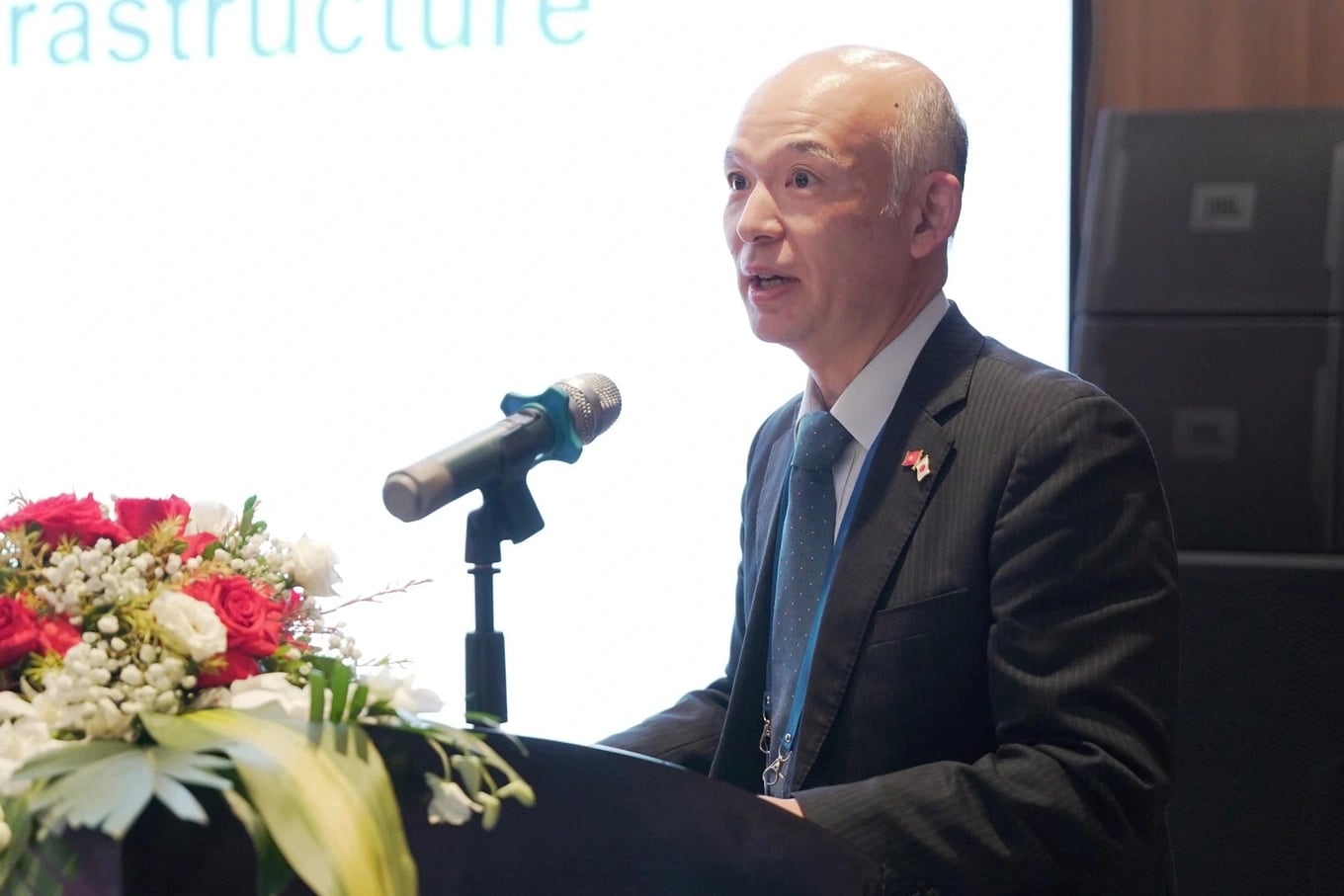
Japan is also developing non-terrestrial networks, including satellite communications, to support smart agriculture and disaster response. With data traffic increasing in the AI era, the country proposed a Digital Corridor Initiative for safe and reliable communications infrastructure.
Flexible policy and user protection
Jeanette Whyte, GSMA's head of public policy for the Asia-Pacific region, said ASEAN needs policies tailored to each market rather than a single 5G model.
GSMA recommended that countries publish spectrum road maps, optimize licensing costs, simplify procedures for deploying base stations and promote infrastructure sharing.
Alongside network development, the organization stressed the need to build digital trust. According to a survey cited by GSMA at the conference, 96% of users surveyed in six ASEAN markets were concerned about online scams.

GSMA called for stronger coordination between governments, operators and banks, along with the use of verification tools based on mobile data to protect consumers using digital services.
Sources: Dân Trí

